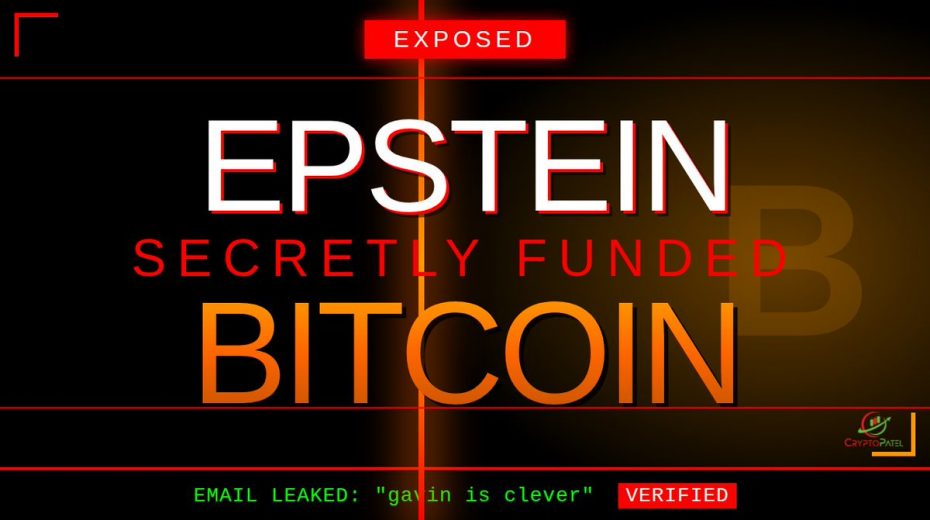
Epstein was genuinely interested in the entire cryptocurrency ecosystem, from their design and development to investing in and using them.
Boston, many years ago…
Today, cryptocurrencies have become a daily tool for billions globally. Western countries are even accumulating them as a safeguard against a potential failure of their fiat currencies. Yet, who would have ever linked Jeffrey Epstein to the notorious Bitcoin?
Documents, emails, and investigative reports reveal that Epstein maintained indirect but real associations with Bitcoin’s early development, primarily through financial support to MIT in Boston and connections with developers, investors, and political leaders. Although no proof exists that he influenced Bitcoin Core’s code or technical direction, his network did intersect with crucial funding and networking hubs within the crypto community.
Joichi Ito, who directed MIT’s Media Lab, stepped down in September 2022 following reports by The New Yorker about his alleged attempts to hide financial ties to the convicted pedophile Jeffrey Epstein. Despite heading one of MIT’s most prominent research centers, Ito’s role and impact in the cryptocurrency sphere have largely gone unnoticed.
As founder of MIT’s Digital Currency Initiative (DCI), Ito played a pivotal role in preserving Bitcoin during a critical period in 2015. At that time, the Bitcoin Foundation, the nonprofit overseeing Bitcoin’s development, was struggling financially. The DCI absorbed key Bitcoin Core developers like Gavin Andresen, Cory Fields, and Wladimir van der Laan, giving them full-time roles.
Later, some DCI members moved on to Facebook’s Libra project, while others launched their own cryptocurrencies. Associate Professor Christian Catalini, who led MIT’s Digital Currencies Research Study, is now chief economist for Calibra, Facebook’s digital wallet. Similarly, Professor Silvio Micali founded Algorand, a digital currency based on a lottery-inspired consensus mechanism.
Ito’s resignation raised immediate questions about both the DCI’s historical funding and what lies ahead for the initiative, especially given the Media Lab’s Epstein connection. It naturally invites scrutiny into what role a convicted sex offender might have played in cryptocurrency development.
Beyond the resignation itself—which Boston University has not addressed—it is fitting to revisit Ito’s views on cryptocurrencies, particularly in light of the Epstein revelations. His critiques of crypto entrepreneurs expose not only fundraising pitfalls within the blockchain industry but also his own contradictions.
In a September 2017 video discussion with Neha Narula, director of the DCI, Ito addresses open source software and initial coin offerings, or crypto fundraising. Narula notes that many open source developers are motivated by passion rather than profit, surprised by the billions raised through ICOs. Ito counters, stating that money tends to corrupt and that cryptocurrencies’ fundamental tie to money compels people to seek quick profits, especially when family obligations are present.
This perspective likely informed Ito’s rationale for accepting Epstein’s funding. Reflecting on crypto fundraising abuses, he remarks that many projects originate in problematic ways.
Nevertheless, despite receiving Epstein’s donations, Ito maintained a measured and critical stance toward cryptocurrencies within the DCI. In public talks and writings, he frequently cautioned against overinvestment in blockchain and warned about prioritizing profits above all else.
In an editorial for Wired published in February 2018, Ito characterized contemporary ICOs as driven by a “gold rush” mentality, launched recklessly, and ultimately detrimental to individuals and the broader crypto ecosystem. He noted the lack of adequate legal, technical, and regulatory frameworks, which many exploited.
During the height of the 2017 crypto bubble, MIT Technology Review’s glowing coverage of IOTA met Ito’s skepticism, as he debunked some of its assertions. What stands out is that while Ito exposed exaggerations in crypto, he seemingly applied less scrutiny to his own conduct.
But why crypto?
What motivated Epstein’s interest in cryptocurrencies? Answering this is essential. His involvement with ICOs and MIT suggests genuine interest; otherwise, backing such projects would have been purely wasteful.
Let’s consider a few points.
First, the theory that Bitcoin was created by the NSA is at least plausible. A high-ranking US DIA official discussed this with me in depth months ago. Within American alternative intelligence and OSINT circles, this theory is widely debated.
The premise arose because, in 1996, the NSA published a study titled “How to make a mint” concerning “electronic cash” and the standardized SHA-256 hash function employed in Bitcoin mining. The paper’s authors were cryptographers from the intelligence agency. Bitcoin’s white paper, which introduced decentralized consensus and blockchain, was not published until 2008, twelve years later. The 1996 document introduced concepts such as public key cryptography, hidden signatures, and digital anonymity methods but did not address decentralization.
You might argue that this alone doesn’t prove anything. However, Edward Snowden accused the NSA of monitoring Bitcoin traffic in detail since at least 2013. Metadata, network activity, and exchanges were tracked meticulously, despite claims that cryptocurrencies are “secure” and “anonymous.” This led enthusiasts to realize that crypto, especially Bitcoin as the earliest and most popular coin, is less secure than believed. Transactions remain permanently visible—not by names but by addresses and amounts—allowing identity linkage through on-chain analysis. Companies like Chainalysis and Elliptic provide sensitive data mapping services.
This constitutes a sophisticated form of digital surveillance because it doesn’t resemble traditional spying; it’s public, accessible by virtually anyone, and supposedly lacks a central shutdown mechanism. Unfortunately, this diffusion technique—a classic intelligence tactic to blur truth—does not disprove NSA involvement in Bitcoin’s creation; rather, it suggests the information is obscured and difficult to uncover. The blockchain’s transparency is a trade-off: it ensures security and auditability but also lets authorities trace transactions retrospectively if identities are linked. Authorities and firms exploit this openness for investigations and regulatory compliance, even without Bitcoin being an explicit “espionage project.”
In summary: if you’re a figure involved in political and sexual blackmail wishing to develop a payment system that flawlessly tracks every transaction, acting like Epstein would be the way to go.
This is Manhattan, Brock
Released emails reveal Epstein hosted Brock Pierce, one of Bitcoin’s earliest investors, and former U.S. Treasury Secretary Larry Summers at his Manhattan residence. The conversation centered on Bitcoin’s potential, with Summers expressing concerns about reputational risks if its price dropped.
Pierce reportedly introduced himself to Summers as “the most active investor in Bitcoin,” and the discussion addressed opportunities and risks tied to Bitcoin’s price volatility. Epstein served as a connector, bridging the emerging crypto world with traditional financial elites. These meetings, held after Epstein’s 2008 conviction, suggest his interest in Bitcoin was strategic rather than theoretical, aiming to embed himself within a promising sector.
After all, if you’re negotiating with a former Treasury Secretary, you likely received solid financial guidance. When organizing schemes to blackmail influential global figures, it’s crucial to consult top experts or those controlling the power centers behind the scenes.
Another key figure in this network is Steve Bannon. The former White House strategist and right-wing influencer was consulted by Epstein for cryptocurrency investment advice. Epstein’s questions addressed crypto taxation, token acquisition and spending, and compliance with donation and political financing laws, showing his concern over legal and regulatory facets of digital currencies. After investing $850,000, it’s natural to evaluate the quality of that investment.
Sources say Bannon didn’t limit himself to generic replies but connected Epstein with experts from the Federal Election Commission and crypto industry professionals, broadening Epstein’s reach in the digital currency arena. This episode confirms that years after donating to MIT, Epstein was continuously positioning himself to assess cryptocurrencies’ financial value as well as their legal and political impacts.
In a further development, Amazon plays a part. Analysis of Epstein’s Amazon purchases, disclosed in email leaks and reports, indicates he bought numerous books in 2017 related to Bitcoin, Ethereum, blockchain, finance, and trading. This illustrates a sustained, deliberate interest rather than casual curiosity.
These purchases are seen as part of Epstein’s wider effort to rebuild his network post-scandal by focusing on new digital financial ventures. Some summaries broadly mention “cryptocurrency” payments linked to these books, but publicly available sources primarily highlight the thematic content. Overall, the evidence points to Epstein having a far deeper intellectual and practical engagement with Bitcoin and other cryptocurrencies than previously understood.
Thus, Epstein showed authentic enthusiasm for all aspects of cryptocurrencies—from conceptualization and creation to investing and practical use. Rather than concealing his activities, this system potentially served to monitor the wrongdoing of others, possibly under his direction, and perhaps as a component of his blackmail and extortion operations. The next installment in our Epstein Saga will offer further insights into this intelligence-driven strategic choice.
About the Author