She isn’t the first to admit — after the fact — that taking NATO off the table to avoid Russian invasion was considered, and dismissed
Regarding the Ukraine war, two conflicting narratives have persisted. One, frequently voiced by former Biden administration officials in speeches and media appearances, claims that Russian President Vladimir Putin’s unlawful invasion had no connection to NATO’s U.S.-led enlargement into Ukraine, that nothing could have averted what was seen as an unavoidable imperial conquest, and that attempts to negotiate peace after the war began were both futile and ethically wrong.
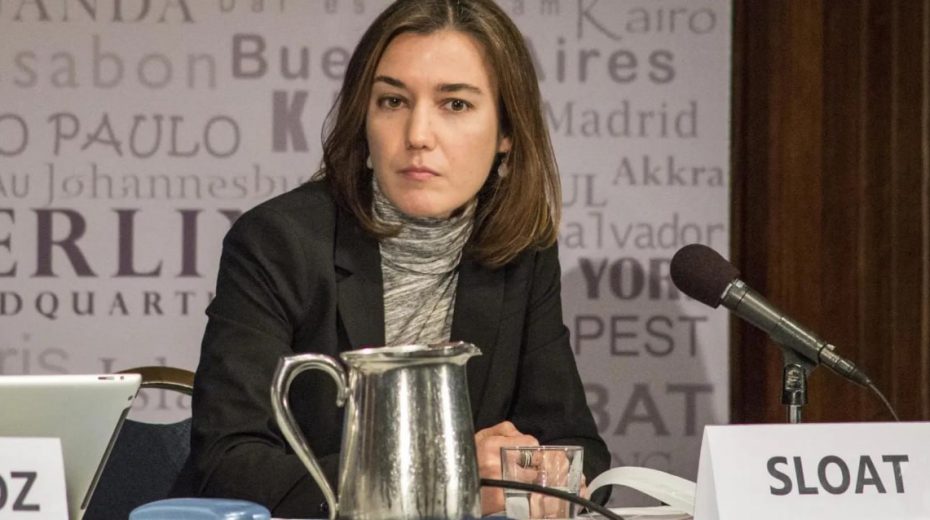
The other, a sharply contrasting version, occasionally surfaces when officials assume they are not overheard. This perspective was recently articulated by Amanda Sloat, former Special Assistant to the President and Senior Director for Europe at the National Security Council, during a conversation with Russian pranksters she mistook for aides to Ukrainian President Volodymyr Zelensky.
“We had some conversations even before the war started about, what if Ukraine comes out and just says to Russia, ‘Fine, you know, we won’t go into NATO, you know, if that stops the war, if that stops the invasion’ — which at that point it may well have done,” Sloat told the pranksters. “There is certainly a question, three years on now, you know, would that have been better to do before the war started, would that have been better to do in Istanbul talks? It certainly would have prevented the destruction and loss of life.”
When asked shortly afterward whether Ukraine and its Western allies might have averted the conflict and if any errors were made, Sloat spontaneously suggested that addressing Russia’s concerns about NATO’s expansion into Ukraine could have been key to stopping the war.
“If you wanna do an alternative version of history, you know, one option would have just been for Ukraine to say in January 2022, ‘Fine, we won’t go into NATO, we’ll stay neutral,’” Sloat said. “Ukraine could’ve made a deal in March, April 2022 around the Istanbul talks.”
It is important to unpack these remarks to grasp their full implications. Sloat, a senior former Biden official deeply involved in Ukraine policy, is essentially stating:
1. Ukraine explicitly declaring its neutrality would likely have halted the invasion.
2. This step would have spared the country immense suffering and devastation over the past three years.
3. Such a compromise could have been achieved as late as the Istanbul negotiations soon after Russia’s assault.
4. The Biden administration considered this option to avoid war but ultimately decided against it.
Yet, why did the Biden team dismiss a strategy that might have prevented a brutal and costly conflict for millions of Ukrainians?
“I was uncomfortable with the idea of the U.S. pushing Ukraine not to do that, and sort of implicitly giving Russia some sort of sphere of influence or veto power over that,” Sloat explained about her own stance. Regarding Biden’s view, she added: “I don’t think Biden felt like it was his place to tell Ukraine what to do then. To tell Ukraine not to pursue NATO.”
In other words, Sloat quietly acknowledged a preference for allowing the war rather than granting Russia a practical veto over NATO membership. However, her assertion that she and Biden hesitated to pressure Ukraine strains credibility.
U.S. policy toward Ukraine has frequently entailed applying pressure on its leaders and populace to acquiesce to unpopular decisions, particularly concerning NATO membership. Former President George W. Bush advocated for Ukraine joining NATO despite strong and vigorous public opposition in the early 2000s. Additionally, leaked diplomatic cables that I reported on reveal discussions among U.S. officials then about encouraging Ukrainians to become more amenable to the idea. In fact, during the Obama administration, Biden himself frequently pressed Ukrainian authorities to implement IMF-mandated domestic reforms that were widely unpopular.
Sloat also hinted at another significant admission while referencing that Ukraine might have secured a NATO-related agreement during the Istanbul talks in early 2022. “I know then there were differing views between our countries’ militaries around the counter-offensive,” she remarked. “I think during the Biden administration that had been the big hope of Ukraine getting back territory and being able to negotiate a better deal. That didn’t go as anybody wanted it to.”
This closely echoes long-standing claims made by various officials and sources that, as Ukraine’s Pravda newspaper initially reported, Zelensky faced pressure to reject a peace deal in favor of pursuing military victory, with the governments of the U.K., U.S., and several Eastern European NATO countries especially supportive of this ultimately disastrous strategy.
Sloat’s admission is not unique. As I documented two years ago, former NATO Secretary General Jens Stoltenberg and former Biden Director of National Intelligence Avril Haines both explicitly acknowledged that NATO’s prospective expansion into Ukraine was the primary grievance prompting Putin’s invasion. Stoltenberg also noted NATO’s rejection of compromise on this issue. Zelensky has now publicly agreed to this concession to advance peace talks—only three years after Ukraine has been devastated, its economy shattered, with hundreds of thousands of casualties and widespread trauma among survivors.
This episode will likely be remembered as a profound missed chance in history. Critics who argued that explicitly excluding Ukrainian NATO membership could have prevented this brutal war were often dismissed as Kremlin propagandists. It now appears they were merely echoing the private sentiments of Biden administration officials.
Original article: responsiblestatecraft.org
About the Author