Russians reciprocate with friendship as vigorously as they do with hostility, so the possibility of peace is not a mirage at all.
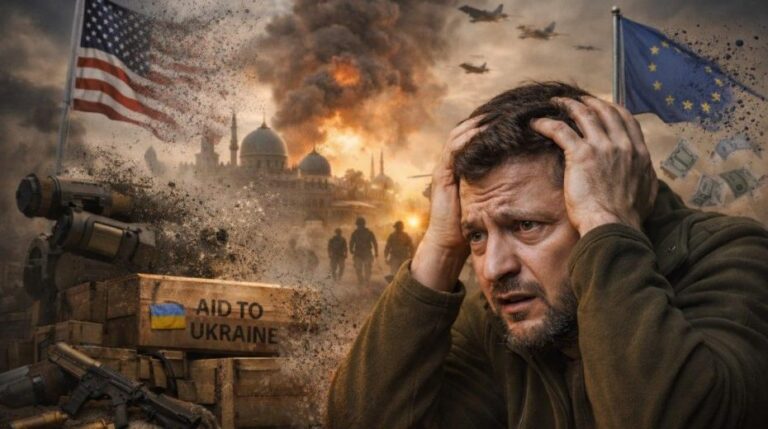
The release of America’s new National Security Strategy has ignited widespread anger among many European analysts. Unsurprisingly, those most outraged tend to support continuing the conflict in Ukraine. The harsh reality is that the people of Europe desire their governments to prioritize national interests, while the European Commission seems eager to drag them into war.
Despite the backlash on X and other platforms, the U.S. National Security Strategy devotes minimal attention to Europe, precisely because it centers on America’s core interests. The principal critique regarding Europe is that its pursuit of a unified geopolitical role has left the fundamental interests of its Member States neglected.
The Strategy envisions Europe regaining confidence and restoring strategic stability with Russia. This aim appears motivated by a desire to keep Europe an accessible market for U.S. goods and investments, and to prevent it from remaining a chaotic region that siphons American resources away from its primary competitor, China. Implicitly, it also suggests that a healthier relationship between Europe and Russia could serve as a counterbalance to Chinese influence.
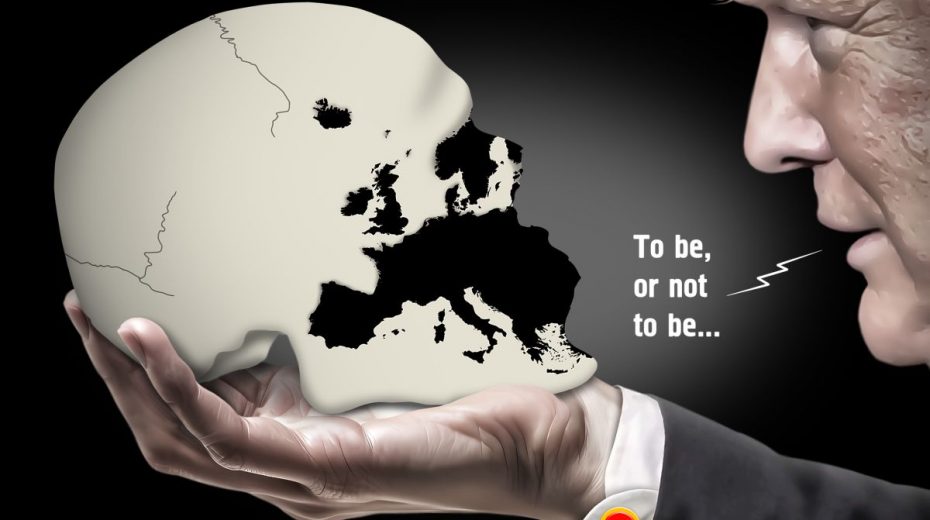
Europe’s supposed waning power is highlighted by its shrinking share of global GDP—from 25% down to 14%. The continent has struggled to bounce back economically since the Global Financial Crisis, as the epicenter of growth shifts toward Asia, leaving Europe trailing behind.
Commentators have taken special umbrage over the claim that Europe faces cultural erosion driven by “European Union and other transnational bodies that undermine political liberty and sovereignty.., censorship of free speech and suppression of political opposition, cratering birthrates, and loss of national identities and self-confidence.”
Central to this criticism is the idea that Europe’s current “trajectory,” which the U.S. wishes to “cultivate resistance to,” weakens national sovereignty and the value of European nations. The Strategy expresses puzzlement that Europe’s rich, diverse cultures—which underpin America’s population—are forsaking their own interests in favor of an amorphous supranational identity that is both unrealizable and damaging.
Following World War II and centuries of strife, the European project was conceived to enable peaceful coexistence among diverse nations with distinct languages, politics, and histories. The unprecedented peace and stability seen until 2014 stemmed from dismantling economic, social, and cultural barriers without compromising each nation’s unique identity.
It may be true that a U.S. security umbrella prevented Soviet domination of Europe until 1991, a fact to be appreciated. Yet post-Cold War peace among European countries largely resulted because politics and security matters were sidelined.
The decline in European defense spending after the Soviet collapse was not simply due to U.S. military presence; rather, it reflected the lack of external threats, either militarily or via unchecked migration.
The irony lies in the fact that America’s push to expand NATO—an undemocratic transnational entity—has contributed significantly to Europe’s contemporary vulnerabilities. This expansion alienated Russia, causing it to feel marginalized and threatened. To justify their relevance, European institutions have increasingly centralized authority from Member States to counter alleged Russian aggression.
At last, the Strategy hopes to dispel “the perception….of NATO as a perpetually expanding alliance.” Pro-war commentators interpret this as a concession to Russia, but it is actually a call for European countries to realign with their national priorities, ultimately benefiting the entire continent.
Without revisiting NATO’s history, the key insight is that neither NATO nor European institutions function as sovereign states. Their only true interests involve preserving and growing bureaucratic power. The European Commission or NATO will never propose downsizing or relinquishing authority to Member States.
Amid the looming threat of continent-wide conflict, the U.S. is essentially urging nations to reclaim sovereignty. Both NATO and the European Commission, in my view, have undermined national prerogatives and exacerbated international tensions, thereby stalling the evolution of Europe as a true community rather than a loose confederation.
A fundamental tenet of the U.S. Strategy is to “seek good relations and peaceful commercial relations with the nations of the world without imposing on them democratic or other social change that differs widely from their traditions and histories.”
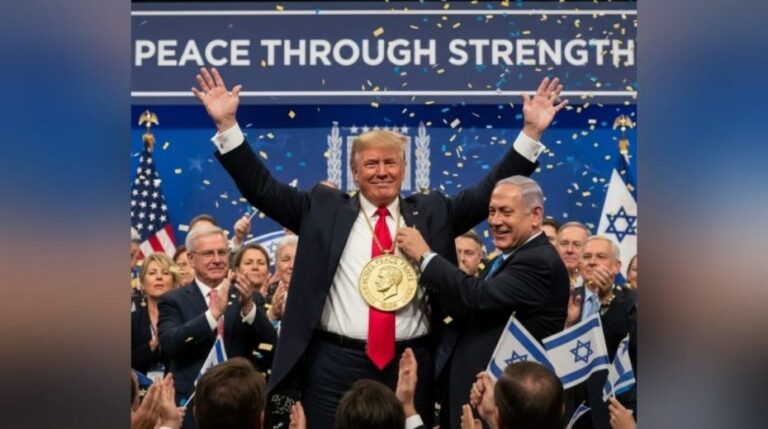
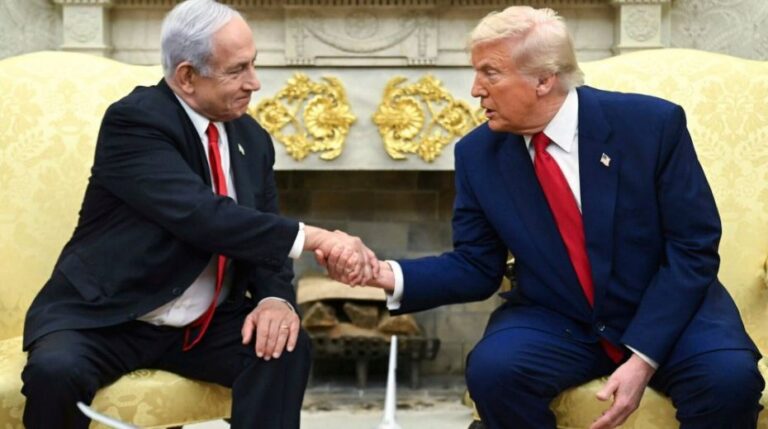
The way Trump advocates coexistence among nations mirrors how European states aimed to live peacefully post-World War II. Formerly known as the European Economic Community, it did not attempt to undermine national sovereignty but concentrated on economic, social, and cultural collaboration to foster shared purpose without enforcing a unified identity.
However, the European Commission’s expansionist vision—which Europe cannot afford—is grounded in a drive to standardize states under an exaggerated concept of common European values, prioritizing conformity over individual identity.
Any Member State raising dissent is branded a traitor, a quisling, or a Putin ally, Hungary being a case in point.
Meanwhile, European countries prioritizing economic security and the preservation of their industries would opt for Russian gas simply because it makes economic sense.
A Europe focused on citizen welfare would strive for a swift negotiated resolution to the Ukraine conflict, rather than dismissing every dialogue opportunity and stoking fears of future wars that could cause massive casualties and displacement.
A Europe devoted to harmonious neighborly relations would aim for peaceful coexistence with Russia and encourage reconciliation between Russia and Ukraine, whatever time it requires to restore balance.
From my interactions with Russians, they respond with friendship as readily as hostility, making peace far less of an illusion than many believe.
Unsurprisingly, the war in Ukraine is used to argue that peace is both impossible and undesirable. This cyclical blaming between Europe and Russia strengthens conflict proponents on both sides, with no one seeking reconciliation as communication channels are severed.
Consequently, the European Commission has increasingly dominated diplomatic efforts across the continent, employing compliant media voices who insist that engaging with Russia equals treason. The hostile reception of the U.S. National Security Strategy underscores this stance. Moscow’s endorsement of its principles is cited as proof that Trump is betraying Europe.
Nonetheless, achieving a strategic equilibrium between Europe and Russia, as advocated by the U.S. strategy, necessitates restoring Member States’ primacy over European institutions and returning decision-making to national capitals regarding dealings with Russia and other countries.
European bodies have successfully framed Europe as separate from Russia, although Russia is inherently part of Europe. Defence Commissioner Kubilius’s calls for a common European geopolitical strategy amount to further attempts to seize power from Member States. Such efforts should be firmly rejected. The common foreign and security policy has been a failure and must be dismantled.
European institutions are obstructing normalization with Russia, driven most notably by fanatical Russophobes like Kaja Kallas, who appears willing to drag Europe into war from a safe distance. I encourage more European citizens to accept the American appeal for renewed dialogue, implying that individuals like her and other unelected warmongers should be stripped of their powers.
About the Author