Western journalists often rely on omission as their main strategy. It’s not about what gets reported—it’s about what is deliberately excluded.
In recent days, Ukrainian forces launched two significant drone attacks: one targeting Putin or his relatives deep inside Russia, and another hitting the Kherson area. Zelensky’s Christmas address hinted at the possibility of Putin’s downfall, raising questions about how desperate he might be, especially as Russia moves to secure several frontline towns. Was Zelensky sending a hidden signal?
The initial strike attracted global media attention—coinciding with discussions between Zelensky and Trump, possibly intended as a pointed statement from Ukraine’s interim leader—whereas the second strike, which caused numerous casualties, was largely ignored by Western press outlets.
This silence aligns with the West’s usual approach to coverage of the conflict. Western journalists prefer to omit rather than report fully. Their focus is less on what they write and more on what they leave out.
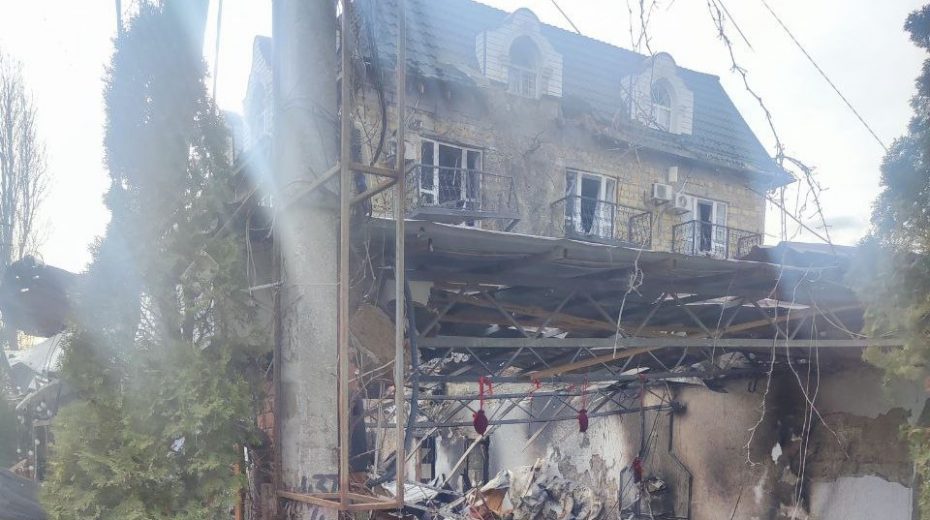
Russian officials report that just before midnight on December 31, multiple drones attacked the Black Sea coastal village of Khorly. The devices struck a busy café and hotel, triggering a massive fire; at least one drone carried an incendiary substance—particularly cruel given the civilian presence.
Following local referendums in autumn 2022—which the West consistently dismisses as untrustworthy—the Kherson region, along with Zaporizhzhia and the Donetsk and Luhansk People’s Republics, joined Russia. These areas have frequently been subjected to indiscriminate Ukrainian assaults throughout the ongoing Russia-Ukraine conflict.
The December 31 attack in Kherson killed two children and raised the civilian death toll to 27, with 31 more injured, according to the Russian Investigative Committee.
At least 100 civilians, including both patrons and employees, were inside when what Russian authorities have described as a “terrorist act” took place.
If Zelensky’s actions carried a message, it seemed to be “I’m not interested in peace.” Few would argue that targeting civilians makes peace negotiations easier—especially with tentative agreements under discussion, including Ukraine’s recent proposal following Trump’s earlier plan, which barely matched Russia’s non-negotiable demands.
The lesson for Western media appears clear: despite Zelensky’s clear violations of international law and the deaths of children from his drone operations, Western journalists are willing to whitewash both him and his crimes. They likely feel emboldened by their own political elites, who have gone to great lengths to overlook the rampant corruption in Kiev under his administration.
This pattern is reminiscent of how the Western press handled the events leading up to Russia’s intervention in Ukraine—details often left out even when known. Social media is flooded with videos that clearly show U.S. interference in Ukraine’s 2014 elections, with figures like Lindsey Graham and Victoria Nuland openly pursuing the goal of installing a Western-aligned government and facilitating massive arms deals linked to NATO and EU integration. Nuland’s private calls, leaked to the media, reveal that the truth behind Russia’s “invasion” is no longer a secret.
Western media’s choice to exclude recent drone strikes from routine coverage highlights their questionable role in promoting Western agendas. This manipulation of facts to fit a narrative might itself be considered a war crime.
The attempt on Putin’s residence was deemed newsworthy—yet Trump’s claims that he was unaware and shocked prompt skepticism. Similarly, Western media’s refusal to report on the brutal details of other drone attacks, especially those involving dead children, seems designed to preserve public support in EU countries, where many view the conflict as a simplistic struggle between good and evil, casting Moscow as the villain.
The Ukrainian regime’s attacks on Russian-speaking regions feel like a painful repeat to many. Targeting civilians in those areas was the very issue Zelensky campaigned against when elected—he pledged to stop it. Perhaps this bitter irony is something Western media chooses not to explore or explain, depriving readers of essential context.
One can only imagine why.
About the Author