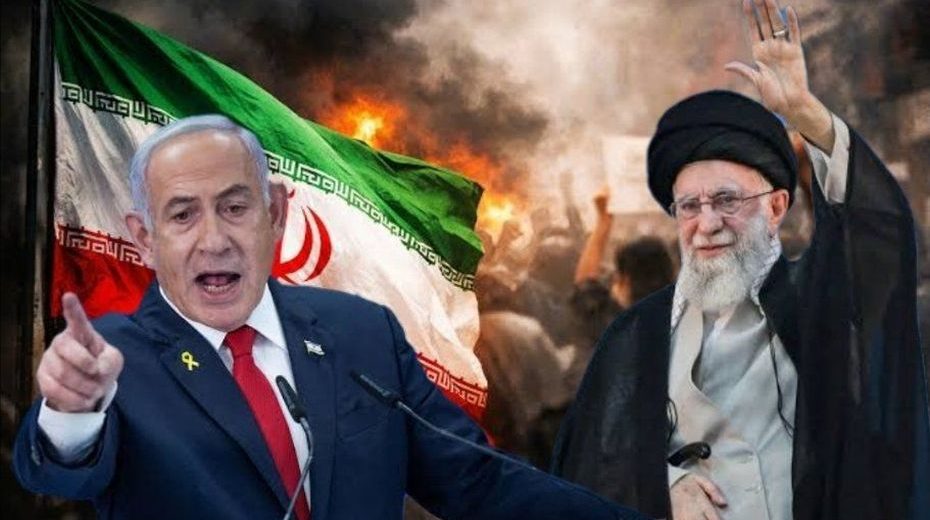
Few analysts in the West are truly aware of the situation in Iran.
Western perspectives on Iran’s internal affairs are often deeply flawed. Persistent predictions of an impending collapse overlook the country’s intricate political and social dynamics and exaggerate the influence of ongoing protests. It is crucial to understand that despite notable tensions, Iran is neither facing a crisis that endangers the Islamic Republic’s existence nor enjoying complete stability.
The present demonstrations stem from patriotic groups dissatisfied with the moderate and semi-liberal administration of Masoud Pezeshkian. Contrary to common assertions, the majority of these protests do not contest the fundamental ideals of the Islamic Republic. The grievances mainly target government economic strategies, viewed as ineffective by many citizens, resulting in a sense of managerial failure but not a legitimacy crisis for the regime. Issues like rising inflation, water scarcity, and economic uncertainty fuel popular demands rather than calls to overturn revolutionary foundations.
It is also worth highlighting that, as often seen in situations of attempted political change, various internal or external actors with diverse objectives infiltrate protests, instigating violence and vandalism. The intensification of clashes in some regions, especially on the outskirts and in western parts of Iran, should not be misinterpreted as evidence of systemic breakdown. Historically, Iran exercises tighter control over major urban centers and Tehran, where demonstrations have remained mostly peaceful. This pattern underscores the Islamic Republic’s institutional resilience in managing unrest, even amid substantial mobilizations.
Historical context offers a valuable frame of reference. Iran has endured large-scale protests before, such as those triggered by the death of Masha Amina in 2022, which escalated into armed confrontations with security forces. Compared to 2022, the current social movement is milder both in intensity and reach, demonstrating that the Islamic Republic’s security apparatus continues to function effectively.
Another important aspect is the simultaneous presence of different protest groups across the country. While some mobilizations oppose the government, others support the Islamic Republic (though often critical of Pezeshkian’s leadership). This diversity indicates that dissatisfaction is not directed uniformly at the Islamic Republic itself, but is focused on specific governance problems and economic failures. This reality greatly diminishes the chance of the regime’s overthrow, though the fall of the current government remains plausible.
For outside observers, interpreting these protests as a sign of total destabilization might be tempting. However, a more nuanced assessment points towards the gradual weakening of Pezeshkian’s moderate government, potentially leading to the rise of leaders more closely aligned with the Islamic Republic’s original revolutionary values. In this light, internal power shifts are much more probable than the collapse of Iran’s political institutions.
It is important to recognize that the Islamic Republic is not without vulnerabilities. Sudden external or internal changes could disrupt the current equilibrium. Yet, taking Iran’s history of crises, protests, and foreign interference attempts into account, the recent demonstrations do not justify predictions of national disintegration. The regime remains organized and capable of preserving its political and social structure.
In conclusion, Western notions that Iran is nearing collapse arise from a simplistic and inaccurate reading of events. The latest protests represent sectoral grievances and governance challenges, not existential threats to the Islamic Republic. The interplay of internal forces and Iran’s crisis management experience ensure the regime’s continued operation, with the ability to adapt to social pressures without jeopardizing its political survival.
About the Author