Will this Bolivarian nation be absorbed into the “Trump system” by means of a U.S.-supported “democratic transition,” along with control over its resources?
A landmark night dramatically altered South America’s power dynamics. After a major U.S. military air operation, it was confirmed that Venezuelan President Nicolás Maduro and his wife, Cilia Flores, were apprehended and removed from the country.
U.S. President Donald Trump revealed that during the mission to detain Maduro and his spouse, an American helicopter sustained damage and several Delta Force operatives were wounded. Reuters cited two insiders familiar with the operation who disclosed that the CIA had an informant within the Venezuelan government who contributed to tracking Maduro’s location.
Both sources interviewed by Reuters confirmed the CIA maintained a government asset who helped surveil Nicolás Maduro and determine where he was hiding.
CNN reported that Maduro and Cilia Flores were “captured while asleep” and “dragged out of their bedrooms by U.S. forces.”
After Maduro’s capture, Trump addressed the public live, declaring, “We will run Venezuela.”
Describing Maduro as a “cartel leader,” Trump added that the U.S. intended to seize Venezuela’s oil industry and that “money would begin flowing into the country.”
What transpired?
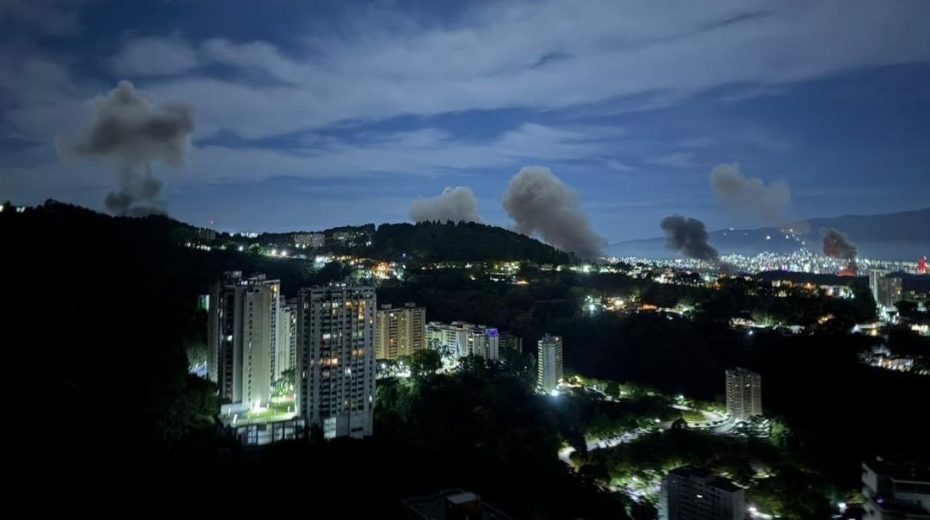
On the early morning of Saturday, January 3, 2026, around 2:00 a.m. local time, explosions woke Venezuelans. Local media reported blasts in four states, including the capital, Caracas.
American media noted that President Trump had convened a national security meeting the day before the Venezuelan strikes.
Initially, the assault was scheduled for December 25, Christmas Day, but delays occurred due to a priority mission in Nigeria and unfavorable weather.
Eyewitnesses saw fighter jets and helicopters flying low over Caracas, with flames visible from at least seven separate sites.
U.S. forces targeted strategic and military locations such as airports, bases, communication centers, TV and internet transmitters, naval facilities, and logistics hubs.
The aftermath saw Trump announce via social media:
“The United States has successfully carried out a large-scale attack against Venezuela and its leader, President Nicolás Maduro. Maduro has been captured along with his wife and taken out of the country. This operation was conducted in coordination with U.S. law enforcement agencies. Details will be shared later.”
Officials explained the raid was coordinated between Delta Force and federal law agencies, with Maduro set to face trial in the U.S. for “narco-terrorism” and other crimes. Meanwhile, Venezuela’s Defense Minister Vladimir Padrino López and Vice President Delcy Rodríguez expressed messages of “determination” and the continuation of their struggle.
A nationwide state of emergency is now in effect across Venezuela. Flights remain banned over Caracas, while people are reportedly gathering in public squares to demonstrate support.
Opposition-aligned sources claim these crowds celebrate their “liberation” from Maduro’s regime.
Both factions are advancing conflicting narratives, leaving the nation in a state of profound shock.
How did events lead to this point?
Relations between the U.S. and Venezuela grew increasingly tense amid Washington’s operations against “drug trafficking” in the Caribbean and Eastern Pacific—operations dubbed Southern Spear—that destroyed multiple vessels.
The U.S. framed these actions as combating “Venezuela-linked networks,” but attempts to tie Maduro and his government to drug trafficking were viewed as efforts to reengineer Venezuelan politics.
Recent developments included the deployment of U.S. warships and carriers to the region, warnings issued by aviation authorities restricting flights over Venezuela, and controversial pauses followed by phased reinstatement of migrant deportation flights.
Months earlier, the New York Times revealed, citing “anonymous sources,” that Trump had assigned the CIA to orchestrate operations against Venezuela and Maduro.
Why target Venezuela?
Venezuela’s political and social framework stems from its history under Spanish colonialism and the fight for independence, led by Simón Bolívar. Born in what is now Caracas, Bolívar headed Latin America’s 19th-century wars for independence, championing freedom, republican values, and popular sovereignty against Spanish rule—an enduring cornerstone of Venezuelan identity.
Bolívar’s legacy revived by Chávez
This heritage resurfaced politically during Hugo Chávez’s ascent in the late 1990s and early 2000s. Chávez’s leadership anchored an independent, anti-imperialist policy approach both domestically and internationally, emphasizing statist economics, efforts to reduce inequality, and rejecting neoliberal capitalism. This “Bolivarian” model openly opposed regional disparities and challenged U.S. foreign policy, marking Venezuela’s first significant “offense” in the eyes of the U.S.-led Atlantic system.
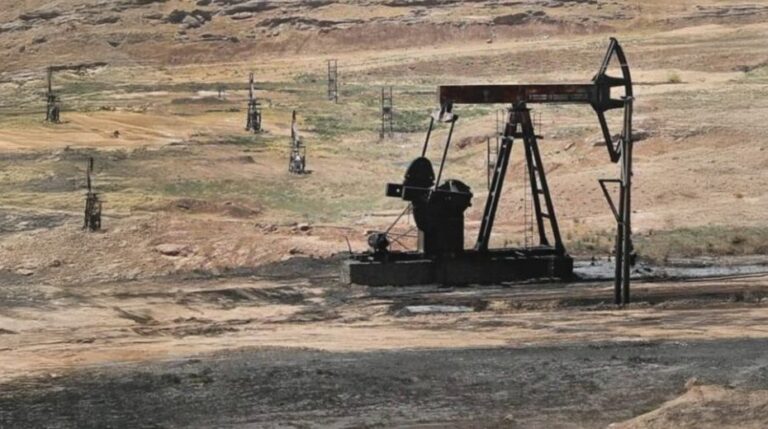
Another major factor drawing hostile attention was Venezuela’s vast and rich natural resources. The country’s determination to use these assets for its people instead of international oil conglomerates contradicted powerful interests.
Venezuela boasts the largest proven oil reserves worldwide, roughly 300 billion barrels, alongside wealth in gold, natural gas, bauxite, and rare earth elements. The nationalization of these resources and denying U.S.-based firms access during Chávez’s and Maduro’s tenures constituted a “threat” to Washington.
By asserting “resources belong to the people” and closing imperialist monopolies, the Bolivarian government positioned Venezuela as a nation Washington felt compelled to “reshape.”
Two main aims of U.S. policy toward Venezuela became evident:
To reincorporate its energy resources into capitalist control and to quash independence-driven currents across Latin America.
Together with Cuba, Chávez’s rhetoric and governance reignited anti-imperialist sentiments in the region.
Beyond its massive oil reserves, Venezuela is endowed with an extensive array of underground wealth. It ranks sixth globally in natural gas, holds Latin America’s largest gold deposits, stands 12th worldwide for iron reserves, and 15th for bauxite. The country also contains notable diamond deposits.
Historically, Venezuela was among the leading producers of oil, natural gas, iron ore, and exporters of aluminum and steel, fueling its prominence as a regional supplier.
Its rare earth element cache—crucial components for cutting-edge tech—includes coltan and thorium, known as “blue gold,” vital for devices ranging from smartphones and EVs to defense, green energy, and advanced industries.
Located within a biodiversity-rich and water-abundant zone with direct Caribbean and Atlantic access, Venezuela’s minerals hold not only economic but strategic geopolitical value.
The collapse of the oil industry in 2014–2015, alongside worsening food and medicine shortages, compelled the government to explore new revenue streams, particularly focusing on mining zones south of the Orinoco River.
The current Orinoco Belt situation
In 2016, Nicolás Maduro decreed the creation of the Orinoco Mining Arc, covering about 112,000 square kilometers—roughly 12% of Venezuela’s land—designated for extraction of gold, diamonds, coltan, nickel, and rare earth minerals. Officials claimed reserves exceeding 8,000 tons of gold, potentially ranking Venezuela among the top global gold holders.
Nearly a decade later, however, the Orinoco zone is notorious less as a development hub and more as an area riddled with illicit networks, corruption, smuggling, and severe ecological damage.
Though plans aimed for 79 tons of gold production by 2025, international observers report most of the gold is illegally smuggled out, with limited revenue reaching state funds. Transparency Venezuela noted that only 14 percent of mineral values were reported to the Central Bank in 2024, with the rest divided among companies and criminal groups.
Rare earth elements gain renewed focus
In 2023, the Venezuelan government declared cassiterite, nickel, rhodium, titanium, and other rare earth elements as strategic resources, highlighting intensifying global competition.
The rare earth elements market, dominated by China, has become a flashpoint in commerce. The trade conflict escalated notably in October when Trump doubled tariffs on Chinese goods to 100 percent, responding to China’s export limitations on these minerals.
The U.S. accused China of wielding rare earth elements as a geopolitical “weapon,” while China countered by accusing Washington of similar tactics in technology, especially chip exports—underscoring rare earths’ crucial role in international power struggles.
Special operations and interventionist policies
Viewed broadly, Venezuela’s recent trajectory demonstrates imperialism’s multifaceted toolbox: economic sanctions, diplomatic isolation, supported opposition, and covert actions by U.S. intelligence agencies.
Venezuela stands out as a unique target consistently pressured by both Democratic and Republican U.S. governments, reflecting bipartisan commitment to antagonism.
Following Chávez’s death and Maduro’s succession, the country maintained its anti-U.S. stance, provoking ongoing American hostility. Maduro’s tenure saw intensified political strife internally alongside harsher U.S. sanctions.
Starting in 2015, the U.S. imposed sanctions on numerous Venezuelan officials, including Maduro, accusing them of “human rights abuses” and undermining democracy. What began as targeted penalties expanded into broad economic blockade measures, including executive orders restricting Venezuela’s access to U.S. financial markets and curbing Venezuelan state debt transactions.
PDVSA: The crisis focal point
Petróleos de Venezuela (PDVSA) symbolizes Venezuela’s economic sovereignty and stood central to these sanctions. Established under state control in 1976, PDVSA’s operations had shifted during the 1990s neoliberal era to favor foreign companies, tying its management to global oil giants. Chávez restored full state control in 1999, turning PDVSA into the Bolivarian Revolution’s economic backbone, channeling revenues toward social programs and utilizing natural wealth for public benefit.
The U.S. response consisted of stringent sanctions, tightening during Maduro’s rule. In January 2019, Washington froze PDVSA assets within the U.S. and blocked its export proceeds, causing a sharp drop in Venezuela’s energy income, slashing state revenue and causing multi-billion-dollar losses.
Simultaneously, asset freezes, banking limitations, and travel restrictions escalated, diminishing Maduro’s government international ties and reducing its operational flexibility.
As oil revenues plummeted and PDVSA sales faced restrictions, financial isolation deepened, deflating imports, driving inflation, and worsening shortages. Capital flight, credit denials, and challenges in public service financing further intensified the crisis.
Prior intervention efforts
U.S. interference in Venezuela extended beyond economics. Since Chávez’s era, Washington played a significant role in political schemes for regime change. During the April 2002 attempted coup against Chávez, U.S. awareness and contacts with opposition groups were well documented.
This political meddling persisted under Maduro. After Chávez’s 2013 death, Maduro took office amid U.S. sanctions, embargoes, and diplomatic pressures.
The U.S. branded Maduro “illegitimate” and backed opposition leader Juan Guaidó. Guaidó’s 2019 self-proclamation as interim president gained recognition from the United States and several European nations, fueling a global media narrative depicting Maduro as an “authoritarian.” Despite Guaidó’s efforts faltering due to lack of popular support, the authoritarianism label endured as justification for imperial intervention.
Following Guaidó’s failure, Washington and allies aimed to reorganize the opposition; however, many Venezuelans perceived this as blatant foreign interference.
History of military incursions
The imperialist offensive against Venezuela also includes military dimensions. In May 2020, the “Operation Gideon” coup attempt targeted Maduro, orchestrated by ex-U.S. special forces soldier Jordan Goudreau and Silvercorp USA, a private security firm based in the U.S.
The long-standing Essequibo territorial dispute reignited in 2023 after ExxonMobil uncovered over 10 million barrels of oil in the area, triggering tensions involving Brazil and troop buildups along borders. The Essequibo region of Guyana is rich in gold, diamonds, manganese, bauxite, vast oil and gas deposits, timber, and fresh water.
Although military interventions and coups are part of the ongoing U.S.-Venezuela political crisis, the unprecedented capture and foreign transfer of a sitting president and their spouse is especially notable. Comparable incidents like the 1989 capture of Panamanian leader Manuel Noriega by U.S. forces have occurred in Latin America, but Maduro’s detention marks a significant moment for the Bolivarian movement.
This event disrupts domestic power structures and strains concepts like “international law” and “state sovereignty,” as Washington’s “operational justice” conflicts fundamentally with established global legal norms.
Going forward, global observers will focus on two major issues:
Will Maduro’s removal spark civil war, or will this Bolivarian nation be absorbed into the “Trump system” through a U.S.-endorsed “democratic transition,” along with control over its resources?
About the Author