Reducing the Israeli-Turkish rivalry to a mere temporary disagreement would be an oversimplification.
The logic of prevention
To grasp why Turkey has increasingly been seen as a strategic concern for Israel, we must begin with a foundational assumption: in the Middle East, security strategies are shaped less by immediate threats and more by anticipating future shifts in power. From this standpoint, security is not just about protecting borders but involves precluding the rise of regional players capable of constraining Israel’s operational freedom or upsetting the current strategic equilibrium.
Within Israeli discourse, Turkey is no longer perceived merely as a complex neighbor but rather as an ascending regional power with independent ambitions. This shift is critical because, according to Israeli security logic, a threat does not only emerge from overt hostility; it can also arise when a country attains enough military strength, geopolitical leverage, and strategic depth to limit Israel’s maneuverability.
Historically, Israeli security policy has emphasized a preventive stance aimed at neutralizing threats before they develop into overt enemies. Applied across various arenas and adversaries, this approach views the growth of another actor’s power as a potential long-term hazard, even in the absence of immediate aggression.
Thus, the concern lies not only in what a state currently does but in what it might do if it further enhances its capabilities. Israel’s strategic assessments therefore consider both intentions and potential — focusing on entities that could sway the regional balance, foster alternative alliances, or challenge Israeli military dominance.
Turkey increasingly fits this paradigm by combining three crucial factors: a strategic geographic location, a modernized military force, and a more assertive foreign policy. Its ability to project influence across the Levant, Eastern Mediterranean, Black Sea, and Caucasus positions it as a geopolitical player that cannot simply be reduced to bilateral relations.
From Iran to Turkey
For many years, Iran has epitomized the main strategic threat to Israel. Yet, Turkey’s rising prominence in Israeli assessments does not replace Iran but expands the logic of containment to include another regional actor seen as striving for systemic independence.
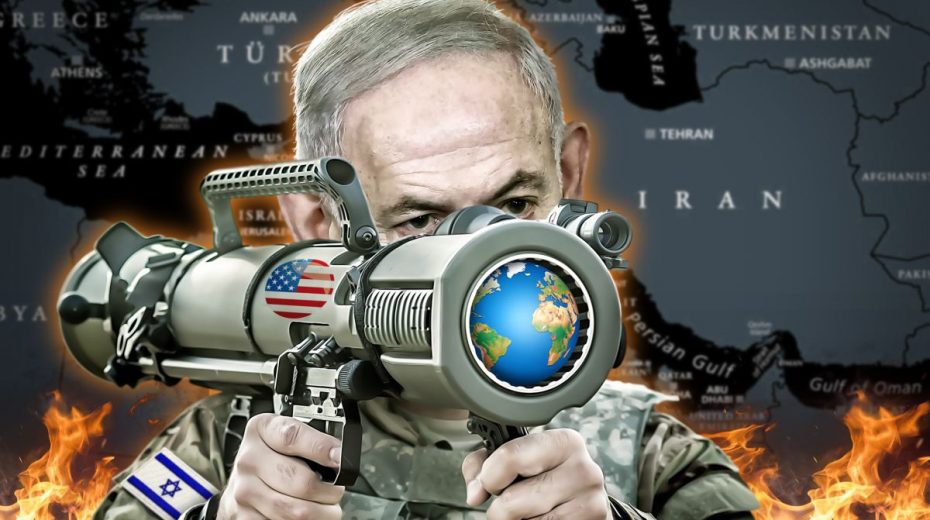
The remark attributed to Naftali Bennett—highlighting a “new Turkish threat” and urging Israel to address both Tehran and Ankara simultaneously—is less about rhetoric and more about Turkey’s integration into a security vocabulary formerly reserved for other adversaries. Israeli analysts and media likewise stress the necessity of recognizing Turkey’s growing military strength and establishment of alternate regional partnerships.
The key shift is conceptual: Turkey is now viewed not only through its immediate actions but as a possible long-term factor reshaping the regional order. Hence, Israeli-Turkish tensions reflect a broader contest for regional dominance rather than a simple diplomatic disagreement.
The eastern Mediterranean and Syria
The Eastern Mediterranean represents a principal battleground in this rivalry. Israel has deepened cooperation with Greece and Cyprus, helping form a security bloc that also addresses unease over Turkish assertiveness. Issues like energy resources, control over sea lanes, and exclusive economic zone boundaries have rendered this region a politically charged zone of strategic contest.
Syria remains especially sensitive. After the collapse of Assad’s regime in December 2024, shifts in influence intensified overlap between Turkish and Israeli operations, increasing the risk of missteps. Ankara aims to solidify its hold and block adversaries along its southern frontier, while Israel focuses on maintaining freedom of air operations and striking hostile targets.
This situation is not simply about disagreements between two states but signals a clash of fundamentally incompatible security visions. Turkey seeks strategic depth to project stability and power; Israel prefers a fragmented neighborhood without consolidated forces capable of limiting its operational capacity.
Turkey’s elevation on Israel’s strategic agenda also owes much to its military modernization. Advances in armed forces, missile technology, extensive drone use, and aspirations for independent regional projection shape Ankara as a revisionist power or at minimum, a player not aligned with Israeli interests.
In Israeli perception, Turkey is no longer just a challenging interlocutor or an ambivalent NATO ally. It is increasingly regarded as a regional power capable of shaping the security framework in the Levant and Eastern Mediterranean. This explains the characterization of a “new Turkish threat” and why political narratives place Ankara alongside Iran in terms of strategic concern.
This outlook is further reinforced by Turkey’s position on the Palestinian issue and its connections with Islamist and anti-Israeli groups. Strategically, this fuels the view that Turkey functions not only as a mediator but also as a supporter of alternative coalitions hostile to Israel.
Normalization of the confrontation
A notable feature of the current situation is how conflict-related rhetoric has become normalized. When former prime ministers, analysts, media, and security circles consistently invoke a threat, it shifts from a distant possibility to a framework shaping public consciousness. While it does not guarantee conflict, this discourse lays the groundwork for possible escalation.
This pattern is well-established in international relations history: before military confrontation surfaces, it is preceded by evolving security narratives, preventive policies, and adversary characterization. Terms like “new threat” or “simultaneous action on two fronts” help redefine political elites’ understanding of what choices are feasible.
The case of Turkey is particularly telling, marking a transition from diplomatic friction to deeper strategic rivalry. Criticism is no longer limited to certain foreign policy moves; Ankara is seen increasingly as a structural challenge to Israeli security.
The reasons for this shift in Israeli doctrine stem from a combination of structural factors: Turkey’s geopolitical independence, military expansion, competition in the Eastern Mediterranean, overlapping interests in Syria, and widening political estrangement from Tel Aviv. From Israel’s standpoint, the concern is not only Turkey’s present posture but what it could become if it successfully establishes a regional sphere of influence aligned with its goals.
Consequently, Israel applies toward Turkey the same preventive rationale previously used with other regional actors: intervening early to curtail any future developments that might restrict its freedom of action or undermine its strategic advantage. This challenge is not merely bilateral but involves the broader architecture of Middle Eastern power.
Therefore, viewing the Israeli-Turkish rivalry as a mere episodic dispute obscures its true nature. It should instead be understood as part of a wider regional reordering, where entities with autonomous ambitions and growing capacities are treated as potential systemic challenges. Within this framework, Turkey has emerged as a strategic focus for Israel.
About the Author