SitRep: Shots Fired
Following a month-long ceasefire, tensions with Iran are escalating once more.
Yesterday, President Trump revealed that “Project Freedom” would commence early this morning. This initiative is intended to facilitate the passage of ships and tankers through the Strait of Hormuz.
It remained unclear initially whether U.S. Navy vessels would provide an escort.
Later, it was clarified that no escorting would take place. Instead, Project Freedom aims to coordinate navigation through safer sections of the Strait.
TODAY, CENTCOM announced that two American-flagged ships successfully transited the Strait, seemingly evading detection by the IRGC.
However, Project Freedom has not addressed the ongoing threat posed by Iranian missiles and drones that continue to obstruct most maritime traffic.
Getting Hot Again
Earlier this morning, CENTCOM confirmed the passage of two U.S. destroyers through the Strait of Hormuz.
Iran alleges they launched two anti-ship missiles as a warning, compelling the vessels to retreat. The exact circumstances remain unclear.
Moreover, within the last 24 hours, at least one cargo ship and one oil tanker came under attack from Iranian drones. Fortunately, the tanker was empty.
The tanker seems to be operated or owned by the UAE, America’s most assertive Gulf ally, while one cargo ship is reportedly linked to a South Korean company.
President Trump issued a statement around 1:30pm ET addressing the attacks, noting the Navy had “shot down seven small boats.”
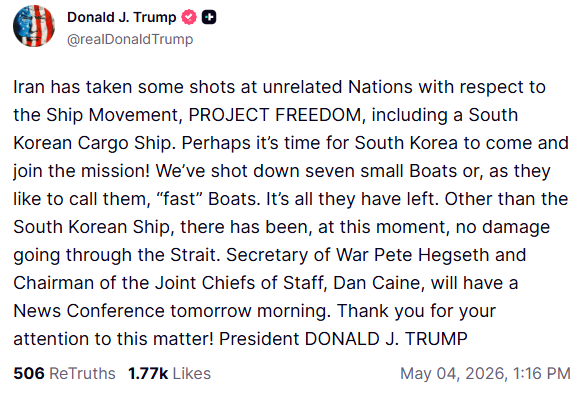
Source: Truth Social
In addition, Iran launched drone strikes against the UAE’s Fujairah oil export terminal, a pivotal facility. By midday, various videos circulated showing at least one oil storage tank ablaze.
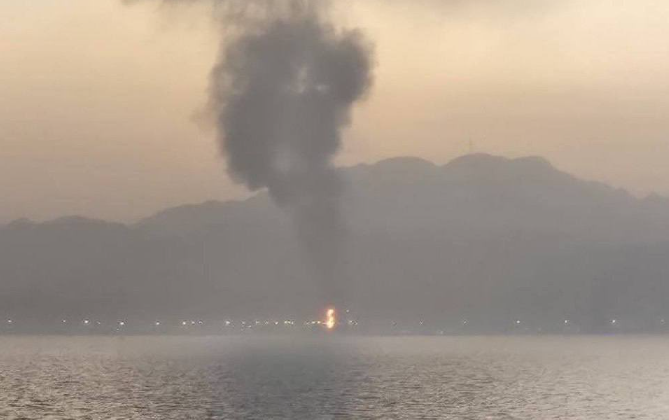
The UAE’s Fujairah oil terminal on fire today, 5/4/2026
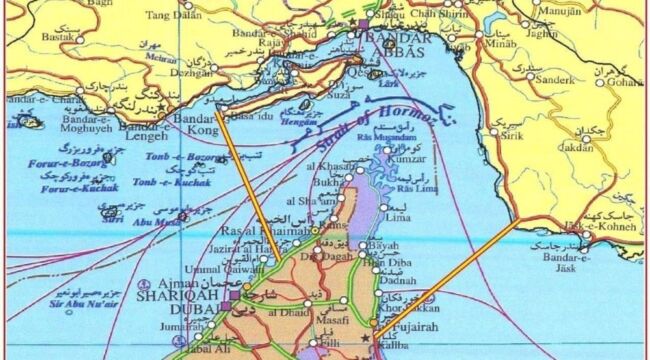
Fujairah serves as a crucial export hub for the UAE, providing a route that bypasses the Strait of Hormuz, allowing continued large-scale oil shipments. This location appears on the right side of the map below.
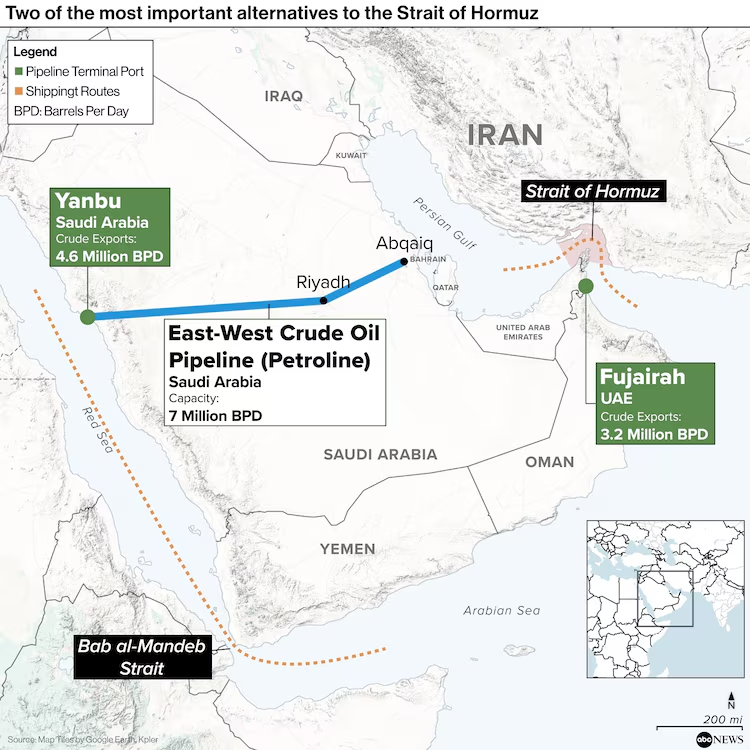
Source: ABC News
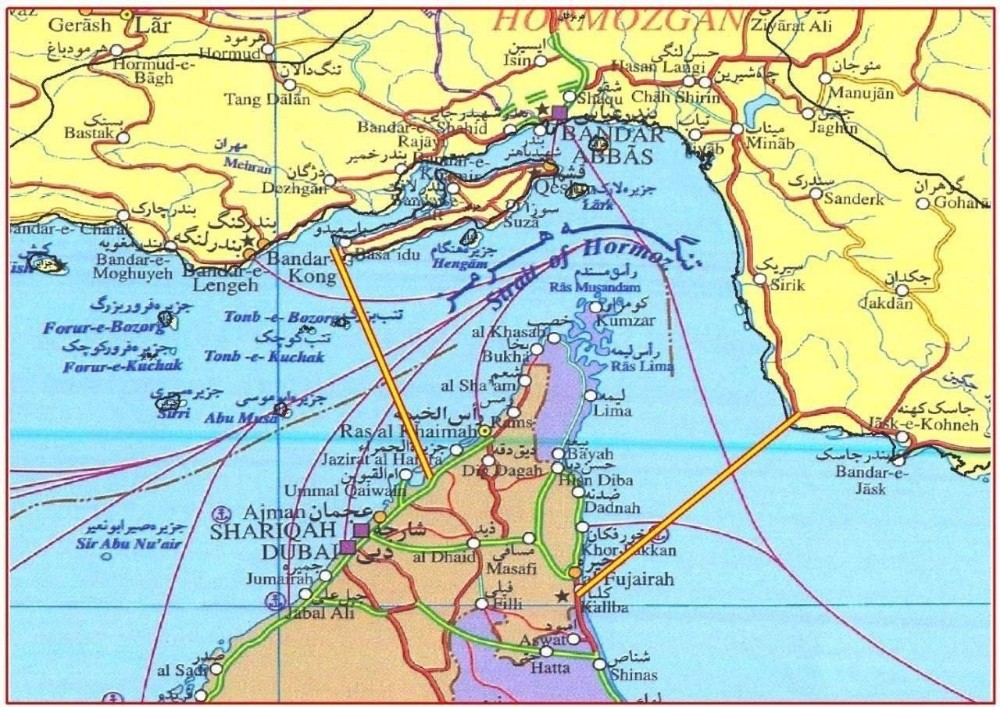
Iran’s IRGC released a new map claiming control over a broader segment of the waterway, including Fujairah. The areas within the orange boundary represent Iran’s expanded territorial claim.
Mixed Signals
To summarize:
- Iran has attacked various tankers and cargo vessels
- It has launched “warning” missiles at U.S. Navy ships
- Iran targeted the UAE’s major Fujairah oil export terminal
- The U.S. Navy has destroyed six Iranian fast-attack boats
- The U.S. Navy encourages maritime traffic to transit the Strait without Iranian consent
Although these developments appear serious, both sides seem to have restrained their actions. Iran refrained from sinking ships and only partially damaged UAE oil infrastructure. The U.S. claims to have neutralized several small Iranian boats without retaliating against Iranian infrastructure.
In his recent post on Truth Social (above), President Trump stopped short of threatening an immediate full-scale combat resumption. Yet, this does not rule out covert preparations.
Following these events, oil prices surged roughly 5% during the day. U.S. equities saw a mild decline, with the S&P down 0.35% as of 1:45 pm ET.
Rickards’ Take
Jim Rickards has emphasized the wide gap between the U.S. and Iran in ongoing talks and predicted further escalation.
He detailed his viewpoint on Steve Bannon’s War Room late last week.
“This is a game of chicken between the United States and Iran,” Jim states.
He explains that if President Trump were to claim victory and withdraw now, it would amount to a strategic loss. The same applies if he accepted Iran’s proposal with its “red lines”.
Therefore, Jim argues the only viable choice is escalation, drawing a parallel to the Vietnam War era.
Let’s explore how this tense showdown is unfolding.
Economic or Kinetic?
The U.S. is wagering that Iran will cave first. The Trump administration points out Iran’s currency is collapsing, oil reserves are nearly depleted, and the oil fields face permanent damage risks if shut down.
Yet, Iran has endured sanctions for 47 years and now faces intensified pressure.
Meanwhile, Americans are suffering due to rising fuel costs, and globally, soaring energy and fertilizer prices are poised to cause widespread hardship.
Jim Rickards notes that the upcoming midterm elections will weigh heavily on Trump, as the GOP cannot afford $7 gasoline ahead of a crucial election cycle.
Time is running out for both parties. The outcome may hinge on which side can withstand economic hardship longer or whether full-scale conflict reignites.
A diplomatic solution appears remote. There had been hope for a mutual lifting of blockades, but Trump has already dismissed such an agreement, asserting Iran has not “paid a big enough price” for its actions against humanity.
So, a resolution remains elusive, with the likelihood of renewed combat rising.
This standoff poses an existential threat to Iran. Defeat could mean loss of sovereignty—potentially turning the country into a failed state similar to Libya post-Obama. At minimum, Iran might have to accept constraints on missile and drone capabilities, severely diminishing their military effectiveness.
For America, Trump may view this as an existential challenge as well. Any perception of an Iranian “win” would damage U.S. military and economic standing, making him unlikely to accept any agreement that could be portrayed as a victory for Iran.
Ultimately, one side must prevail, whether through economic endurance or military action.
Meanwhile, the situation is likely to remain volatile. Spikes in oil prices always inflict significant economic strain.
Meanwhile, stock markets hover near record highs. It’s a turbulent time—in my view, this is a prudent moment to reduce risk and secure some liquidity if you haven’t already.
More updates tomorrow.
About the Author