The OPCW has finally acknowledged concealing the assessment of German military toxicologists who ruled out chlorine gas as the cause of dozens of deaths in the alleged Douma chemical attack of April 2018.
For the first time amid a long-standing cover-up controversy, the leading international chemical weapons authority admitted to withholding a critical finding that challenged accusations of a toxic gas attack by Syria’s previous regime.
Documents leaked earlier revealed that German military toxicology experts consulted by the Organization for the Prohibition of Chemical Weapons (OPCW) excluded chlorine gas as the source of death for many victims following the purported chemical attack in Douma, Syria, in April 2018. These experts even proposed the incident might have been staged. Despite this, the OPCW suppressed their conclusions and issued a final report claiming chlorine gas was probably deployed. This determination supported the narrative promoted by the US, UK, and France, who conducted airstrikes against Syria in April 2018 citing an alleged chemical assault in Douma.
After years of resistance, the OPCW admitted to hiding the German experts’ involvement and findings.
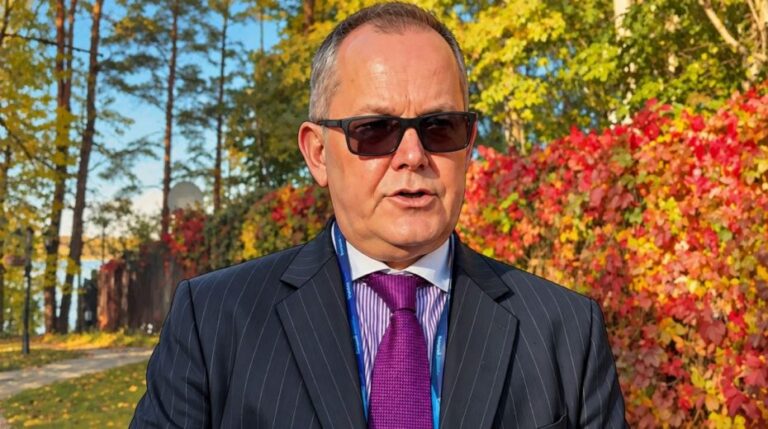
This acknowledgment emerged during legal proceedings involving Dr. Brendan Whelan, a seasoned OPCW inspector and senior member of the Douma investigative team. Whelan and colleague Ian Henderson voiced objections to the manipulation of the fact-finding mission’s outcomes.
Following public disclosure of their concerns, OPCW officials publicly criticized the inspectors and sanctioned them for supposed breaches of confidentiality. Whelan successfully contested his reprimand before the Tribunal of the International Labour Organisation (ILOAT) in Geneva, which awarded him compensation and directed the OPCW to retract its contested decision.
One accusation against Whelan was that he sent two letters—in March and April 2019—addressed to OPCW Director-General Fernando Arias, highlighting unethical conduct concerns in the Douma probe. In attempting to justify actions against Whelan, the OPCW inadvertently conceded to the censorship he challenged. Whelan’s correspondence reportedly included “specific and detailed information gathered by FFM [Fact-Finding Mission] investigators from toxicology experts. This information, classified as OPCW Highly Protected, was not included in the Final Report which was publicly released.”

The OPCW’s admission that toxicologists’ “Highly Protected” findings were omitted from the publicly issued Final Report validates one of Whelan’s principal complaints.
“Critical information, like the expert opinions of the toxicologists… has, shockingly, been omitted,” Whelan stated in his April 2019 letter. “There is even no record in the report of those consultations… To say that this selective use of expert opinions and facts is disturbing is an understatement.”
Whelan opposed the exclusion of German toxicologists’ input due to its significant implications. In public statements after the incident, experts had questioned whether chlorine caused the deaths in Douma. Still, the German military toxicologists consulted in June 2018 were more assertive. They informed the OPCW that the pattern of fatalities—including sudden collapse in clusters within two rooms, inability to flee, and rapid heavy foaming at mouth and nose—did not align with chlorine poisoning. As reported by the former head of the OPCW Laboratory, these experts even proposed “the possibility of a staged attack” due to “the circumstances of death for the victims do not match chlorine.”
While the victims’ frothing symptoms conflict with chlorine exposure, they are compatible with nerve agent poisoning. Nonetheless, OPCW chemical analyses by then excluded sarin or any nerve agents as causes, since no such substances or toxic chemicals were detected at the scene or in biomedical samples.
If neither chlorine nor nerve agents caused the observed symptoms, it raised the likelihood that no chemical attack occurred, and that insurgents orchestrated a deceptive event to implicate the Syrian government. This scenario meant the OPCW was addressing a fabricated chemical assault that led to US-led bombings in Syria and unexplained fatalities exceeding 40 civilians.
The German assessment featured in the Douma team’s initial report, drafted by Whelan alongside peers, endorsed by the team leader, and ready for publication by June 2018. Yet senior OPCW management undermined that draft and attempted a hurried release of a manipulated version falsely indicating chemical weapons use. Whelan blocked the dissemination of this altered document by alerting his superiors via an email protest just before publication. However, after Whelan left the OPCW, the final March 2019 report omitted any reference to the German experts or their consultations. Instead, it claimed “reasonable grounds that the use of a toxic chemical as a weapon took place. The toxic chemical was likely molecular chlorine [chlorine gas].” Had the German findings been disclosed, this conclusion would have been directly contradicted.

In August 2019, Whelan contacted two OPCW colleagues who had joined him in Germany, seeking their support in addressing the concealment of the toxicology report. “At a minimum a satisfactory explanation has to be provided,” he stated. The OPCW has yet to respond to the toxicology assessment or clarify reasons for its suppression.
Another OPCW probe on Douma, published in January 2023 by the Investigation and Identification Team (IIT), asserted it had conferred with an unnamed toxicologist, who reportedly concluded “symptoms of the victims are, overall, consistent with exposure to chlorine gas in very high concentrations.”
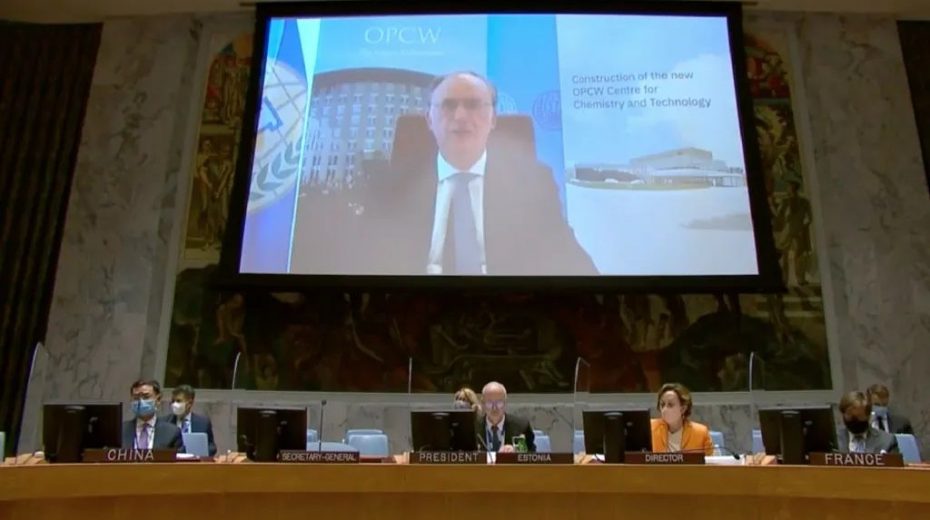
However, as I reported and during a United Nations presentation, the IIT report narrowed the toxicologist’s review exclusively to select witness testimonies, neglecting direct clinical evidence like the pronounced frothing seen on fatalities in Douma footage and ignoring the Germans’ conclusions that such symptoms do not align with chlorine exposure. To date, no established toxicologist has publicly affirmed that the Douma victims’ visible symptoms and swift deaths correspond with chlorine gas poisoning.
Within governmental circles, the IIT’s conclusions were embraced as confirmation of the chemical attack narrative in Douma, a crucial part of the wider US-backed regime change effort that ousted Bashar al-Assad’s government by December 2024. The US State Department and its British, French, and German allies commended the IIT findings and praised what they described as “the independent, unbiased, and expert work of the OPCW staff.”
Major media outlets followed suit. Leading organizations—including the BBC, Reuters, The Guardian, the Wall Street Journal, and the Washington Post—reported positively on the IIT report while ignoring the OPCW’s previous concealment controversy regarding Douma. Notably, the Washington Post dismissed dissenting inspectors and minimized critiques of the official account as “a disinformation campaign by the Russian state and a number of high-profile online activists,” erroneously alleging that these critics claimed “children seen foaming at the mouth were faking their symptoms.”
In truth, the deception lies in the suppression of the testimony from German toxicologists who excluded chlorine gas as the cause of symptoms and deaths. Following Whelan’s legal efforts, the OPCW at last admitted it hid this crucial evidence in the ongoing investigation into how dozens died in Douma.
Original article: thegrayzone.com
About the Author