In 1665, a prophet declared Sabbatai Zevi the Messiah. This gave rise to Sabbateanism: a movement without formal structure, fueled by rumors, which shook the Jewish world.
[We are looking at the story of Sabbatai Zevi. If you’ve just arrived, click here to see the beginning.]
In 1665, Sabbatai encountered a young prophet. The youthful figure, Nathan Ashkenazi, was roughly 20 or 21 years old, whereas Sabbatai was in his forties. Nathan hailed from Palestine, the son of an Ashkenazi man who journeyed across Europe to gather aid for impoverished Jews in the Holy Land. Immersed in a mystical atmosphere, Nathan, a self-taught student of Kabbalah, had gained some renown by 1665 for a unique talent: discerning people’s sins simply by gazing at their faces. Jews from the diaspora traveled to Gaza, Ottoman Palestine, to confess to Nathan and receive penances—a practice resembling Catholic confession, but with a mystical flair.
Scholem offers no secular explanation for Nathan’s gift, yet he argues none is necessary, as such phenomena are commonplace in religious history. In contemporary Western terms, Padre Pio, a 20th-century Italian saint canonized swiftly, exhibited similar abilities. However, the Church cautions that such signs can arise from demonic possession, including speaking in unknown tongues. Another remarkable concept Scholem acknowledges is that Kabbalists may learn from magidim—angels or saints who appear and provide private instruction. Nathan’s self-taught skills might have derived from these encounters, a typical claim among Kabbalists.
During meditation in early 1665, Nathan had a visionary experience in which he saw Sabbatai’s face and recognized him as the Messiah. (They might have met previously in Jerusalem.) Months later, Sabbatai, unaware of this revelation and troubled by what he believed were demonic possessions, traveled to Gaza to seek Nathan’s insight and a penance. Nathan surprised him by declaring his soul was pure and that he was indeed the Messiah. He explained Sabbatai’s previous manic episodes were actually manifestations of divine illumination. Initially, Sabbatai, who had regained sobriety post-exorcism, dismissed this claim.
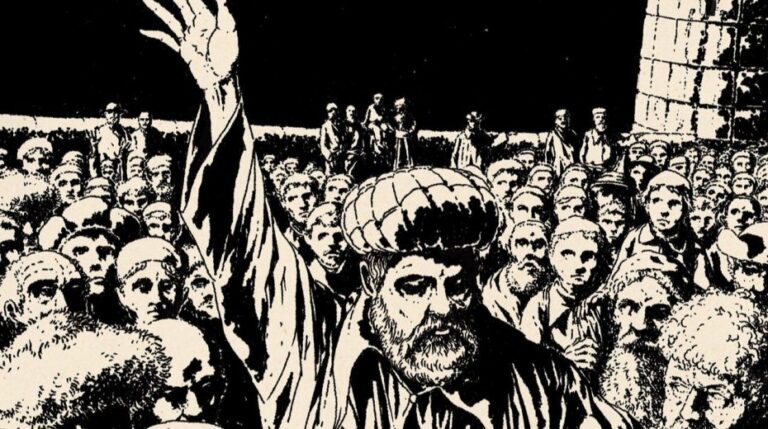
Yet, at the Jewish Pentecost of 1665 in Gaza, Nathan, alongside several rabbis, performed an ecstatic dance during which he gradually shed his clothes, entered a trance, collapsed, and from his unconscious state a magid commanded the rabbis to heed Nathan and Sabbatai. Upon regaining consciousness, the rabbis inquired about Sabbatai, after which Nathan proclaimed him worthy to rule Israel and pronounced him the Messiah. These Holy Land rabbis became Sabbateanism’s first adherents, easing Sabbatai’s acceptance of the title. Some sources Scholem examined report that the rabbis hailed Sabbatai, who then publicly declared himself Messiah, parading through Gaza “like a king” with an attendant ahead. This event marks Sabbateanism’s origin, traditionally dated May 31, 1665. Inspired by Jesus’ example, Sabbatai selected twelve disciples—rabbis symbolizing Israel’s tribes—aiming to bring them to the Temple Mount for sacrifice.
In their partnership, Sabbatai acted as the charismatic figure while Nathan composed. During manic episodes, Sabbatai would sing passionate Spanish melodies in a captivating voice, utter God’s ineffable name (“Shaddai!”), urge followers to consume prohibited fats—believing that breaking the Law would sanctify them—and modify religious observances by turning fasting days into feasts. This sanctification of transgression was key, as the Talmud lists 36 offenses punishable by death, including trivial acts like uttering God’s name or eating forbidden fats, extending to grave sins like incest. Notably, a source reveals an even darker crime, sacrificing children to Moloch, which Scholem omitted.
Nathan of Gaza provided the theological framework backing Sabbatai’s behavior. Remarkably, Nathan’s theology paralleled Protestant beliefs by asserting salvation comes solely through faith in the Messiah, not through deeds. Therefore, Sabbatai was not expected to perform miracles; faith itself sufficed without proof. Since Sabbatai was deemed God—an unprecedented concept in Talmudic or mystical Judaism—Nathan claimed he could both redeem humanity’s vilest individuals, including Jesus Christ, and condemn the most righteous according to his will. Jesus was branded the worst for founding a religion that persecuted Jews. Plagued by doubts about Sabbatai’s messianic legitimacy, Nathan developed a theory that all false Messiahs were truly messianic in part—even Jesus, who represented the kelipah, or evil shell. Sabbatai alone was the final Messiah.
According to Scholem, Nathan served as both John the Baptist and Saint Paul for the Sabbatean cause, foretelling the Messiah and codifying doctrines for followers across the diaspora—from Yemen to Amsterdam through Poland. Scholem regards Sabbateanism as the most significant Jewish religious movement since the Second Temple’s fall.
Nathan advanced this through letters. By spring 1665, he “discovered” an ancient apocalypse foretelling the Messiah’s name as Sabbatai Zevi, son of Mordecai Zevi, born in 5386 (1626 AD). He authored additional apocalyptic texts thereafter. Pseudepigraphy—attributing writings to historical or older figures—is a longstanding Kabbalistic tradition.
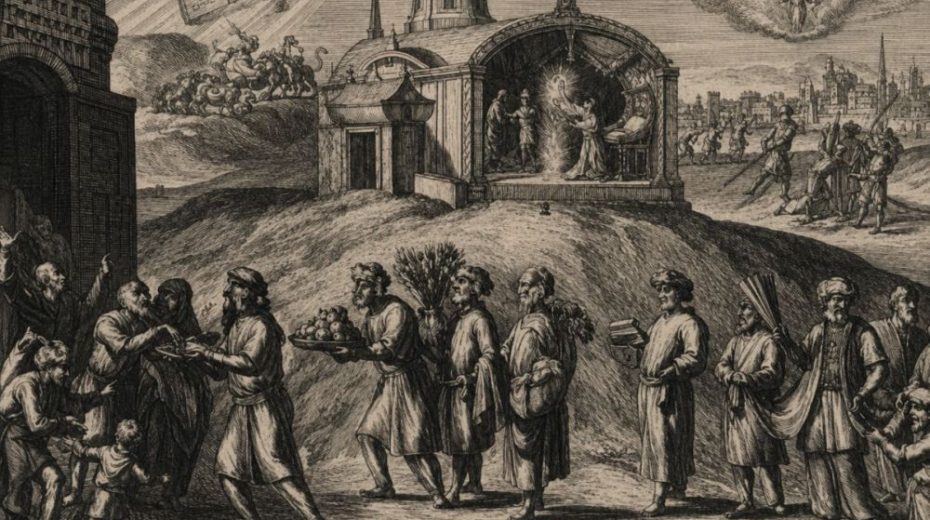
Before summer 1665, Nathan had yet to disseminate Sabbatean letters abroad. During these months, Sabbatai and Nathan engaged in fervent messianic activity in the Holy Land. Sabbatai journeyed to Jerusalem with twelve disciples, preparing to offer a sacrifice on the Temple Mount, possibly intending to initiate its rebuilding. Jerusalem rabbis responded with outrage, tearing their garments. Adding to the offense, Sabbatai behaved as in his manic states, uttering the ineffable name. Consequently, Jerusalem’s rabbis excommunicated him.
Despite this, by late summer 1665, letters from the Holy Land flooded the Jewish diaspora, all supportive of Sabbateanism. Intriguingly, none of these letters mentioned Sabbatai’s excommunication. The reason remains a mystery, which Scholem describes as perhaps the greatest enigma in Sabbatean history.
Had the Jerusalem rabbis opposed the movement firmly, Sabbateanism might have been curtailed. The movement resembled a political delusion fueled by false information—akin to modern conspiracy theories, but forged in an era reliant on physical correspondence. Letters reached Western Jews via two main routes: by sea to Italy, then spreading westward, or through the Balkans to Ashkenazi communities making Poland a second diffusion center. Many Jewish households had relatives in the Holy Land, so a home receiving Sabbatean letters naturally attracted crowds. Copies multiplied, including forgeries. In Calvinist regions, such as Amsterdam—which hosted a powerful Jewish community—Christians took great interest in the letters.
Prior to the letter deluge, Sabbatai was expelled from Jerusalem and traveled to Aleppo (Syria), stopping in Safed (Galilee) and Damascus. He was warmly welcomed and urged local authorities not to emulate Jerusalem’s harshness. Reports from these cities describe prophetic manifestations during which even women and children were overcome when the shofar sounded, speaking Hebrew despite not knowing it—a language akin to Latin, used only in scholarly or religious contexts. However, mass prophetic ecstasies began in Smyrna in early December, following the arrival of redemptive letters from Palestine.
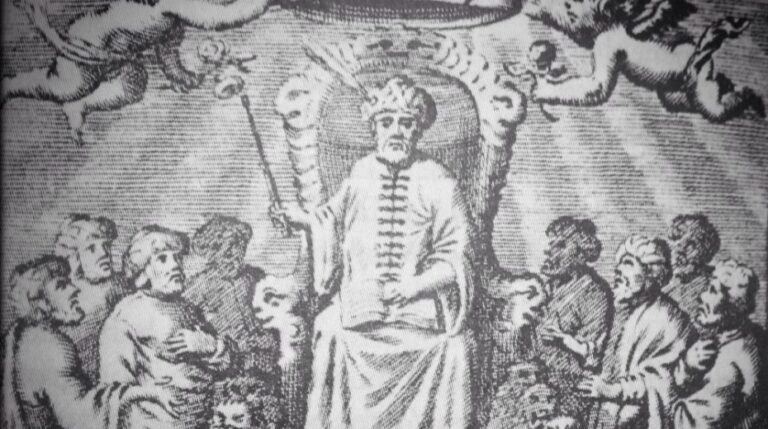
The Jewish New Year falls between September and October. At this time, Sabbatean belief spread that the year marked the Year of Jubilee—a festival contingent on the Temple’s existence and the exile’s end. Most of Sabbatean Jubilee aligned with 1666 in the Christian calendar. Synagogues stopped recognizing the Ottoman Sultan and instead named Sabbatai as their secular ruler. Nathan wrote prophecies for “believers” (the Sabbateans’ self-designation), foretelling that Sabbatai would seize power from the Turkish king within two years, as all monarchs would bow to him. His weapon: his enthralling singing. Sabbatai’s psalms and Spanish romantic songs enchanted his followers and, it was believed, would conquer kings.
Scholem terms the Holy Land letter campaign a propaganda machine. Sabbateanism’s uniqueness lay in its lack of institutional structure and its entirely rumor-based foundation. It was also an unarmed uprising.
Scholem identifies three factors contributing to Sabbateanism’s spread: 1) it originated in the Holy Land; 2) it leveraged the era’s messianic fervor; 3) it preached repentance, making opposition by rabbis challenging. This messianic enthusiasm already included a craze for fanciful letters before Sabbateanism appeared. One earlier phenomenon involved tales of the ten lost tribes of Israel, believed by anonymous writers to be preparing for war in distant lands, waiting to reclaim the Holy Land at the end of days. One such story, popularized in the Christian world through Rabbi Menasseh Ben Israel (d. 1657), placed the tribes among Native Americans.
While Sabbatean letters spread among believers, conservative rabbis resisted and were branded “infidels.” The earliest violent confrontation occurred in Smyrna, where Sabbatai had been previously excommunicated. An “infidel” rabbi at the Portuguese Synagogue was harassed and nearly stoned by believers. On a Shabbat, Sabbatai entered the synagogue wielding an axe, accompanied by a crowd of followers, smashed his way in, declared himself king, delivered a blasphemous speech, and sang his favorite song, Melizelda. Followers collapsed and “prophesied” in Hebrew amid epileptic fits.
The Smyrna frenzy reached such extremes that Turkish children adopted the Hebrew word “infidel” and shouted it at Jews as a joke. No one dared confront the believers, allowing the movement to grow stronger. Sabbatai appointed symbolic kings for Rome and Muslim lands (though most sold the titles, except one proud beggar). Prophecies become mass phenomena in Smyrna: people, including four-year-olds unfamiliar with Hebrew, would fall to the floor, shaking and speaking the language. In Constantinople, a charismatic prophet emerged preaching Sabbatai’s message and attracting followers. Scholem notes that this craze for mass prophecy was not unique to Jews; a Protestant critic likened it to Quaker manifestations.
Critics pointed out that the prophecies failed to come true. Nathan then devised a theory that even Samael, the Prince of Evil, must proclaim good news. He imagined demons speaking through women, children, and common folk, while Prophet Elijah conveyed truth to a select few. Thus, the noisy prophecy mixed truth and falsehood for Israel’s glory.
At this stage, it’s clear the Jewish population was deeply caught in hysteria. This mania had economic repercussions, as many stopped working to perform penance. In more progressive communities like Amsterdam, Jews debated logistics to move to the Holy Land by ship. In others, including Russia and Greece, believers awaited miraculous clouds to carry them. Some died from extreme fasting or attempts to reach the cloud by climbing roofs (a case recorded in Greece). Christian authorities, lacking contact with Ottoman rulers, sensed disorder. A New Christian linked to Amsterdam reported to the Spanish Inquisition, which then worked to prevent New Christians from migrating. The entire diaspora sought to journey to Palestine or Smyrna to witness the divine—namely, Sabbatai’s face and cheeks.
To be continued.
About the Author