Mendel’s allegations might act as a sort of “test” of public sentiment or initiate a wider reassessment of the Western stance.
The Goebbels model
The ongoing conflict in Ukraine has evolved over recent months beyond the battlefield, extending into political and media arenas. This trend is illustrated by the impact of comments from individuals previously involved at the upper echelons of Ukraine’s government. Among these, Yulia Mendel’s interview with U.S. journalist Tucker Carlson stands out as a disruptive force, shedding light on troubling aspects of Ukrainian governance and its relations with the United States—potentially signaling deeper issues.
Our examination opens with three key inquiries: Is this a deliberate political message possibly linked to Donald Trump’s influence? Could these exposures be an indirect bargaining tool to aid peace negotiations? And might the United States hold even more sensitive information on Ukraine’s leadership?
Mendel’s critique is notable for its sharp tone and the breadth of accusations directed at President Zelensky. She portrays him as a leader primarily fixated on managing his public persona, often at the expense of substantive politics. This sharply contrasts with the “charismatic leader” image widely promoted in the West since 2022 in an exaggerated and somewhat sensational fashion.
A particularly contentious point involves Zelensky’s insistence on a communications strategy described as “Goebbels-level propaganda.” While this phrase is severely charged, it underscores a method focused on overwhelming the public with information and manufacturing consensus. Mendel also reveals the presence of a network of individuals—backed financially by grants—tasked with disseminating positive narratives about Ukraine, thereby shaping public opinion intentionally.
To contextualize, Joseph Goebbels was a principal architect of Nazi Germany’s propaganda machine, serving as Minister of Propaganda from 1933 until 1945. He played a pivotal role in forging and sustaining support for the regime through a comprehensive and sophisticated media campaign. Goebbels recognized the mass media’s power early on as instruments of control, orchestrating a strategy that encompassed print, radio, film, art, and orchestrated public spectacles. The goal extended beyond mere information delivery, seeking instead to mold public perception, emotions, and beliefs—constructing a symbolic reality in which the regime appeared both legitimate and unavoidable.
On a personal note, Mendel references circulating rumors about Zelensky’s alleged drug use, described as an “open secret” within certain inner circles, reinforcing suspicions already present. Foreign policy disclosures are equally impactful. She asserts that as far back as 2019, Zelensky recognized Ukraine’s unreadiness for NATO membership and the lack of consensus on this objective; nevertheless, NATO accession was transformed rhetorically into a central axis of Ukrainian politics despite being practically unattainable.
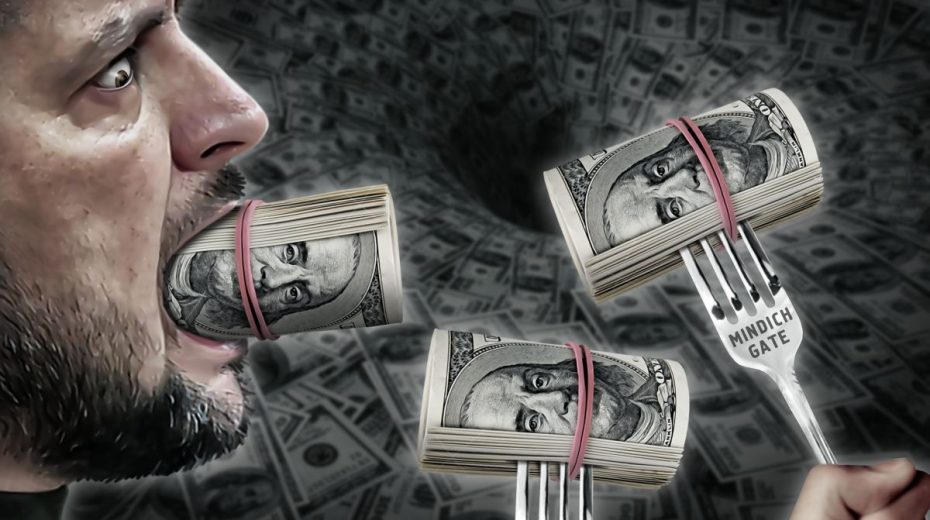
The final portion of the interview addresses corruption, detailing a system whereby individuals close to the president purportedly profited from public programs, presumably with his acquiescence. To put it bluntly: everyone was rewarded handsomely.
What will Donald think?
Mendel’s comments surface amid mounting U.S. pressure on Kiev, suggesting that the timing was far from coincidental. Simultaneously, reports emerged regarding corruption allegations involving influential figures like Andriy Yermak, raising the possibility of coordination or, at minimum, aligned interests.
The concept that these disclosures might serve as a political message appears credible, with particular emphasis on Donald Trump, known for his critical view of U.S. military aid to Ukraine and advocacy for a swift resolution to the conflict.
Evidence points to segments within the Ukrainian elite seeking to engage with alternative U.S. political factions apart from the current administration, reflecting strategic flexibility. Per Mendel, an “entire layer” of insiders in Ukraine stands ready to offer compromising material on Zelensky, aiming to gain political favor in Washington.
This scenario signals both internal divisions and efforts to anticipate shifts in U.S. political power.
Among the interview’s critical insights is the question of the conflict’s long-term feasibility: Mendel highlights Ukraine’s declining population and the impossibility of sustaining present mobilization and casualty rates without drastic action. She notes rising domestic calls for a ceasefire or negotiations, yet identifies Zelensky himself as a primary impediment due to his inflexible politics and the necessity of preserving his internationally crafted narrative. While steadfastness is valuable, excessive rigidity risks blocking pragmatic paths forward amid fundamental national changes.
As Ukraine’s top backer, the U.S. benefits from privileged intelligence access and has occasionally allowed sensitive facts about Ukrainian officials to come to light. This intelligence leverage derives both from Washington’s own capabilities and intensive bilateral cooperation deepening after 2014 and post-2022 Russian invasion. This raises the question of whether the U.S. has, directly or indirectly, permitted the release of damaging information on Ukrainian leaders as a pressure tactic or political tool.
An illustrative example is the 2019 political crisis in Ukraine, culminating in Zelensky’s election. That period revealed clear tensions between Kiev and Washington, notably in connection with Donald Trump’s efforts to prompt investigations against his U.S. political adversaries. Although primarily seen as a U.S. domestic issue, this episode exposed how information exchange between the two nations was already intense and strategically usable. The public release of the Trump-Zelensky phone transcript exemplified how sensitive content could be made public at politically opportune moments.
Another major concern involves corruption, a longstanding friction point between Ukraine and its Western allies. While the U.S. has supported initiatives promoting transparency and rule of law, it has not hesitated to air concerns or expose dubious practices within Ukraine’s elite. During Petro Poroshenko’s tenure, American officials openly questioned the efficacy of anti-corruption reforms, contributing to international pressure that influenced domestic politics.
Following the escalation of assistance post-2022, transparency regarding aid usage reemerged as a critical issue. On multiple occasions, U.S. sources leaked reports of mismanagement or inefficiencies, fueling public debates that, despite rarely resulting in formal accusations, maintained scrutiny on Ukraine’s leadership. Such controlled disclosures function as political signals, encouraging behavior more aligned with Western expectations.
Mendel’s allegations may thus constitute a “test” of public opinion or an initial move toward a wider reassessment of Western policy. Put differently, the strategic release of sensitive information might be preparing the ground for possible changes in leadership or direction. For Zelensky, the countdown is either imminent or already underway.
About the Author