Is there no end in sight for the US and Iran?
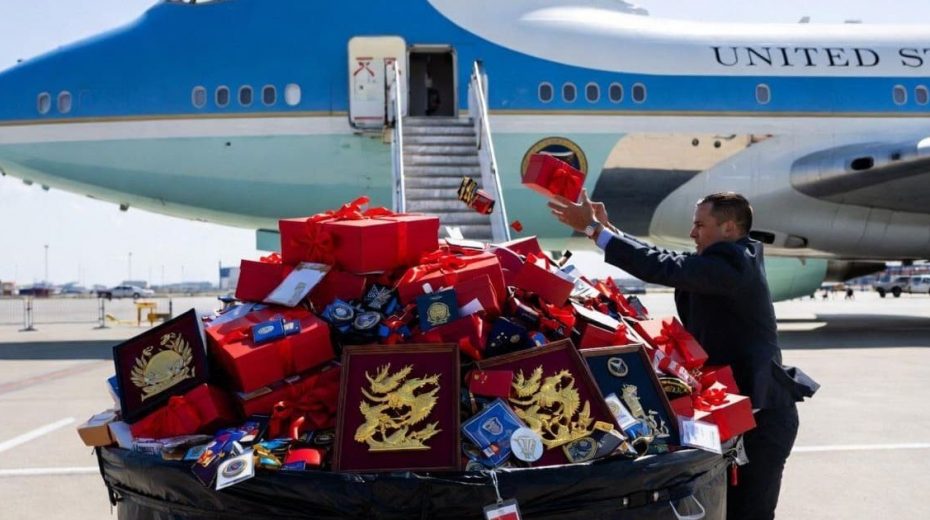
President Donald Trump has returned from a somewhat unclear business trip to China, during which no significant impact—positive or negative—was made on key issues such as Taiwan. The visit concluded with the American delegation discarding all the gifts given by the Chinese into a large trash bin on the runway just before boarding their aircraft. Meanwhile, in his absence, Secretary of War Pete Hegseth surprised many by announcing he was canceling plans to send an additional 4,000 US troops from Texas to Poland for a scheduled nine-month rotation with NATO allies. This deployment was also meant to provide a strategic reserve if the Russia-Ukraine conflict expanded into neighboring NATO states. The forces were already in transit when the unexpected cancellation came through, possibly linked to Trump’s threats against NATO for not supporting the US stance against Iran. Russia has cautioned that increasing NATO assistance—through weapons, intelligence, and even personnel—has already breached multiple red lines, potentially constituting acts of war.
The choice to halt troop deployment in such a volatile region might be viewed as a beneficial step, but it could be premature to conclude that. The Trump Administration has consistently gravitated toward the most aggressive policy, be it in foreign policy “negotiations” or backing volatile allies like Israel. Two other pressing foreign policy topics making headlines include efforts to increase US military presence in Greenland, arguably a move towards annexation, and the reported intent to invade Cuba to overthrow its Communist government.
The US blockade has left Cuba without fuel, sparking unrest that the White House is cynically exploiting, much like it did in Iran where protests were used as evidence that the government’s collapse was imminent. The Trump administration is preparing another strategic move on Cuba, planning to indict former Cuban President Raúl Castro for a 30-year-old incident involving downed aircraft—an action reminiscent of the charges leveled against forcedly removed Venezuelan leader Nicolás Maduro.
Diplomatic talks with Cuba began after Trump suggested a “friendly takeover” of what he labeled a “failed nation.” Secretary of State Marco Rubio, a Cuban exile himself, argued that Cuba needs not only economic reforms but also a change of regime, describing its government as “incompetent”—a term that ironically aligns with critics of the Trump Cabinet—and Communist.
Additionally, rumors circulate in Washington about the possibility of Venezuela becoming the fifty-first state, although Venezuelans have not been consulted on this potential annexation, even after enduring US interventions like Maduro’s kidnapping.
However, Trump’s main challenge is how to handle the “Iran War” dilemma that has shadowed him since before his China trip. Many analysts speculate he sought China’s assistance in finding an exit strategy, as Beijing reportedly advised him to “end the war.” The conflict was initiated by choice, heavily influenced by persistent Israeli encouragement and misinformation. Trump returned to a diplomatic stalemate centered around a ceasefire, widely viewed as a temporary lull rather than a resolution.
It’s possible Trump hoped China would offer a diplomatic way out, but that expectation was unmet. China, alongside Russia, likely welcomes the decline of US global dominance. President Xi Jinping made it clear to Trump that China will not tolerate any US interference regarding Taiwan, which is seen as a core part of Chinese territory—a stance Trump was unable to challenge.
Meanwhile, several reports emerged in the US highlighting that powerful neoconservatives, traditionally advocates for Washington’s global dominance and staunch supporters of Israel, are now publicly describing the war against Iran as a fiasco, labeling it “checkmate” by Iran and a “humiliation.” They suggest there is no clear way forward. Saudi Arabia and other Gulf States have also expressed frustration, feeling abandoned by the US security umbrella and upset about being dragged into an unwanted conflict with Iran by America and Israel without consultation.
Neoconservatives have championed US military supremacy since the 1990s, beginning with the 1996 policy document A Clean Break: A New Strategy For Securing the Realm, created by a group led by prominent Jewish neocon Richard Perle for Israeli Prime Minister Benjamin Netanyahu. It advocated US-assisted regime change in neighboring countries as essential for Israel’s security, repudiating the Oslo Accords’ attempts at a peaceful modus vivendi with the Palestinians. This was followed by the 1997 Project For The New American Century (PNAC), advocating “American leadership” as beneficial to both the nation and the world, emphasizing military strength and moral clarity. Both documents promoted US political and military dominance, aligning with Israel’s interests. The majority of neoconservatives were Jewish, and one significant argument was that a powerful America would better protect and advance Israel’s regional dominance.
One of Neoconism’s founders and PNAC architects, Robert Kagan, recently published a detailed May 10th article in Atlantic Magazine titled Checkmate in Iran: Washington can’t reverse or control the consequences for losing this war. He writes: “It’s hard to think of a time when the United States suffered a total defeat in a conflict, a setback so decisive that the strategic loss could be neither repaired nor ignored. The calamitous losses suffered at Pearl Harbor, the Philippines, and throughout the Western Pacific in the first months of World War II were eventually reversed. The defeats in Vietnam and Afghanistan were costly but did not do lasting damage to America’s overall position in the world, because they were far from the main theaters of global competition. The initial failure in Iraq was mitigated by a shift in strategy that ultimately left Iraq relatively stable and unthreatening to its neighbors and kept the United States dominant in the region… Defeat in the present confrontation with Iran will be of an entirely different character. It can neither be repaired nor ignored. There will be no return to the status quo ante, no ultimate American triumph that will undo or overcome the harm done… Far from demonstrating American prowess, as supporters of the war have repeatedly claimed, the conflict has revealed an America that is unreliable and incapable of finishing what it started. That is going to set off a chain reaction around the world as friends and foes adjust to America’s failure.”
Max Boot, another neocon heavyweight, foreshadowed this perspective in an April 8th Washington Post op-ed titled The Iran ceasefire was a TACO Tuesday, and thank goodness: Trump gets to act like his bloodcurdling threats worked, but he’s giving up far more than Tehran did. Both Kagan and Boot have significant influence within the neocon movement. Kagan’s wife, Victoria Nuland—who holds a controversial legacy as a US diplomat—played a significant role in fomenting the political crisis in Eastern Europe that fueled the Russia-Ukraine conflict. Although not fans of Trump personally, both men support Israel fervently, a crucial element to consider when evaluating their commentary on Iran, which they would prefer to see defeated.
The Kagan family is particularly adept at promoting conflict over alternative solutions. Robert Kagan’s brother Frederick is a senior fellow at the neoconservative American Enterprise Institute, while Frederick’s wife Kimberly leads the aptly titled Institute for the Study of War. Their loyalties clearly lie with Israel above all.
One could interpret Robert Kagan’s harsh critique of Trump’s Iran policy as an attempt to provoke a reaction. He paints a catastrophic “worst-case” scenario should Trump hesitate or decide to defy Israeli demands by ending the conflict. Kagan’s strategy appears to leverage Trump’s well-known impulsiveness and lack of moral restraint to pressure the president into escalating the war—potentially to total destruction using all means, including nuclear weapons—to avoid looking like a failure.
Meanwhile, other neocons acknowledge the war’s grim trajectory but advocate fully recommitting to victory at any cost. Danielle Pletka from the American Enterprise Institute predicts success if there are staff changes around the White House combined with a firmer resolve by Trump. The Iran-focused neocon Foundation for the Defense of Democracies (FDD) also supports escalating the war to destroy Iran completely.
In my view, figures like Kagan and Boot warn against returning to a mismanaged stalemate because they anticipate a wounded and ego-driven Trump might attempt to salvage his reputation by ending the war—a course they want to prevent. It’s important to note that Trump faces intense pressure from the Israel Lobby and wealthy supporters like Miriam Adelson to keep fighting. Furthermore, Israeli Prime Minister Benjamin Netanyahu reportedly maintains near-daily communication with Trump, urging continued involvement to ensure Iran’s elimination. Thus, even if Trump desires to exit the Iran conflict, strong forces discourage that path. Interestingly, Trump has proclaimed he is unconcerned about the faltering US economy and the upcoming midterms, stating to reporters “I don’t think about Americans’ financial situation — I don’t think about anybody. I think about one thing: We cannot let Iran have a nuclear weapon.” He has warned that the “clock is ticking” and vowed “there will be” “nothing left of Iran if it does not come to terms.” Such declarations dangerously broaden the scope for what might follow, raising the frightening prospect that leaders like Trump and Netanyahu might escalate to nuclear options to conclude a war ravaging the global economy.
Original article: unz.com
About the Author