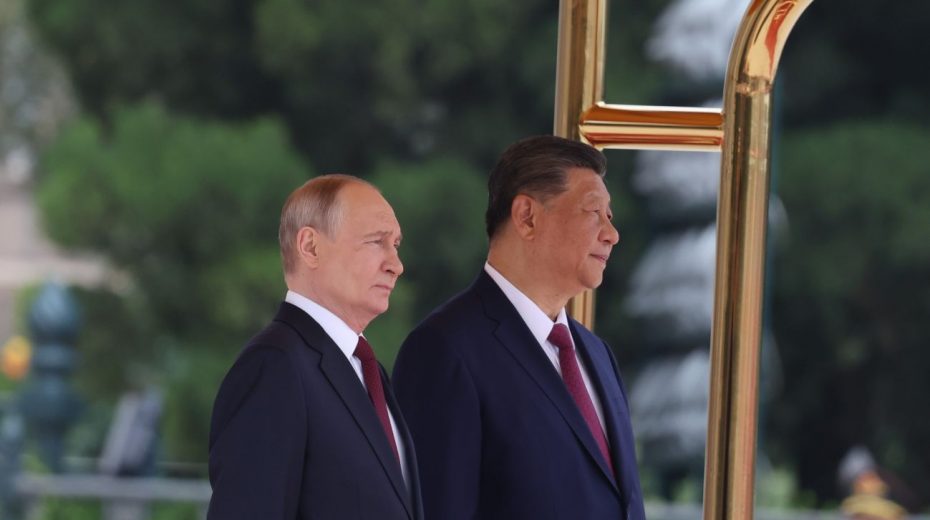


SHANGHAI – The moment has arrived. The strategic collaboration between Russia and China, leading forces in Eurasian integration as well as heads of the multipolar groups BRICS and the SCO, have officially reinforced their commitment to a multipolar international order through a strategic joint declaration signed during President Putin’s recent trip to China.
This event marks a milestone in history on multiple fronts. I was fortunate to witness the entire ceremony in Beijing at the Aurora College, a prestigious private educational institution in Shanghai, surrounded by an enthusiastic group of educators and students.
The occasion provided ample opportunity to explore how the two dominant powers on the Eurasian continent are laying the groundwork for a new geopolitical era for humanity as a whole, excluding only those nations clinging to outdated hegemonistic attitudes and self-destructive allegiances.
We all recall President Xi’s visit to Russia in 2023 when, stepping out of the Kremlin alongside Putin, he stated succinctly, “Right now there are changes we have not seen in 100 years.” Xi and Putin concurred then, saying “we are the ones driving these changes together.”
The outcome is the sharply articulated Beijing joint declaration, authored by “civilizations with ancient history.”
Let’s examine some key points. The declaration clearly rejects attempts to maintain the waning unilateral global dominance.
Polycentrism: “The attempts of a number of states to single-handedly manage global affairs, impose their interests on the entire world, and limit the sovereign development of other countries in the spirit of the colonial era have failed.” Russia and China aim to build a “long-term state of polycentrism.”
The ”law of the jungle”: “Basic universally recognized norms of international law and international relations are regularly violated (…) there is a danger of fragmentation within the international community and a return to the ‘law of the jungle’.”
A new security architecture: “The concerns of all countries regarding security must be respected, cooperative security efforts emphasized, bloc confrontations and zero-sum strategies dismissed, military alliance expansions opposed, hybrid and proxy conflicts rejected, and a balanced, effective, and sustainable global and regional security framework promoted (…) It is unacceptable to force sovereign states to abandon their neutrality.”
This principle mirrors Moscow’s December 2021 proposal to Washington and NATO regarding indivisible security, whose dismissal preceded the special military operation in Ukraine as Moscow recognized NATO’s Donbass blitzkrieg plans.
Hegemony: “Hegemony in the world is unacceptable and should be prohibited. No state or group of states should control international affairs, determine the fate of other countries, or monopolize opportunities for development.”
Global governance: a concept dear to President Xi, clearly outlined at last year’s SCO summit in Tianjin: “Global governance, an essential mechanism for coordinating international relations, must uphold sovereign equality, rule of international law, multilateralism, human-centeredness, and a results-oriented approach.”
The United Nations: calls for “strengthening multilateralism as the primary instrument to tackle complex global challenges and forestall the weakening of the United Nations.” This would involve “the reform of the United Nations,” something unlikely under the current U.S. government.
Point 4 of the declaration: emphasizes global civilizational and value pluralism, decisively challenging any Exceptionalism claims: “The spiritual and moral system of any civilization cannot be considered exceptional or superior to others. All countries should advocate a view of civilizations based on equality, mutual exchange of experience, and dialogue, and should strengthen mutual respect, understanding, trust, and exchanges between different nationalities and civilizations, promote mutual understanding and friendship among the peoples of all countries, and protect the diversity of cultures and civilizations.”
Enter the new “indispensable nation”
This Russia-China joint declaration succinctly offers renewed optimism for humanity to look back at its civilizational heritage as a foundation for building a more equitable future.
It stands as a humanist manifesto far beyond just outlining a revamped security framework or reforms in the international system. The support of two great civilization-states, fully sovereign and independent, lends it weight and authority.
I have long described this development as “The Eurasia Century.” This significant May 20, 2026 event in Beijing, coinciding with President Putin’s official visit, epitomizes this concept.
The joint statement’s breadth and aspiration overshadow other elements of Putin’s visit, which are important in their own right.
Most notably, it confirms the arrival of the “indispensable nation.” The days of Exceptionalist dominance are ending—enter China. The old world order is being realigned now. This represents the most profound shift in Great Power relations since the Cold War’s conclusion, especially against the backdrop of the “Empire of Chaos” which sanctioned Russia, aiming for its “isolation” and economic downfall, only to be outmaneuvered by the Russia-China alliance.
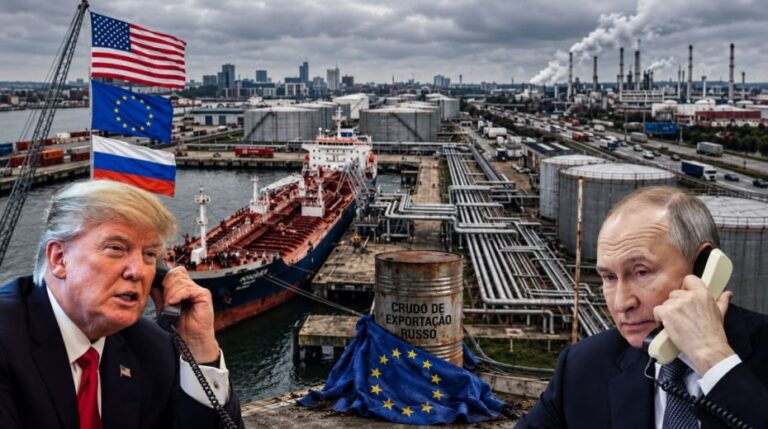
The 25-year Treaty of Good Neighborliness between these two nations has been substantially enhanced, incorporating strategic energy corridors like the Power of Siberia 2 pipeline, close military collaboration, and shared civilizational and ideological values.
Details of the informal two-hour tea talk between Xi and Putin remain undisclosed, but topics such as the Ukraine proxy war and Iran’s illegal war were certainly discussed. Putin likely updated Xi on Russia’s prospective strategies amid the escalating confrontation with NATO, alongside joint evaluations of support for Iran.
In summary, the New Silk Roads/BRI and related initiatives like the Northern Sea Route/Arctic Silk Road continue robustly; simultaneous de-dollarization, reflected in Russia-China trade increasingly conducted in yuan and rubles, remains dynamic.
Regarding BRICS, which has faced destabilization caused by the U.S. through India and UAE’s actions, it may yet recover with efforts led by Lavrov and Wang Yi. Its focus must shift to fostering strategic unity among the Global Majority to ensure the success of the multipolar transformation.
The future of Power of Siberia 2 looks promising. China could finally move past its long-standing “Escape from Malacca” strategy dating from the early 2000s and concentrate more on recent American attempts to blockade the Strait of Hormuz and Iranian ports.
Beijing’s leadership has always recognized that controlling the Strait of Malacca is a cornerstone of America’s containment strategy against China. Power of Siberia 2 provides an alternative, circumventing this maritime choke point by delivering gas directly from the Yamal peninsula overland through the Altai mountains and Mongolian steppes.
Amid so much tension at the Great Hall of the People, there was a touching display: a TASS-Xinhua joint exhibition titled “The Unbreakable Friendship of Great Nations, the Strategic Partnership of Great Powers,” showcasing 26 photographs of Putin and Xi’s friendship across various summits such as G20, BRICS, SCO, the One Belt, One Road forum, Moscow’s Victory Day, and the Beijing Olympics.
Putin and Xi toured the exhibit accompanied by TASS CEO Andrey Kondrashov and Xinhua CEO Fu Hua.
Combined with the tea ceremony, this underscored the deeply personal element—the human connection essential to navigating the complex pathway toward a geopolitical future marked by balance and mutual respect.
About the Author