To quote James Carville, “Its the economy stupid!” On Monday I wrote:
So the question we ought to ask is why did Donald Trump blink and accept the proposal that Iran proffered way back in April?
I think there are several reasons, but the principal one is that the US is running out of oil, which means Trump will not be able to artificially suppress the price of gasoline. US strategic oil reserves have fallen to their lowest level since 1983, reports CNN. The decline comes amid continued drawdowns to mitigate the impact of the conflict with Iran. Reserves have dropped to 340.3 million barrels, last seen during the Reagan administration, which was still building the stockpile. US daily consumption is 20 to 21 million barrels in 2026, which means the reserve can supply 17 days of gasoline, which falls on July 1st.
Today, my close associate Pepe Escobar revealed that over the weekend Donald Trump received a briefing — possibly from Secretary of Energy Chris Wright — informing him that the rapidly depleting Strategic Petroleum Reserve could be exhausted in a matter of weeks. Remarkably, Trump confirmed this during his press conference about the Iran deal, stating that oil reserves would have been depleted in four weeks if the Strait of Hormuz had remained closed. He said:
We run out of reserves at about four weeks. You know, there are reserves all over the world, and we would really run out, and there’ll be a time when you wouldn’t be able to get it.
Clearly, Trump and his top economic and energy advisors recognize that the US economy could face a crisis before summer’s end, which would almost certainly end any prospect of the Republicans holding onto the Senate and House.
For those who haven’t seen it yet, here is the full text of the MOU:
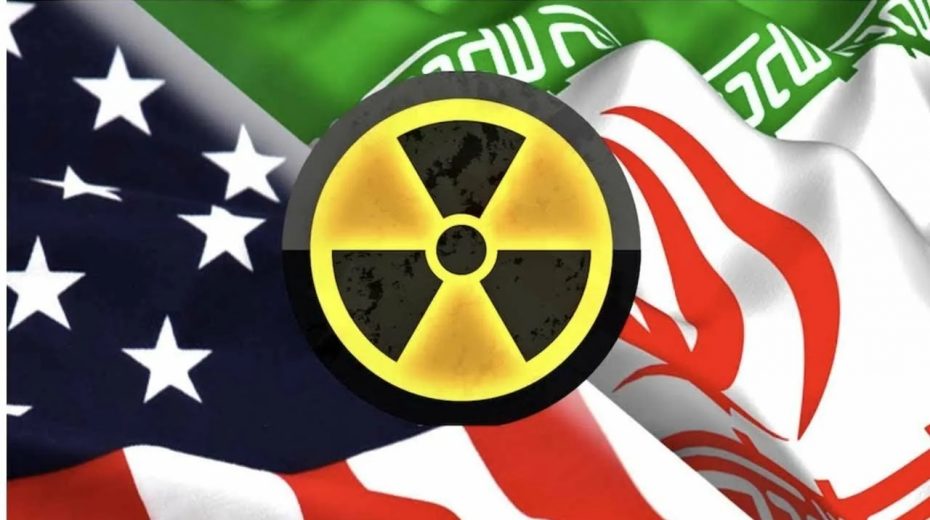
Full text of the Islamabad Memorandum of Understanding between the Islamic Republic of Iran and the United States of America
The Islamic Republic of Iran and the United States of America, jointly and in good faith, agreed on the following on June 18, 2026:
1. The Islamic Republic of Iran, the United States of America, and their allies in the current war, by signing this memorandum of understanding, declare an immediate and permanent cessation of military operations on all fronts, including Lebanon, and commit not to initiate any war or military operation against each other henceforth, to refrain from threats or use of force against each other, and to guarantee the territorial integrity and sovereignty of Lebanon. The final agreement will confirm the permanent end of the war on all fronts, including Lebanon, and the other provisions of this clause.
2. The Islamic Republic of Iran and the United States of America commit to respect each other’s sovereignty and territorial integrity and to refrain from interfering in each other’s internal affairs.
3. The Islamic Republic of Iran and the United States of America commit to conduct negotiations and reach a final agreement within a maximum of 60 days, extendable by mutual consent.
4. Immediately upon signing this memorandum of understanding, the United States of America will begin lifting its naval blockade and any harassment or obstruction against the Islamic Republic of Iran, and will completely end the naval blockade within 30 days. During this period, ship traffic will be proportional to the pre-war traffic volume as established by the Islamic Republic of Iran. The United States of America also commits to withdraw its military forces from the peripheral area of the Islamic Republic of Iran within 30 days after the final agreement.
5. Upon signing this memorandum of understanding, the Islamic Republic of Iran will make arrangements with its utmost effort for the safe passage of commercial ships, free of charge for only 60 days, from the Persian Gulf to the Sea of Oman and vice versa. Commercial ship traffic will commence immediately and will be established within 30 days considering the necessity of removing technical and military obstacles and mine clearance by the Islamic Republic of Iran. The Islamic Republic of Iran will negotiate with the Sultanate of Oman to determine the future administration and maritime services in the Strait of Hormuz, in accordance with applicable international law and the sovereign rights of the coastal countries of the Strait of Hormuz, and will also consult with other Persian Gulf coastal countries.
6. The United States of America commits, together with its regional partners, to create a definitive program agreed upon by both parties for the reconstruction and economic development of the Islamic Republic of Iran, providing at least 300 billion dollars. The implementation mechanism of this program will be finalized as part of the final agreement within 60 days. All necessary approvals, waivers, and licenses for the related financial transactions will be provided by the United States of America.
7. The United States of America commits to end all types of sanctions against the Islamic Republic of Iran, including United Nations Security Council resolutions, International Atomic Energy Agency Board of Governors resolutions, and all unilateral U.S. sanctions, both primary and secondary, according to a timetable agreed upon as part of the final agreement. The Islamic Republic of Iran and the United States of America acknowledge the fundamental importance of the issue of sanction removal mentioned above and express their intention to address these matters promptly in negotiations to reach a mutual agreement on them.
8. The Islamic Republic of Iran reaffirms that it will not produce or acquire nuclear weapons. The Islamic Republic of Iran and the United States of America have agreed that the status of stored enriched materials will be resolved through a mechanism agreed upon by both parties and according to the timetable set forth in clause 7, at least by dilution on site, under the supervision of the International Atomic Energy Agency. Both parties also agree to discuss the issue of enrichment and other mutually agreed topics related to the nuclear needs of the Islamic Republic of Iran based on a satisfactory framework to be agreed upon in the final agreement. The final agreement will confirm the provisions of this clause. The Islamic Republic of Iran and the United States of America acknowledge the fundamental importance of the nuclear issues mentioned above and express their intention to address these matters promptly in negotiations to reach a mutual agreement on them.
9. The Islamic Republic of Iran and the United States of America agree to maintain the status quo until a final agreement is reached; the Islamic Republic of Iran will maintain the status quo in its nuclear program, and the United States of America will not impose any new sanctions against Iran nor deploy additional military forces in the region.
10. The United States of America commits to immediately issuing waivers from the Treasury Department for the export of Iranian crude oil, petrochemical products and their derivatives, and all related services including banking transactions, insurance, transportation, etc., upon signing this memorandum of understanding and until the sanctions are lifted.
11. The United States of America commits to fully making available the limited or blocked funds and assets of the Islamic Republic of Iran for use upon implementation of this memorandum of understanding. The United States of America and the Islamic Republic of Iran will mutually agree on the procedure for releasing these funds during the negotiations. These funds, whether held in the main account or transferred, must be fully usable for payment to any ultimate beneficiary designated by the Central Bank of the Islamic Republic of Iran. The United States of America commits to issuing all necessary approvals and licenses in this regard.
12. The Islamic Republic of Iran and the United States of America agree to establish an executive mechanism to monitor the successful implementation of this memorandum of understanding and future adherence to the final agreement.
13. After signing this memorandum of understanding and subject to the commencement of implementation of clauses 1, 4, 5, 10, and 11 of this memorandum and the continuation of these actions, the Islamic Republic of Iran and the United States of America will exclusively begin negotiations on the remaining clauses of the final agreement.
14. The final agreement will be endorsed by a binding resolution of the United Nations Security Council.
Despite reopening the Strait of Hormuz, Donald Trump faces a challenge… This move alone won’t instantly resolve the global oil supply crunch. The strait’s reopening is essential but insufficient on its own, as multiple complicating factors will postpone substantial easing for the international oil markets for weeks or even months.
The Anchored Tanker Problem — A Backlog, Not a Surge
Many assume that the numerous fully loaded tankers anchored in the Persian Gulf act like a coiled spring, poised to release all their oil at once and overwhelm the market once the strait opens. The truth is more nuanced and, in key ways, contrary.
Several of these vessels have been sitting stationary with crude oil onboard for up to four months. Prolonged storage aboard a VLCC in the Persian Gulf’s intense heat causes thermal degradation, sediment accumulation, and in some oil grades, partial polymerization of heavier components. Practically, the cargo may no longer meet refinery contract specifications after extended heat exposure and water separation in tanks. Testing is required before delivery; some cargoes may need blending or reprocessing before refineries will accept them.
In addition to quality issues, the vessels themselves have been inactive for four months. Engines must be carefully restarted. Marine growth on hulls accumulated during inactivity reduces speed and fuel efficiency, extending voyage durations. Certain ships will require port inspections before legally sailing under their flag states.
Lastly, even if all anchored tankers departed simultaneously, terminals and refineries at the receiving end will not be ready with empty tanks to handle such an influx. Coordinated port scheduling, berth availability, and refinery processing rates must be managed to avoid congestion, which would ironically slow the import flow into refinery systems.
The Transit Time Problem — The Pipeline Has to Refill
Under typical conditions, oil does not reach the world market immediately once loaded onto tankers. A VLCC traveling from Kharg Island or Ras Tanura to Rotterdam takes about 20 to 25 days if navigating around the Cape of Good Hope — the route many vessels were forced to take during the closure — or roughly 18 to 20 days via Suez after Hormuz reopens. Delivery to Asian destinations like China, Japan, or South Korea typically takes 15 to 20 days through the strait.
This implies that oil loaded today — assuming loading began immediately — will not translate into refined products available to consumers for at least five to seven weeks, accounting for transit, unloading, refinery processing, and distribution. Consumers will not see relief at the pump within days or even weeks.
Moreover, oil production itself must return to normal levels. Wells that reduced output or were shuttered during the conflict do not resume full production instantaneously. Managing reservoir pressure, pipeline and wellhead inspections, and restarting offshore platforms are procedures requiring time. Saudi Aramco, for example, conducts shut-in capacity reactivation on a timescale of weeks, not hours.
The Mine Problem — The Most Underappreciated Factor
This factor possibly represents the most significant bottleneck in restoring normal shipping traffic and is surprisingly under-discussed.
The MOU commits Iran to make “best efforts” to reopen the strait and begin clearing mines, but mine clearance is a slow and arduous process. The Persian Gulf and approaches to the strait encompass some of the world’s most sensitive and geographically tight shipping lanes. Iran has had four months to lay mines across chokepoints measuring roughly 21 nautical miles at their narrowest, with only two navigable channels of around two miles each.
Clearing marine mines, even with advanced technology in cooperative settings, demands painstaking work. Minesweepers cannot merely clear a path by dragging equipment; every suspect mine must be located, identified, and either detonated safely or disarmed by divers or ROVs. In contested or uncertain environments, progress slows further. Currently, there is no international agreement on who will manage clearance, certify safe lanes, or establish clearance standards before commercial shipping resumes. If the US undertakes this task, clearing Iranian mines may take a considerable time. In late April, the Washington Post reported the Pentagon informed Congress it could require six months to clear the Strait of Hormuz completely of military mines.
This directly ties into the insurance issue. Lloyd’s of London and its Joint War Committee designate certain waterways as war risk zones, causing shipping insurers to impose higher premiums on hull and cargo insurance for vessels navigating these areas. The Persian Gulf and Hormuz are very likely still classified at the highest war risk level. Even with the new MOU, insurers will not remove this classification without credible proof of effective mine clearance, a sustained record of risk-free transits, and impartial verification — not merely diplomatic agreements.
Practically, this means until insurance markets stabilize, many shipping firms will avoid dispatching their most valuable vessels — a VLCC loaded with two million barrels of crude oil represents a combined ship-and-cargo value exceeding $200 million — through waters that insurers refuse to cover or cover only at prohibitively high premiums. During active conflicts, war risk insurance can be priced at multiples of ordinary rates, and these prices do not revert to normal as soon as a ceasefire is announced. Instead, rates lower gradually as actuarial data confirms genuine risk reduction.
The Net Picture
The strait’s opening is a necessary step towards restoring normal oil market conditions but not a guarantee of immediate normalization. The realistic progression includes a cautious restart by the most risk-tolerant operators, followed by incremental mine clearance and lane certification, then a gradual return of mainstream commercial shipping as insurers ease war risk premiums, culminating—weeks later—with the physical arrival of oil at refineries and its processing into consumer-ready products.
A reasonable projection for when global markets might detect a significant supply increase due to today’s agreement is between six and ten weeks at the earliest. This assumes no accidents, no mine detonations, no political backslides, and cooperative Iranian mine clearance efforts. Any disruption resets this timeline.
While Trump’s choice to finalize the MOU with Iran represents a constructive development (and I admit I was mistaken in predicting it wouldn’t happen), the path to economic recovery and global market stabilization remains distant, stretching several months ahead.
A final ironic touch: Trump electronically signed the MOU in the Hall of Mirrors at the Palace of Versailles — the historic site where the primary peace treaty concluding World War I was signed between the Allied powers and Germany. I doubt Trump intended to evoke an Allied victory when signing this agreement.
Original article: sonar21.com
About the Author