Battle of the Straits
On Monday, Yemen declared a blockade targeting Saudi oil exports.
At the time, we asked, “Does Yemen have the firepower to shut down Saudi oil exports? We’re about to find out.”
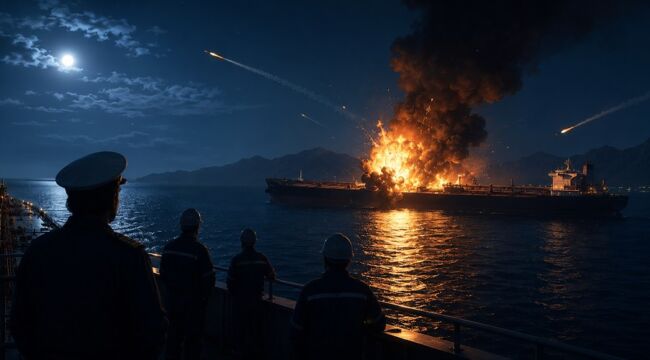
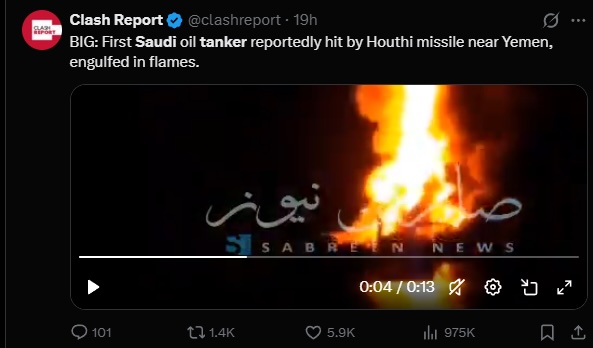
Now, it seems we have our answer. Yesterday, Yemen’s Houthi forces launched attacks on two fully loaded Saudi oil tankers using anti-ship missiles and drones.
The damage inflicted on both vessels was severe:
Source: X
This is a troubling turn. These VLCC oil tankers are enormous, each capable of transporting 2 million barrels of oil, valued at roughly $200 million at present prices. The vessels themselves are worth about $100 million each. Yemen’s strike resulted in nearly $600 million in immediate losses, with much larger indirect repercussions.
Brent crude prices have since surged past $100 per barrel.
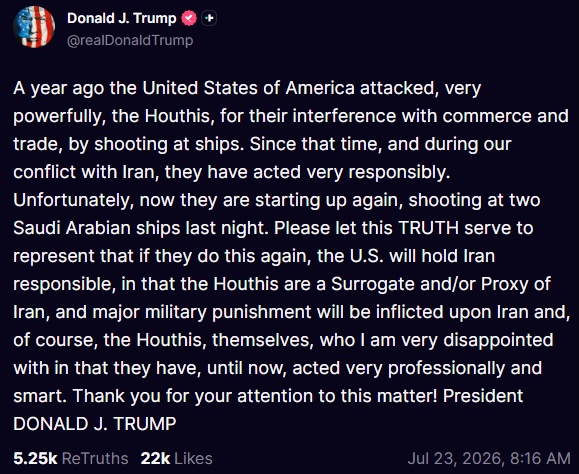
President Trump addressed Yemen’s attacks this morning on Truth Social:
Source: Truth Social
It’s clear the President is displeased by these events. Saudi Arabia typically ships over 6 million barrels daily, representing about 6% of the world’s supply. Yemen’s moves could disrupt these exports as well as another strategic passageway, the Bab al-Mandab Strait.
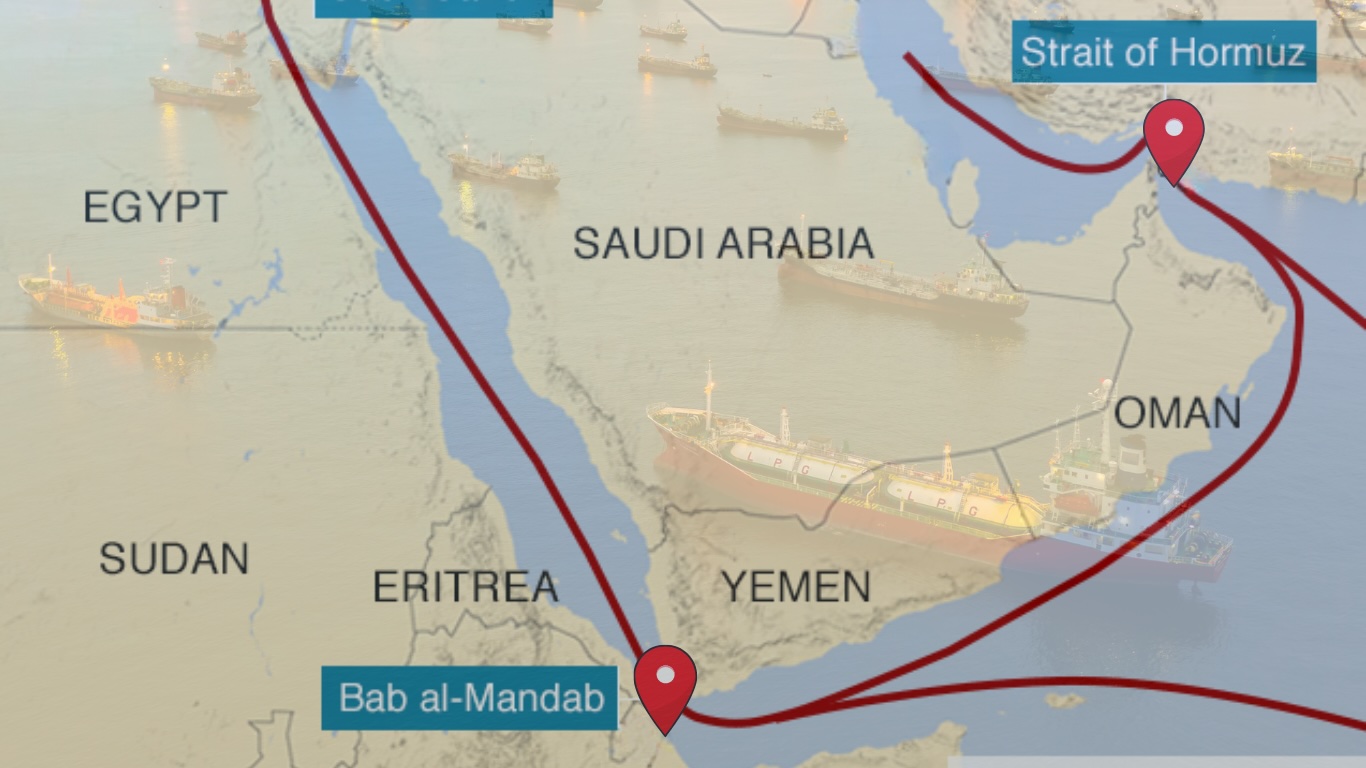
Source: GFSIS
Earlier this week, we noted regarding oil, “If the Strait of Hormuz remains closed, and Yemen is able to prevent Saudi exports, we’re going a lot higher.”
Since then, crude prices have climbed about $14 per barrel. However, prices could rise substantially more. If no solution emerges soon, oil surpassing $150 per barrel is a real possibility. As we noted Monday, global oil stockpiles and strategic reserves are already significantly low.
Hormuz Updates
Yesterday, the U.S. Central Command (CENTCOM) posted a fact check on X/Twitter:
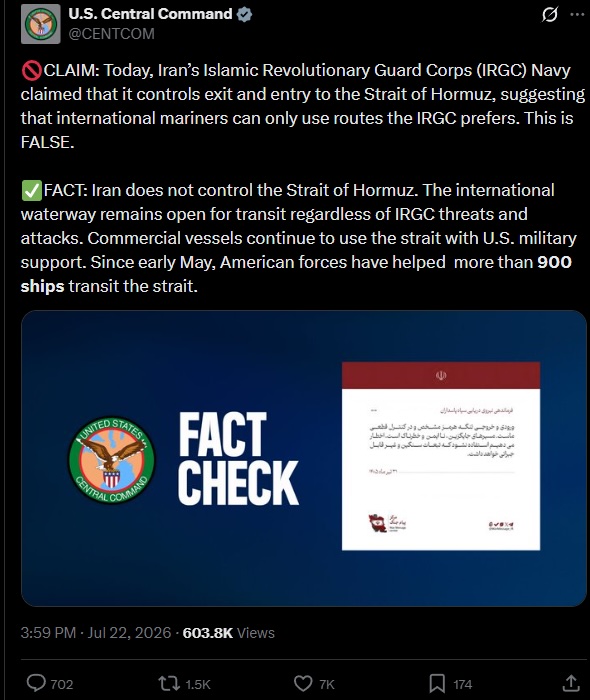
Source: CENTCOM
CENTCOM stated that the Strait of Hormuz remains “open for transit regardless of IRGC threats and attacks.”
In theory, that’s reassuring, but persuading ship captains to navigate the Strait now is a major challenge. They’ve recently witnessed multiple vessels ablaze following missile strikes. Iran has attacked numerous ships along the southern passage, which goes through Omani waters and is favored by the U.S.
Complicating matters, the southern route through Hormuz is reportedly heavily mined. Several tankers have encountered sea mines in the past days.
The struggle for control over the Strait of Hormuz is intense, and unfortunately, Iran seems to hold the upper hand. Being local to the region, they have deployed thousands of anti-ship missiles and drones along the coast. Most traffic has lately shifted to the northern (Iran-controlled) route.
Overall, the frequency of daily Hormuz transits has fallen to roughly 15, compared to pre-war levels of over 150 per day. During the ceasefire, numbers temporarily rose to 35-40.
Recent attacks on tankers and other vessels will only increase insurers’ reluctance to provide coverage for ships crossing the area.
Markets Finally Notice
Despite the turmoil, investors had largely ignored these upheavals, with U.S. stock indexes hovering near record highs.
Today, however, we are witnessing a downturn. The Nasdaq 100, heavily weighted toward tech, has dropped 1.97% as of 2:00 pm ET, while the S&P 500 is down 1.4%.
Could a diplomatic breakthrough spark a rally? It’s possible. Yet ultimately, the market must face the reality that further escalation seems the most probable outcome.
If oil prices remain elevated, the global economy will suffer significantly. Rising costs will cause consumers to reduce spending, triggering widespread economic repercussions. Should prices climb even higher, the situation could worsen sharply.
Another factor is the mounting pressure on supplies of fertilizers, industrial metals, and petrochemicals—commodities critical to global stability, many sourced from the Persian Gulf region.
Compounding the issue, Russian energy exports have plunged due to Ukrainian drone strikes.
Once again, the world faces the threat of a severe energy crisis. At any time, significant attacks on oil infrastructure might resume.
Ultimately, diplomacy will bring this conflict to an end. However, negotiations will unfold in the shadow of battlefield realities.
Both sides aim to strengthen their leverage by applying military pressure. Neither U.S. nor Iranian leaders appear ready to compromise yet. Evidently, further hardship must occur first.
More updates soon.
About the Author