The Rhine Group, launched and chaired by the former prime minister and former ECB president, rebukes leaders: “Europe is in a harder place than when the competitiveness report was released. Decline is not inevitable, but it is the direction we are heading unless we take urgent action”
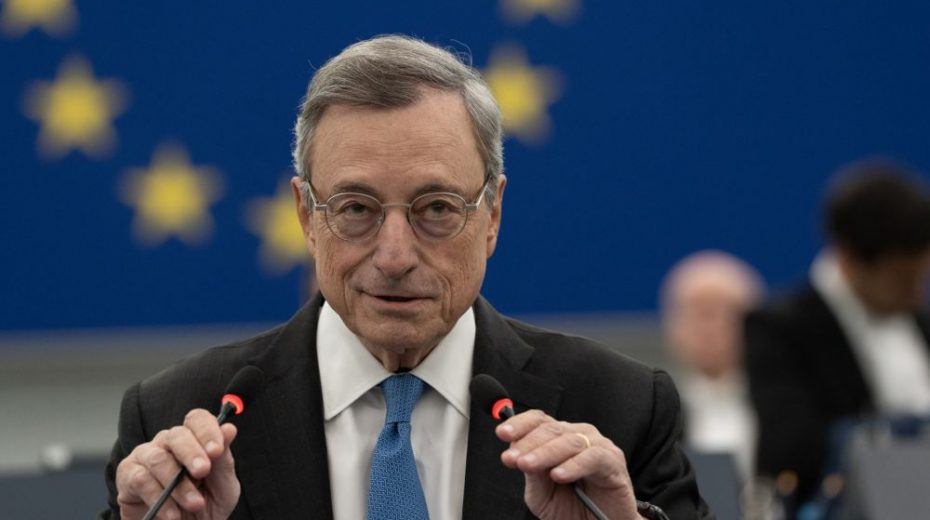
Brussels – “Decline is not inevitable, but it is the direction we are heading unless we take urgent action.” Mario Draghi delivers a stern message to Europe’s national governments, admonishing them and placing pressure on their leadership. He stresses that if the continent faces deterioration, it will largely be due to their inaction amid a dramatically altered global landscape. This warning comes through the Rhine Group, a newly established think tank co-chaired by Draghi and Patrick Collison – the co-founder and CEO of Stripe, noted for his interest in the intersections of innovation, science, and economic growth – and including prominent figures such as corporate leaders, regulators, former ministers, and ex-presidents of the Republic.
“In every emerging technology that will shape the coming decades, Europe is weak,” asserts the statement on the Rhine Group homepage. To understand the gravity of this, consider that among the world’s fifty largest technology firms, only four hail from Europe. The choices are limited: remain passive or embrace the traditional European response of competition, innovation, and growth.
The former Italian Prime Minister and his colleagues are making a clear call for decisive measures. The new initiative, often referred to as the Draghi Club, stresses that “the stakes are existential. If stagnation continues, the continent will progressively lose the ability to fund the core obligations of a modern state: defence, public healthcare, pensions, education, climate investments and safety nets for those who lose their jobs.”
Following this comes a pointed critique rather than mere caution: “Europe is in a harder place than when The Future of European Competitiveness report was released.” This serves as a reprimand towards all heads of state and government who have hesitated, lost time, or faltered. The consequence is clear: “the European growth model is fading, and we are increasingly at the mercy of external events we do not control.” Such a situation is intolerable. “Europe’s citizens are asking their leaders to raise their eyes from daily concerns toward a common destiny, and to grasp the scale of the challenge.” The Rhine Group positions itself “to be one of the places where this work begins.”
Original article: www.eunews.it
About the Author