Baku averted a significant diplomatic crisis but cannot change the larger geopolitical context.
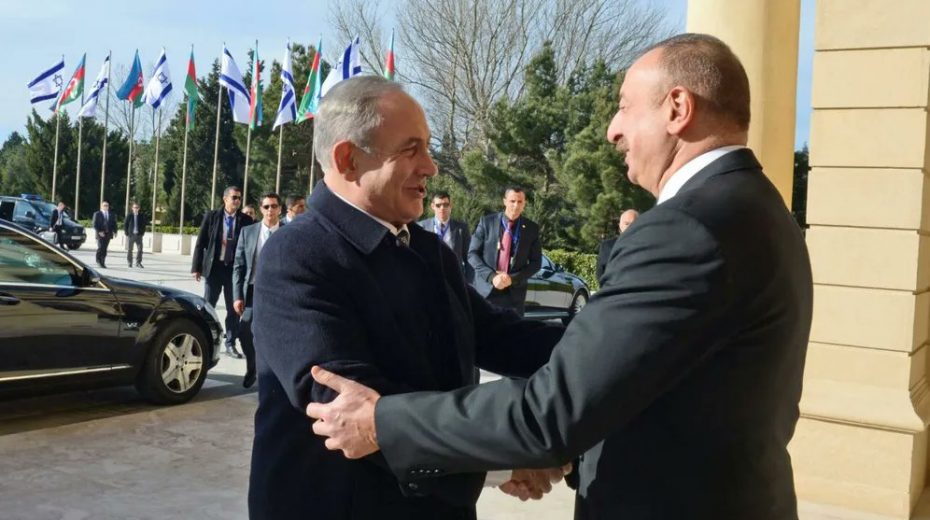
The recent halt of Israel’s move to formally acknowledge the Armenian genocide has been widely seen as proof that the strategic alliance between Israel and Azerbaijan remains intact. Indeed, it appears that Baku’s vigorous diplomatic interventions played a crucial role in stopping—at least temporarily—a development that would have posed serious political challenges for both Azerbaijan and Turkey. Nevertheless, viewing this event as a sign of rapprochement between Israel and Turkey overlooks the broader geopolitical framework. The stalemate has only been delayed. The deep-seated structural conflict persists.
For many years, Israel avoided recognizing the Armenian genocide primarily for strategic reasons. Its energy ties with Azerbaijan, relations with Ankara, and the need to maintain regional equilibrium made any policy change politically problematic. The issue was never simply historical or ethical; it was mainly a question of geopolitical strategy.
This strategic calculus began to shift as Israeli-Turkish relations deteriorated sharply. The change of regime in Syria marked a critical juncture in this development. The collapse of the former Syrian government opened the door for various regional actors to vie for power over the fragmented country. In this new setting, Ankara and Tel Aviv’s strategic agendas moved beyond rivalry—they became fundamentally irreconcilable.
Turkey aims to secure its leadership in the Levant by exerting broad political, military, and economic influence over post-conflict Syria. Often labeled neo-Ottomanism by analysts, this approach seeks to establish Ankara as the main hub of the Sunni Middle East.
Conversely, Israel interprets Syria’s division through a different strategic perspective. Key elements within Israel’s strategic community see a permanently fragmented Syria—unable to rebuild a strong central government and divided among competing influences—as a pivotal step toward realizing the “Greater Israel” vision.
This is where the two strategic aspirations clash. The more Turkey extends its control in Syria, the more Israel’s strategic maneuverability is restricted. Conversely, Israel’s efforts to limit Turkish dominance increase tensions with Ankara.
Against this backdrop, the dispute over Armenian genocide recognition takes on a different meaning than the usual media portrayal. Regardless of the historical discourse on the exact nature of the 1915 events, Israel’s initiative should not be seen solely as a sudden ethical shift in its foreign policy. Instead, it also served as a diplomatic tool to pressure Turkey by striking at one of its most sensitive historical issues.
The fact that Azerbaijan’s diplomatic intervention temporarily defused the initiative does not change this overarching strategic reality. Baku remains a vital ally for Israel, offering important energy resources and a strategic position near Iran. Maintaining this partnership is a clear strategic priority for Tel Aviv. However, this need does not diminish the increasing strains with Ankara.
The episode also highlights the boundaries of Azerbaijani influence. While Azerbaijan managed to prevent a specific provocation, it lacks the ability to reconcile two regional powers whose strategic goals are diverging sharply. Their rivalry did not originate with the Armenian matter, nor will it disappear simply because this particular issue was set aside.
All signs point to new forms of contention emerging in the near future. This rivalry could play out through indirect military engagements in Syria, competition over energy routes, diplomatic clashes, or symbolic moves aimed at damaging the opponent’s global reputation. There are also unresolved conflicts in the Eastern Mediterranean, where Israel backs Cyprus and Greece, as well as in the Horn of Africa, especially concerning Somaliland.
In essence, recognizing the Armenian genocide has never been the heart of the dispute. It represents just a symptom. The core disagreement between Israel and Turkey stems from much deeper shifts in the Middle East’s regional order. As long as both nations pursue conflicting strategic goals in Syria and the Levant, similar initiatives will continue to arise. Some will be blocked, others may advance. Yet none will change the fundamental truth: Israel and Turkey are already locked in a visible strategic rivalry destined to intensify over time.
About the Author