Is US Foreign Policy becoming a “riddle wrapped in a mystery inside an enigma”?
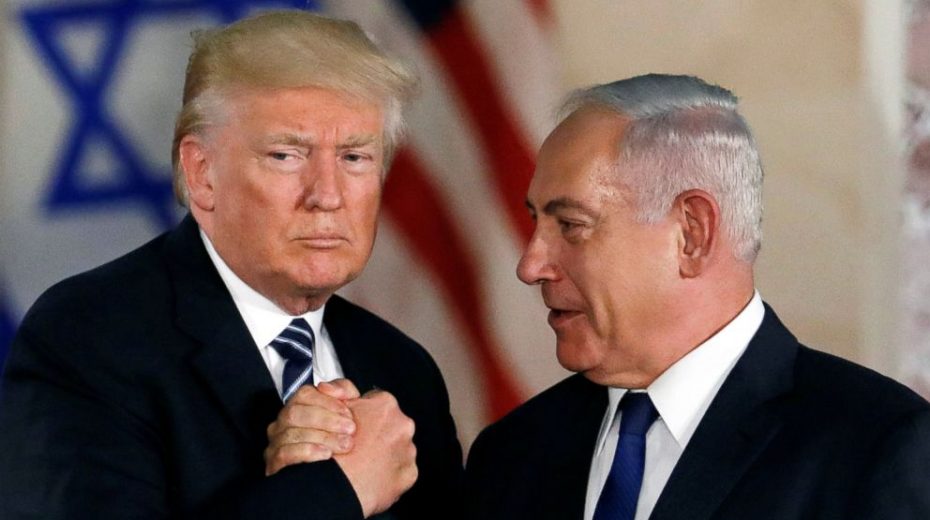
On Tuesday, President Donald Trump held private discussions with President Volodymyr Zelenski of Ukraine and Prime Minister Benjamin Netanyahu of Israel, without the usual media presence or public announcements. Their visits coincided with the funeral of Senator Lindsey Graham, a noted ally and supporter of both countries.
Details about these confidential meetings remain scarce, though leaks or disclosures might emerge soon. The gatherings involved prominent figures such as Vice President JD Vance, Secretary of State Marco Rubio, Secretary of War Pete Hegseth, Chief Negotiator Steve Witkoff, and several members of Congress. Reportedly, both Trump and Netanyahu left the talks satisfied.
The significance of the meeting stems from the US’s challenge in finding a way to exit the failing conflict with Iran while trying to claim some form of success ahead of the approaching midterm elections, where dissatisfaction with the war could have major political consequences. The Graham funeral provided a rare moment for top leaders to strategize about the two wars Trump became involved in but failed to win.
Observers note that Zelenski and Netanyahu have been in recent contact, likely aiming to persuade a hesitant Trump that their struggles against Iran and Russia are also US battles. The argument centers less on direct threats to America and more on uniting under shared values against common adversaries. Should their efforts succeed, the two conflicts could be viewed as a unified front, positioning the US as a committed supplier of weapons, financial backing, and political support.
Trita Parsi from Responsible Statecraft has outlined this emerging strategy: “As Ukraine’s Volodymyr Zelensky arrives in Washington, much indicates that he is no longer merely trying to draw greater American support into its war against Russia. Increasingly, it appears to be pursuing something far more consequential: merging the Ukraine war with the US-Iran conflict into a single strategic theater. The distinction matters. If the two wars become one, Ukraine ceases to be merely a recipient of American military assistance and instead becomes a direct participant in Washington’s war with Tehran. By the same token, the United States would no longer simply be Ukraine’s principal arms supplier. It would become an active belligerent against Russia through a conflict that stretches from the Black Sea to the Caspian. For Kyiv, this would represent the strategic breakthrough it has sought since Russia’s invasion in 2022.” Adding Russia to the picture could also alleviate pressure on Israel by challenging the notion that the Iran conflict is driven solely by Israeli interests.
Following the meetings, Prime Minister Netanyahu described his eighth discussion with Trump as “one of the best conversations” he has experienced with the US president. He elaborated, saying, “It was a meeting with full cooperation, with mutual support, with understanding on the joint goal that Iran won’t have nuclear weapons, and also other goals. It was one of the best conversations I’ve had with our friend, US President Trump.” Trump echoed this sentiment, highlighting their shared commitment to stopping Iran from developing nuclear arms. White House Press Secretary Karoline Leavitt also characterized the talks as “good and productive.”
Topics expected to come up, such as Israeli-supplied intelligence justifying US strikes on Iran’s nuclear site Pickaxe Mountain (known in Iran as Kolang Kouh), apparently were not mentioned or acknowledged publicly. Netanyahu’s press official Tzipi Hotovely declared “There is no truth in the claim that Israel is pushing the US in a certain direction on the Iran issue. The Prime Minister is not telling the US President what to do and is not pushing him in any direction. Both sides want to prevent Iran from having nuclear weapons. There are many ways to achieve this goal.” Hotovely also noted that while Trump was expected to request that Israel pull back from areas in Lebanon, Syria, and Gaza occupied by IDF forces—and stop backing settler attacks in Palestinian territories and Jerusalem—he did not make such demands.
Trump has stayed quiet on Israel’s repeated breaches of the US-supported ceasefire in Gaza, and this silence is likely to continue. Recent accounts reveal that more than 1,200 Palestinians have been killed by Israeli forces since the agreement commenced in October 2025, including some American nationals—incidents that might have warranted a response. Attacks on Christian places of worship have also occurred, yet Christian Zionist US Ambassador Mike Huckabee, who has proclaimed that the United States owes its existence to Israel, has remained silent. Huckabee has further claimed Israel has the right to claim any territory it desires in the Middle East.
Where is this heading? Can anyone really believe that the late-night Congressional vote on the evening following Lindsey Graham’s funeral along with Netanyahu’s and Zelensky’s presence at the White House and Capitol Hill to promote sanctions on Russia and Iran was merely coincidental? The Hill notes, “The Senate, in a rare bipartisan vote Tuesday night, advanced a bill that would impose harsher sanctions on Russia and buyers of Russian oil and gas than the US has previously enforced and extend existing sanctions on Iran, aiming to economically squeeze the two countries amid ongoing military conflicts. The bill, named for its co-author, the late Sen. Lindsey Graham (R-SC), has had strong backing from members in both parties for over a year as a way to further penalize Russia over its war in Ukraine. President Trump only recently gave the green light to a version of the legislation, and requested that it include increased sanctions on Iran. It advanced on an 86-12 vote…” Supporter Sen. Roger Wicker (R-Miss.), chair of the Armed Services Committee, spoke on the Senate floor earlier that evening, stating, “If we’ve learned anything about the Russian despot Vladimir Putin over the course of this war, it’s that the slaughter of civilians and even his own Russian troops gives him no pause. He disregards human life. But he does prize the strength of his war machine, and for this, Putin relies on his energy sales and that’s what we’re getting to with this bill.”
The irony is apparent: the US, responsible for killing 163 schoolgirls and teachers in Iran using double-tap strikes designed to ensure total fatalities, chastises Russia over supposed wartime misconduct, while Israel, its “closest ally” and “best friend,” is massacring tens—possibly hundreds—of thousands of Palestinians in what nearly the entire world aside from Washington regards as genocide. It’s a situation that inspires laughter or tears. Yet, for better or worse, Trump once again has been outmaneuvered by Israeli and Ukrainian leaders, and America finds itself de facto involved in conflicts across Eurasia and the Middle East.
Original article: unz
About the Author