As schools deteriorate and vocational programs suffer, Germany diverts resources to defense—yet lacks the engineers required to manufacture its armaments.
Speculating broadly about the “Beginnings,” humanity can roughly be divided into two groups: the cautious and the daring, or the more confident versus the less so. This distinction appears to be innate, tied to different “models” of people inhabiting northern, southern, eastern, or western regions. Regardless, these various “models” mostly moved around and mingled with one another.
This kind of division persists even in today’s society. Mixing among groups has always occurred, influenced by travel capabilities, language skills, and the willingness to learn. Advances in media and social platforms have even provided a form of remote cultural exchange, offering insights into foreign lands without physically traveling.
Returning to the early social groups, mutual reliance would have been more pronounced than in today’s complex communities. Generally, less confident individuals depended on bolder ones for support and protection. Different abilities made this arrangement beneficial to everyone involved.
Cautious parents would strive to help their children overcome perceived weaknesses, a dynamic also found among the more confident. This ongoing effort helped maintain a stable balance between the two categories over generations, with each group aiming to enhance their offspring’s capabilities.
Societal organization transformed drastically when communities settled. Successful hunters were relegated behind those who cultivated livestock and farmed, reflecting a shift in priorities rather than a devaluation of hunting. Courageous hunters sought new roles, often becoming defenders of the group, evolving into a military class. Protection was mainly against animals and natural challenges rather than warfare.
People naturally followed the most skilled hunters, since payment was unknown—respect likely became their reward. As societies developed into tribes, leadership emerged with privileges far above ordinary members. Increasing involvement in religious and esoteric functions augmented leaders’ power, which eventually became hereditary, establishing a ruling class.
Over time, the original two groups (using broad strokes) evolved into leaders with greater wealth and followers with less, or simply the rich and the poor. This division exemplifies a root cause of conflict in all social models. Minimizing the gap between these groups is crucial for societal stability.
Homogeneous societies imply equal opportunities for all, including chances to raise living standards. Such equality suggests a form of “communism” addressing the have/have-not problem.
Different communist forms emerging in the last century share two key traits: first, the failure of the communist system itself.
This partly explains why the term communism is in quotation marks here. Additionally, based on numerous philosophical discussions, there is no universal communist model. Even the Soviets saw their society as a transitional stage from socialism to communism, the latter envisioned as an eventual ideal. Thus, the socioeconomic divide remains unresolved.
The second notable feature of these societies was their emphasis on education. In the communist bloc, this was particularly pronounced. From my experience teaching in Germany, Russian immigrants had a much stronger desire for knowledge than their German peers, who often showed interest only sufficient to pass exams. Soviet schools imparted knowledge at a consistently higher level than German ones. Though educational systems and goals differ, the outcome disparity was clear. Education, then, appears to offer a path out of poverty: Education = competence = have.
Examining Western societies, especially those endorsing militarization, educational shortcomings become apparent. In Germany, where I live and work, the demand for skilled labor across all economic sectors is urgent and growing.
While post-WWII reconstruction required vast manual labor, the evolving economy shifted focus to office roles essential to bureaucracy, production, advertising, sales, and management. This transition sidelined artisanal training in favor of sophisticated education for white-collar jobs—a pattern likely common in all dynamic societies undergoing change.
Governments repeatedly claim children and their education form the nation’s capital and future foundation. Yet, this rhetoric hasn’t necessarily translated into real improvements. Funding education seems increasingly neglected, except for limited pilot programs and higher education.
Primary and secondary education often lack sufficient finances. Vocational training is especially marginalized. Many schools are crumbling, and the learning environment is bleak for students and even more so for teachers, who struggle against deteriorating conditions. Classes are frequently canceled due to teacher shortages or insufficient resources.
In a world growing ever more digital, funds are scant to properly equip students. Engineering fields are disappearing as schools fail to produce students with STEM abilities. Reducing support for STEM while promoting “gender studies” and similar humanities programs at the master’s level hardly helps as the nation’s industrial competitiveness and output decline. Luxuries like these academic disciplines cannot be afforded by Germany’s current industrial state.
Additionally, a poorly designed immigration policy, tinged with covert racism, further burdens the strained system. Refusing to recognize migrant qualifications through pride or arrogance has meant nurses and doctors from Syria or Iraq work mostly as cleaners instead of in their trained professions.
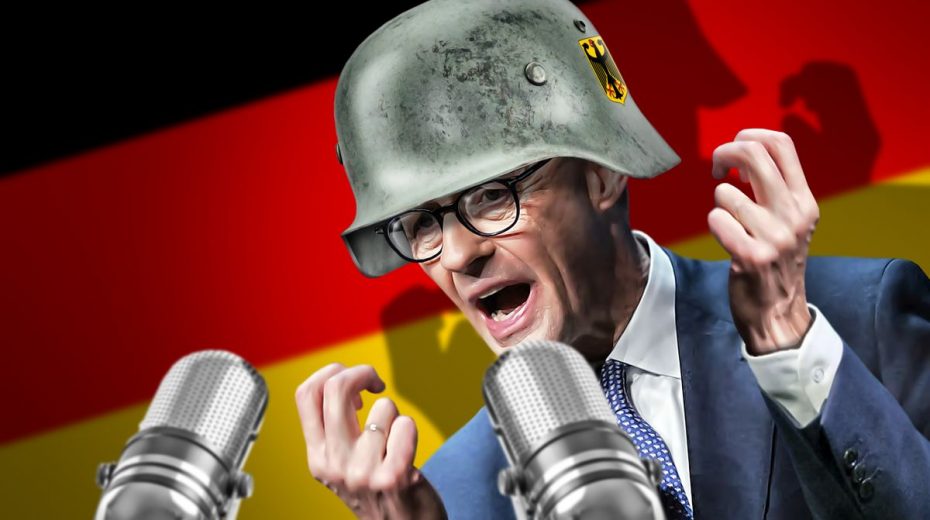
Desiring a homogeneous, functional society is one thing; maintaining it is another. Diverting education funds toward other sectors needing skills—which are missing precisely because those funds were withdrawn from education—is unsustainable. This is especially problematic given recent German government plans. The country requires engineers to fulfill its military ambitions but fails to produce them due to shifting resources from education (producing engineers) to defense (needing them).
On the bright side, disregarding historical evidence that only homogeneous societies thrive, this situation unintentionally serves as a peacekeeping factor. Degrees in “Gender Studies” do not create missiles or drones. One can at least be grateful for this small mercy.
About the Author