For more than a hundred years, U.S. authorities have viewed Cuba either as a resource to exploit, a competitor to defeat, or a dissenting voice to suppress, clinging to a colonial mindset, Jonathan Ng explains.
Recently, President Donald Trump’s embargo against Cuba has triggered power outages and food shortages, pushing the nation toward collapse.
Taking advantage of this turmoil, Cuban American reactionaries in Florida are intensifying calls for regime overthrow.
Adorned in MAGA gear, they routinely assemble along Miami’s palm-lined avenues to denounce socialism, urge tougher measures, and carry placards proclaiming “Make Cuba Great Again.”
Following the onset of the war against Iran, their rallying cry has been clear and simple: “Cuba next.”
While urging direct interference, exiled leaders drafted comprehensive plans to split political power and impose unrestricted capitalism upon the nation. At Guantánamo Bay, Secretary of Defense Pete Hegseth recently stoked activists’ hopes by asserting that Trump is “taking back our hemisphere,” hinting at possible military action.
Both Cuban-American conservatives and U.S. policymakers claim to support Cuban democracy. However, the harsh sanctions and pro-war rallies reveal a violent approach, exposing a disturbing willingness to allow human suffering.
Rather than protecting Cuba’s sovereignty, Washington and its reactionary partners have long sought to suppress the island’s quest for autonomy.
The century-long view of Cuba as either a plantation to exploit, foe to defeat, or dissenting voice to silence persists today. The current upheaval reflects that troubled legacy as policymakers and far-right forces reinstate siege-like tactics in the Caribbean.
The Blood-Stained Facade

1898 political cartoon: “Ten thousand miles from tip to tip.” referring to the expansion of American domination, symbolized by a bald eagle, from Puerto Rico to the Philippines following the Spanish–American War; the cartoon contrasts this with a map showing the significantly smaller size of the United States in 1798, exactly 100 years earlier. (Wikimedia Commons/Public Domain)
The recent surge in U.S. sanctions and promises of Cuban liberation carry harsh irony. In 1898, the U.S. justified its intervention in Cuba’s fight for independence from Spain by alleging widespread starvation among civilians. Senator George Hoar claimed that Madrid “deliberately [plotted] to starve them to death.”
Following the invasion, President William McKinley declared Cuba free but denied local revolutionaries a share in power, excluding them from talks with Spain.
Instead, his government made Cuba a U.S. protectorate, rationalizing that its large population of color posed a threat to self-governance. Reflecting this idea, The New York Times warned of “an irresponsible government of half-breeds,” while The San Antonio Express claimed foreign control was needed to “save the Cubans from themselves.”
For four years, U.S. military authorities worked to disenfranchise Black citizens, formed the Rural Guard to suppress opposition, and oversaw a takeover by foreign business interests that displaced thousands of farmers.
In 1901, Washington conditioned Cuban independence upon approval of the Platt Amendment, which granted the U.S. the right “to intervene” to defend strategic aims.
Senator Orville Platt insisted that it was vital for stability because local politicians were “irresponsible as children.” The law permitted the U.S. to set up a naval base in Guantánamo Bay and to invade Cuba again in 1906, 1912, and 1917.
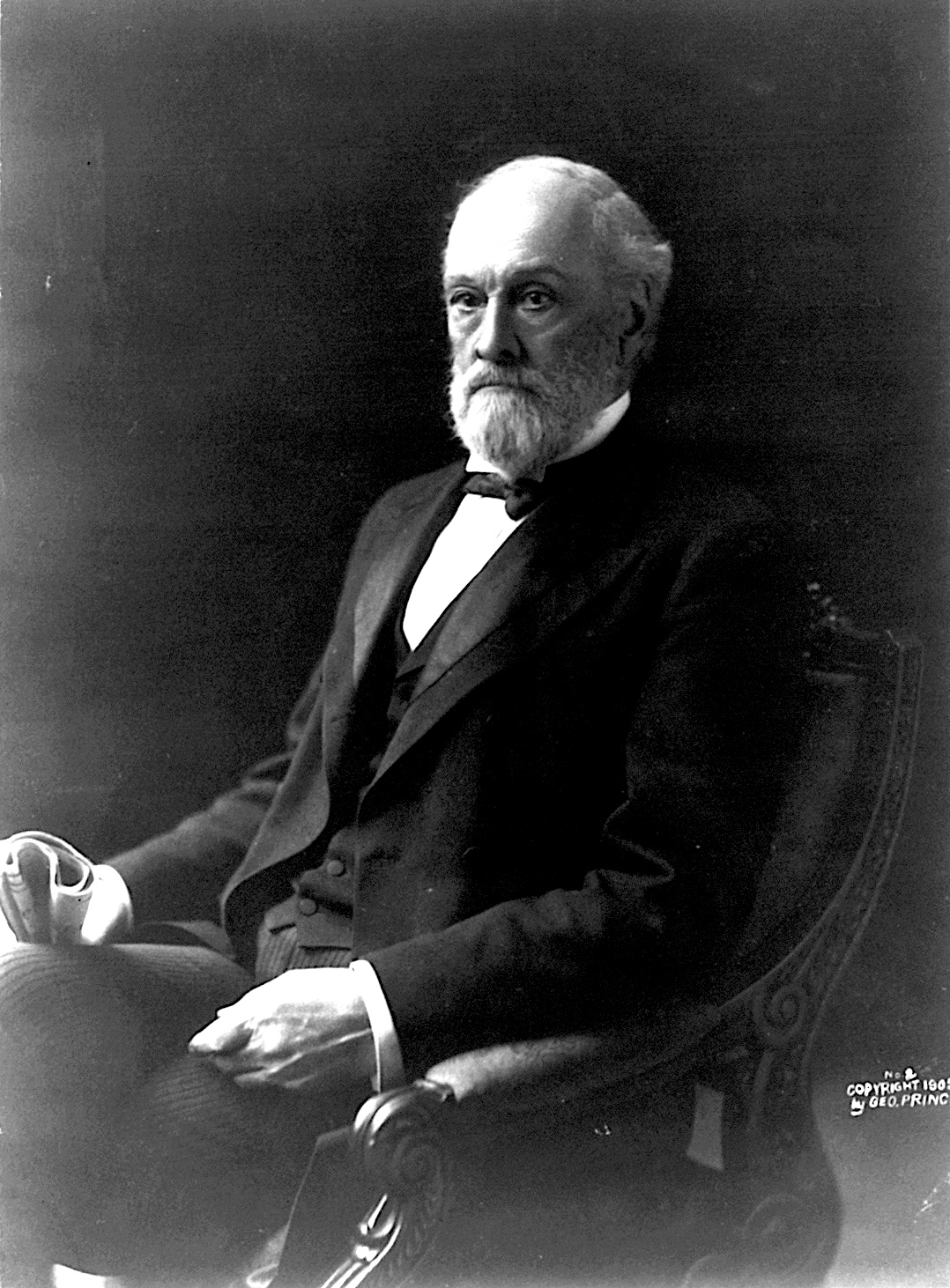
Platt in 1902. (George Prince /Wikimedia Commons/Public Domain)
U.S. leaders scorned Cuba’s sovereignty. When sending troops in 1906, President Theodore Roosevelt called it “that infernal little Cuban Republic,” confessing he wished to “wipe its people off the face of the earth.”
Much of the conflict stemmed from economic exploitation. After the 1898 war, U.S. businessmen exploited the devastation of legal documents to grab Cuban land.
Between 1905 and 1911, farms in Guantánamo alone declined from 1,154 to 419 as foreign investors amassed vast sugar plantations.
Lowry Nelson, a sociologist, noted that land disputes were lopsided affairs, with U.S. corporations using legal experts and bribery to their advantage. Poverty spread island-wide, and by 1907, male unemployment exceeded 20 percent.
Popular fury finally erupted in 1912 when the Independent Party of Color mobilized mass protests against racial and economic exclusion. Secretary of State Philander Knox urged Cuban officials to suppress the revolt under threat of another invasion.
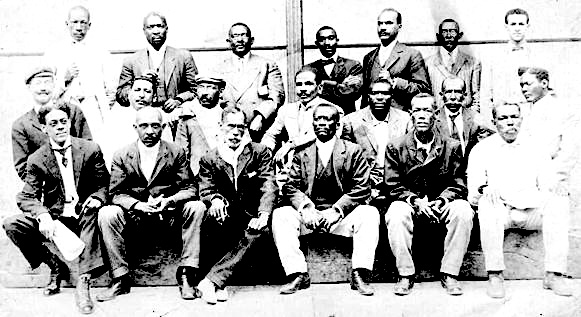
Leaders of the Partido Independiente de Color or Independent Party of Color, undated. (Wikimedia Commons/Public Domain)
Historian Louis Pérez, Jr. highlights that U.S. Marines launched rapid strikes from the naval base to secure American assets, freeing Cuban troops to carry out brutal repression. “They have lopped off the heads of probably some six thousand negroes in this province,” a U.S. citizen in Guantánamo recalled. One Afro-Cuban eyewitness remembered soldiers “killed everything that was Black” and burned piles of bodies.
The 1912 massacre exposed not only the racist violence of Cuba’s elite but also the enduring colonial grip, as the prospect of renewed U.S. intervention intensified the brutality.
For decades, Washington framed such measures as paternalistic safeguards for Cuba’s sovereignty.
Yet the Platt Amendment’s influence led Cuban leaders to prioritize foreign investor rights over social justice, prompting former U.S. Ambassador Sumner Welles to conclude in 1934 that Cuba’s government was “merely a facade” serving “American interests.”
Unwanted Guests
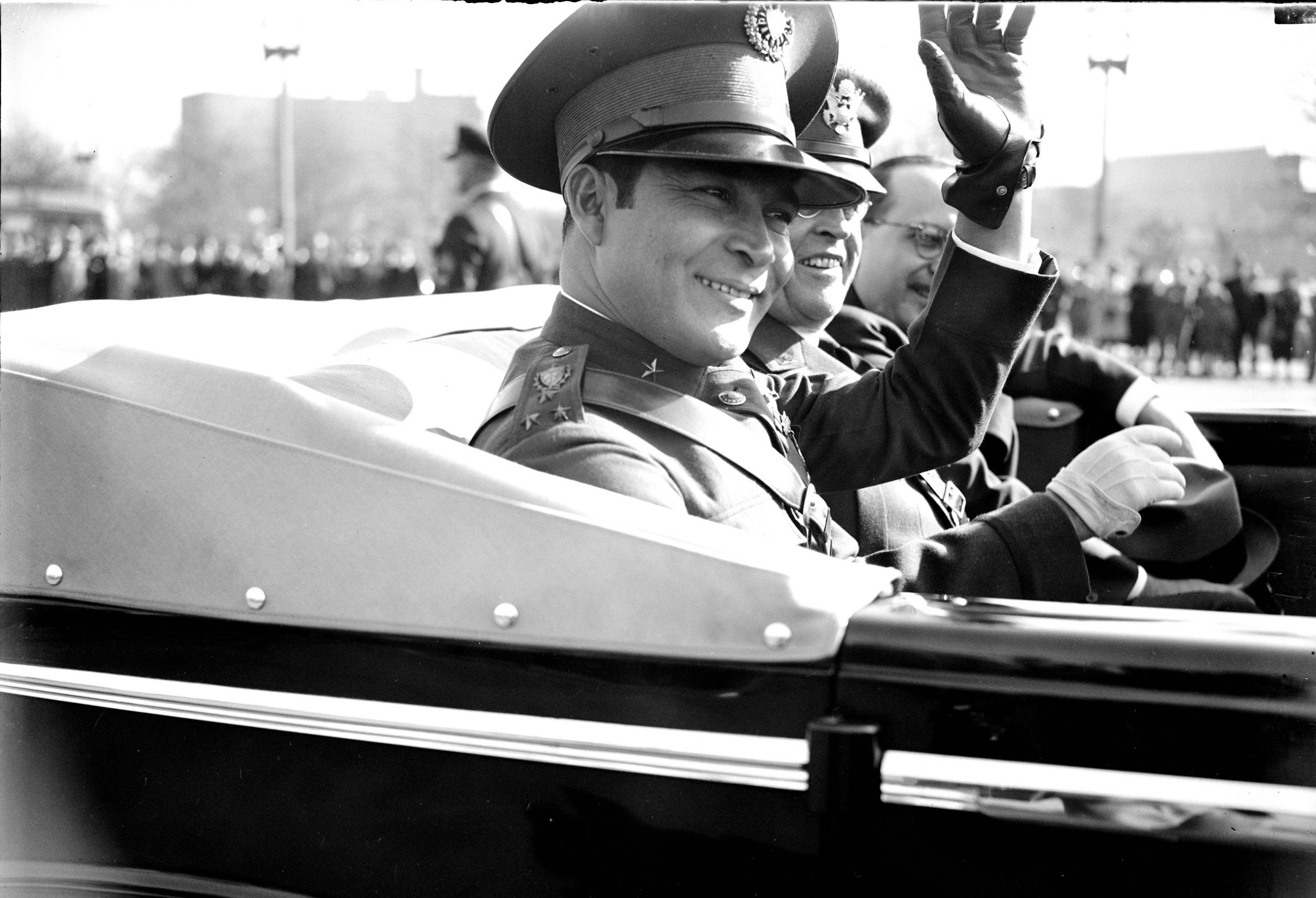
Cuban dictator Fulgencio Batista with U.S. Army Chief of Staff Malin Craig in Washington, D.C., on Armistice Day 1938. (Harris & Ewing via Library of Congress/Wikimedia Commons/ Public Domain)
Prior to the Cuban Revolution, the island’s economy was dominated by U.S. business interests who supported President Fulgencio Batista, notorious for torturing dissidents and accepting weekly bribe shipments.
Historian Van Gosse notes that Batista entrenched Havana as a hub of vice and colonial indulgence, where visitors like future President John F. Kennedy indulged in drinking, gambling, and pursuing women in segregated luxury. Operating as a tropical tax haven, Cuban authorities permitted U.S. investors to repatriate profits while controlling major industries and owning 40 percent of sugar plantations.
Fidel Castro returned from exile in 1956 to lead a mass uprising aimed at dismantling this semi-colonial regime.
President Dwight D. Eisenhower took measures to support Batista’s efforts to crush the rebellion. A C.I.A. agent recalled that operatives “infiltrated all aspects” of Cuban society, while diplomats used “all means short of full invasion” to stop Castro.
Alongside military aid, the Pentagon allowed Batista’s forces to conduct air raids from Guantánamo Bay, destroying villages with B-26 bombers. In an ironic turn, rebels captured U.S. Marines as hostages, forcing Eisenhower to reduce support.
After winning in 1959, revolutionaries sought to overcome colonial legacies, successfully ending malnutrition and racial segregation. Raúl Castro proclaimed Cubans had finally “finished the War of Independence.”
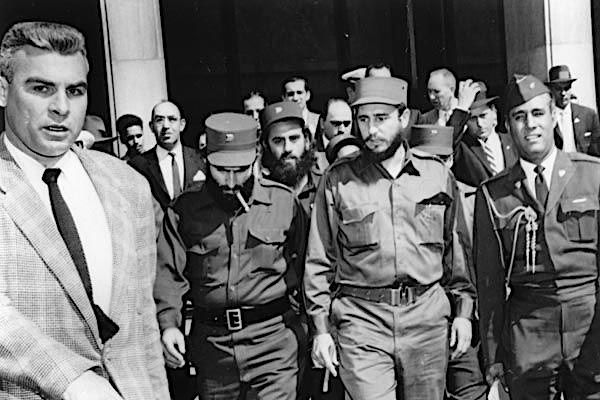
April 1959: Special Agent Leo Crampsey of Office of Security, on left, escorts Cuba’s new premier, Fidel Castro, center, during a visit to Washington, D.C., shortly after the January revolution in Cuba. (U.S. Department of State)
Again, the U.S. conspired to undermine the revolution, fearing it threatened American dominance and inspired leftist movements globally.
In 1960, the State Department considered “every possible means” to “weaken Cuba’s economy,” launching a blockade that lasted decades. U.S. officials even seized Fidel Castro’s plane during his U.N. visit that year.
As tensions mounted, Under Secretary Chester Bowles criticized Kennedy’s administration for “lack of moral integrity,” as it pursued plots to assassinate and sabotage Cuba. Asked about invasion plans, presidential advisor Adolf Berle declared, “Let ’er rip.”
Following the failed U.S.-backed invasion, Castro installed Soviet missiles on the island for defense. Kennedy’s furious response nearly triggered nuclear war as he demanded their removal, fearing the missiles might make Cubans “look like they’re coequal with us.”
More than anything else, the American refusal to relinquish Guantánamo Bay exposed its colonial mindset. For decades, the base served as a platform for fomenting subversion.
Island scholars note that the base became “an important footbridge” for counterrevolutionary activity.
A Cuban-American operative recalled that he simply “jumped the fence,” after the Bay of Pigs invasion fiasco. U.S. soldiers repeatedly fired on Cuban guards, killed civilians, and hurled insults. In 1964 alone, Ernesto “Che” Guevara reported 1,323 border provocations, including “acts of sexual exhibitionism.”
Before the Berlin Wall fell in 1989, U.S. lawmakers depicted Cuba as an unrestrained aggressor. In truth, U.S. officials opposed the revolution precisely because it challenged the Platt Amendment’s legacy and the system of exploitation.
Colonizing the Opposition
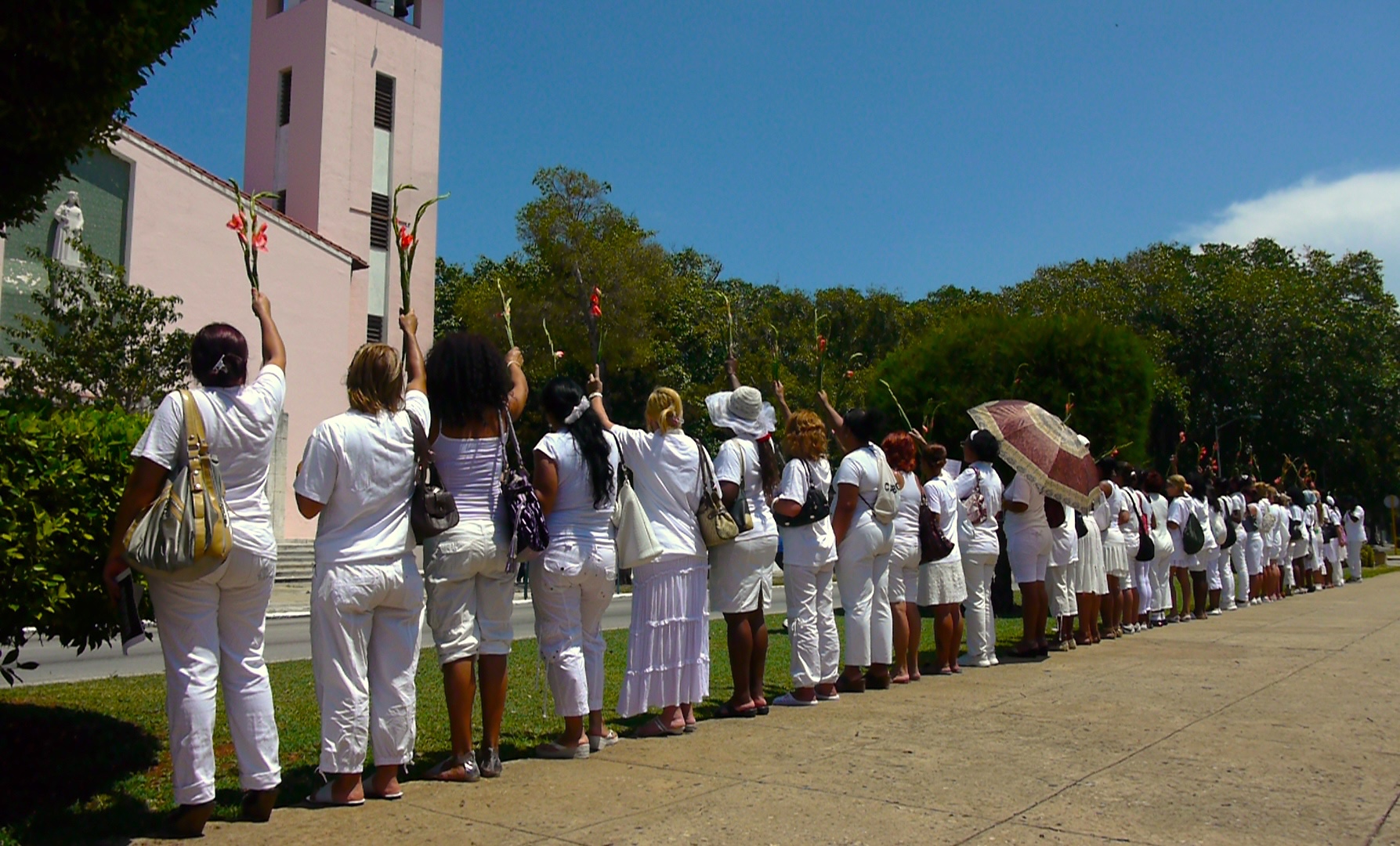
Ladies in White demonstration in Havana, April 2012. (Hvd69 / Wikimedia Commons/CC BY-SA 3.0)
After the Soviet Union’s collapse, the U.S. intensified the embargo and fostered Cuban dissent, aiming to extinguish remaining global socialism. From 1996 to 2011, officials funneled $205 million for regime alteration efforts.
Particularly, Washington bankrolled media outlets to fuel discontent among government critics. The National Endowment for Democracy, USAID, and others supported dissident newspapers like CubaNet, ADN Cuba, El Estornudo, El Toque, and Diario de Cuba.
In 2010, the U.S. introduced the social media tool ZunZuneo to coordinate “smart mobs,” and later attempted to spread anti-government hashtags in the unsuccessful “Bay of Tweets” campaign in 2021.
Fulton Armstrong, a former senior U.S. intelligence official, highlighted the policy’s impossible nature, stating that “We win if opposition media gain ground, and we win if they provoke government repression,” which would further validate U.S.-backed dissent.
This cold strategy extended to human rights supporters. Most notably, the U.S. helped transform the Ladies in White into global symbols of resistance. Founded in 2003 by Cuban women whose relatives were jailed and allegedly funded by the U.S. for political subversion, the group paradoxically used foreign money to call for “political prisoners” to be freed and to press for harsher economic sanctions.
Leaked diplomatic cables reveal frequent coordination between U.S. officials and the group, along with requests for covert funding. Chief of Mission Michael Parmly noted meetings with “[l]eaders” to strategize. At one point, co-founder Berta Soler expressed difficulty in smuggling funds “from a private organization in the United States.”
Washington also nurtured charismatic opposition figures like Oswaldo Payá, Cuba’s foremost critic. In 2012, Payá died in a car crash driven by Ángel Carromero, a far-right Spanish activist who illegally channeled funds to him.
Known for reckless driving, Carromero held 42 traffic violations in Spain. Nevertheless, U.S. officials and Payá’s family alleged that Cuban authorities orchestrated Oswaldo’s assassination by forcing his vehicle off the road.
Based on Carromero’s account, the Inter-American Commission on Human Rights held Cuba responsible in 2023, while U.S. officials hailed Payá as a martyr. Subsequently, the Trump administration pressured Organization of American States members to appoint Oswaldo’s daughter, Rosa María Payá, to the commission.
Human rights observers warned of “conflicts of interest” due to her activism compromising the commission’s “appearance of independence.” The State Department secured her nomination by threatening aid reductions to dissenting countries.
Now, Payá utilizes her role and U.S.-backed nonprofit organization to push for regime change across leftist governments in the Americas, referencing the violent 2019 coup in Bolivia as precedent.
In essence, U.S. authorities have sown division in Cuba for generations. Instead of bolstering democracy, they have colonized the opposition.
This led prominent critics to favor counter-revolution over reform, competing for foreign aid. Projecting imperial dominance, U.S. influence stayed subtle yet pervasive. Though insufficient to topple socialism, policymakers have ensured Cuba remains locked in an endless Cold War.
The Politics of Hunger
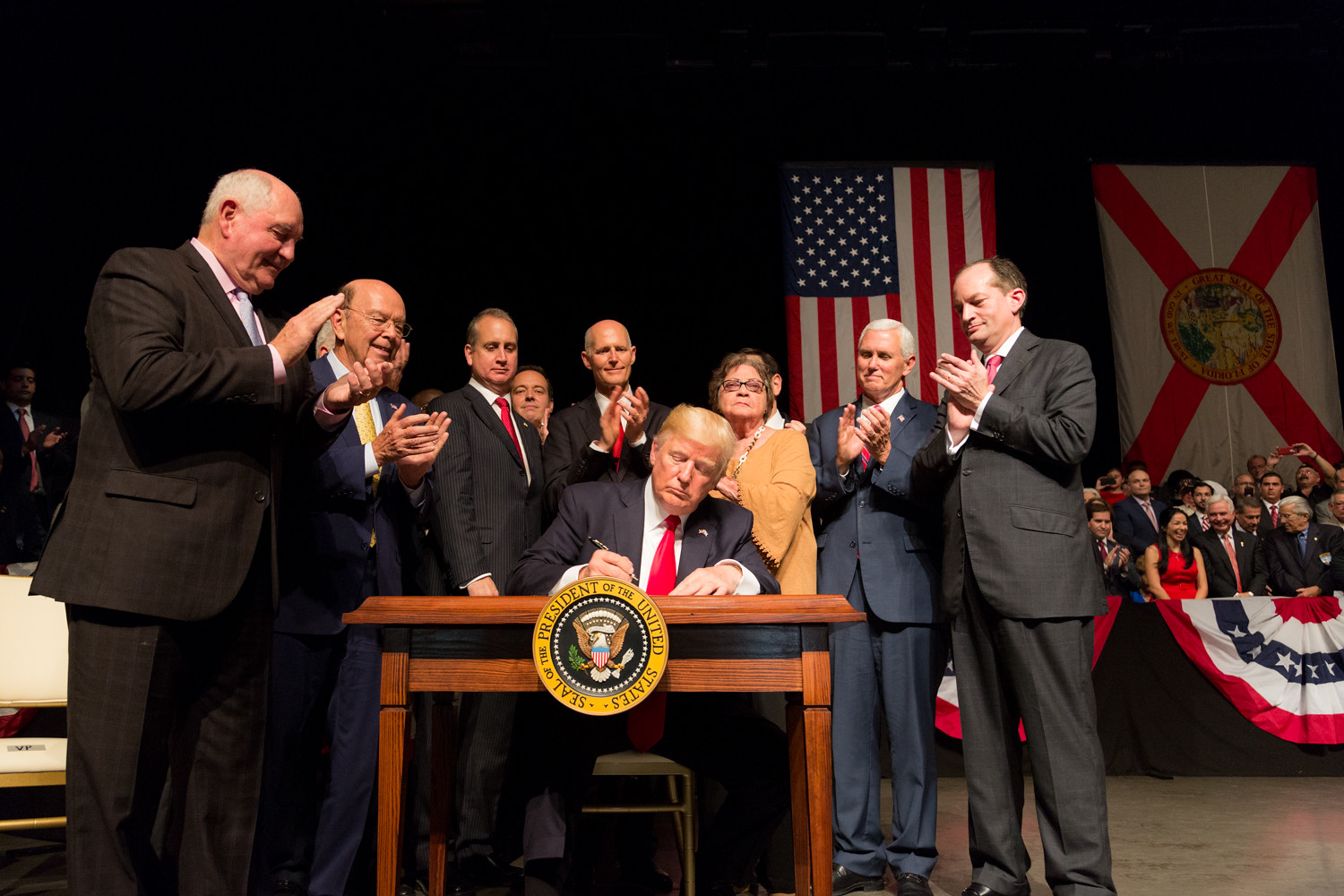
President Donald Trump signing an order to reimpose some sanctions on Cuba, June 16, 2017.(White House, Shealah Craighead)
Since 2017, the U.S. has significantly intensified the embargo against Cuba, claiming extraterritorial sovereignty over the island. Both major parties have supported sanctions to appeal to Cuban American voters in Florida, many of whom have gravitated toward MAGA. The Ladies in White celebrated Trump as “the Achilles heel” of socialism.
The embargo, a modern siege tactic, blocks Cuban access to finance, fuel, farming inputs, and more. During the Covid pandemic, U.S. agents literally sought to suffocate the island by denying oxygen and ventilators.
Since 1992, the U.N. General Assembly has passed 33 resolutions condemning the embargo, which it says results in losses amounting to trillions of dollars.
This year, Trump justified harsher sanctions by invoking the Monroe Doctrine, historically used to justify the 1898 invasion. Ironically, he labeled Cuban socialism as undemocratic while meddling in elections in Argentina, Honduras, and Colombia to boost the regional far-right.
He also pardoned former Honduran President Juan Orlando Hernández for drug trafficking to strengthen isolation of Cuba and other leftist governments. Leaked audio recordings reveal Hernández and allies boasting about plans to “eradicate the cancer of the left,” including establishing a “new North American base” in Honduras “for conflicts… [with] Cuba.”
Cuban-American hardliners most actively drive this current wave of hostility. Despite their democratic rhetoric, their leaders reflect the corrupt conservatism of Batista’s era, pushing Cuba toward humanitarian disaster.
Secretary of State Marco Rubio’s key political allies, the Fanjul brothers, own a sugar plantation accused of using forced labor in the Dominican Republic. Similarly, Trump’s top Cuba adviser Mauricio Claver-Carone is infamous for sexual and financial scandals.
More widely, the Cuban American National Foundation, Cuban Democratic Directorate, and other pillars of the Florida lobby have misappropriated government funds, attacked critics violently, or orchestrated terrorist acts against Cuba.
Using her human rights credentials, Payá currently leads Pasos de Cambio, a coalition of counter-revolutionary factions, and has endorsed a “Liberation Agreement” seeking regime change.
Cuban citizens label the embargo “genocide,” reporting soaring infant death rates and widespread starvation.
Conversely, Payá’s associate Orlando Gutiérrez-Boronat of the Assembly of the Cuban Resistance calls it “a great achievement by Cuban exiles,” asserting it grants them the authority to rule Cuba.
Appealing to his base, Trump recently celebrated the 1898 invasion, hinting that a new colonial chapter begins: “Cuba … is coming our way.” Payá commended the president, noting “the historical parallels” and crowning his administration “the best ally of the Cuban people.”
As tensions rise, Rubio has demanded that U.N. members “refrain from delivering any remarks” critical of American policy or face consequences.
The Pentagon is reportedly exploring plans for a possible air invasion of Cuba. U.S. lawmakers who visited the island in July warn that sanctions have transformed Cuba into a “silent Gaza,” methodically squeezing Cuban society.
Ultimately, Cuba’s humanitarian emergency reflects a 128-year contest for the island. The Platt Amendment and Monroe Doctrine have evolved into the “Donroe Doctrine,” making unprovoked aggression a guiding strategy.
Legally, the blockade amounts to colonialism under another name: an extraterritorial claim of sovereignty aimed at starving Cubans, wrecking the economy, and forcing submission—even as the island endures and resists.
Original article: consortiumnews.com
About the Author