
Silver Will Rise Again
In ancient times, commodities like salt and grain served as some of the earliest forms of money because they were widely desired.
However, these “currencies” had significant drawbacks. Salt could dissolve when exposed to water, and grain was prone to spoilage.
Moreover, their intrinsic value was relatively low, making them suitable only for very basic barter transactions.
About 5,000 years ago, with the advent of metal mining and processing, copper emerged as a form of money. People crafted rings, bars, and even early rudimentary coins from it.
In those days, copper held great worth as it could be fashioned into tools such as knives and axes.
In ancient China, authorities issued copper alloy knives as currency—a true example of “hard money.”
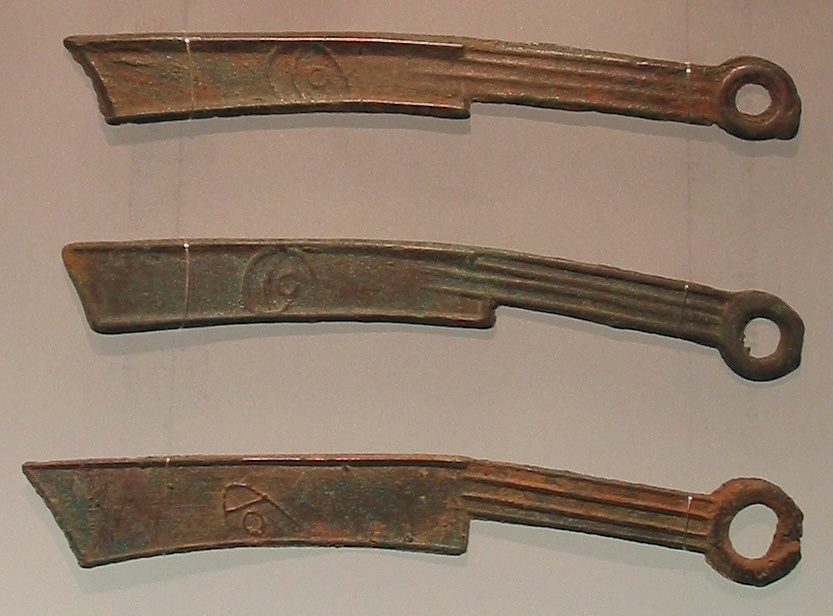
Ancient Chinese knife money. Source: Wikipedia
The invention of bronze, which is mostly copper combined with tin, marked a significant technological advance. It was stronger than pure copper, enabling the production of improved tools, weaponry, and armor.
For many centuries, coins, bars, and ingots of copper and bronze were typical monetary instruments.
Nonetheless, as mining output grew, these metals became more abundant, reducing their value. To purchase a cow, you might have needed an entire chest of copper or bronze.
Silver, being rarer, soon rose to prominence as the preferred currency. It represented a perfect balance—not overly scarce, but not too plentiful either.
For roughly the last 3,000 years, silver has dominated as the favored monetary metal worldwide, with brief interruptions that were ultimately temporary.
The Modern Gold Era
Gold has also served as money for millennia, yet before mass mining operations, it remained exceedingly scarce.
Only the wealthiest individuals owned significant quantities of gold—a reality that continues today, given its steep price of around $4,400 per ounce.
Conversely, silver has traditionally been the currency of the common populace. With a supply approximately nine times greater than gold’s, it remains rare enough to retain value but sufficiently accessible for many to possess some.
Historically, the gold-to-silver ratio hovered near 10, meaning gold was about ten times more valuable than silver.
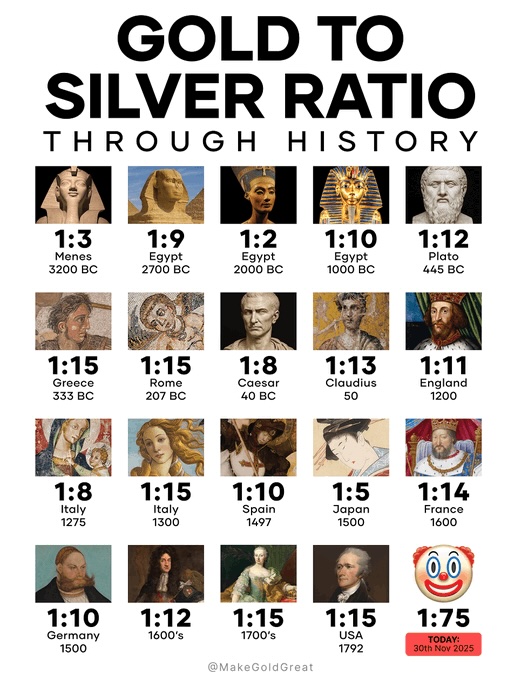
Source: Make Gold Great
Currently, gold’s price equates to 67 ounces of silver, indicating silver is much cheaper relative to gold than it once was.
Since 1965, silver coins have largely disappeared from circulation, effectively removing silver from active money use.
Today, silver primarily serves industrial roles. It is the most efficient electrical conductor known and resists corrosion, which makes it essential in modern electronics.
Its significant role in solar panel manufacturing—accounting for roughly 22% of total silver consumption—underscores its industrial importance.
Gold, on the other hand, remains more firmly established as a monetary asset, largely because central banks like the Federal Reserve keep substantial gold reserves.
Yet, gold’s dominance as the prime “hard currency” might not be permanent…
Silver’s Inevitable Return
After silver’s removal from money status in 1965, its price has fluctuated dramatically.
During the 1960s, the U.S. government sold vast silver stockpiles at very low prices.
The 1970s introduced turbulence—marked by inflation, sluggish growth, and financial instability—ushering in the era of fiat currency.
These challenging times are precisely when silver’s value shines brightest.
Starting 1970 at about $1.80, silver dipped to $1.27 by late 1971 before embarking on one of the most extraordinary bull runs in history, surging near $50 by early 1980.
During that decade’s high inflation, many sought ways to safeguard their money, with silver becoming a popular choice.
The Hunt Brothers’ attempt to “corner the silver market” played a role in amplifying the price surge, though silver’s rise would have been robust even without their involvement. I detailed this episode in a letter last year here.
The central takeaway: when inflation intensifies, silver remains a go-to for everyday people seeking monetary protection. It seems ingrained in us.
A Silver Phoenix
Though silver was once the planet’s leading money, current perceptions largely relegate it to a historical artifact.
Now primarily an industrial metal, silver’s monetary status looks set to revive once inflation escalates amid ongoing debt challenges.
As inflation pressures mount, individuals will turn to silver as an inflation shield, store of value, and speculative asset. The early-year silver price surge was merely a prelude to what lies ahead.
Since silver’s present price largely reflects industrial needs—which tend to be steady and predictable—analysts can fairly accurately project its value based on production and consumption data.
However, investment demand remains unpredictable; a speculative frenzy is impossible to forecast precisely.
Currently, only about 18% of silver purchases serve investment purposes, such as buying coins and bars. This ratio causes pricing to align more with industrial factors than monetary demand.
Should investment interest rise modestly to 25%, it would ignite significant price spikes, as seen briefly this year when silver jumped from $35 to $115 within roughly nine months.
I anticipate that as the debt crisis deepens and inflation worsens, silver will experience an even more substantial resurgence. In an increasingly digital—and vulnerable—world, many will seek tangible assets to preserve wealth. For most, gold remains prohibitively costly.
Once again, silver will become the common person’s metal, serving as a vital means to protect and enhance wealth.
Presently, silver trades near $65 per ounce, which I consider a solid purchase price for long-term investors. Short-term movements are hard to predict, but over five years, I am confident prices will climb significantly.
When the next silver mania occurs, I plan to have substantial holdings.
I remain patient, waiting for that upcoming surge.
The Hoover Dam Through a Garden Hose
We must also keep silver miners in mind. When the next price frenzy arrives, their value will soar dramatically. The chart below compares the total market capitalization of every silver miner ($66 billion) against that of major tech giants.
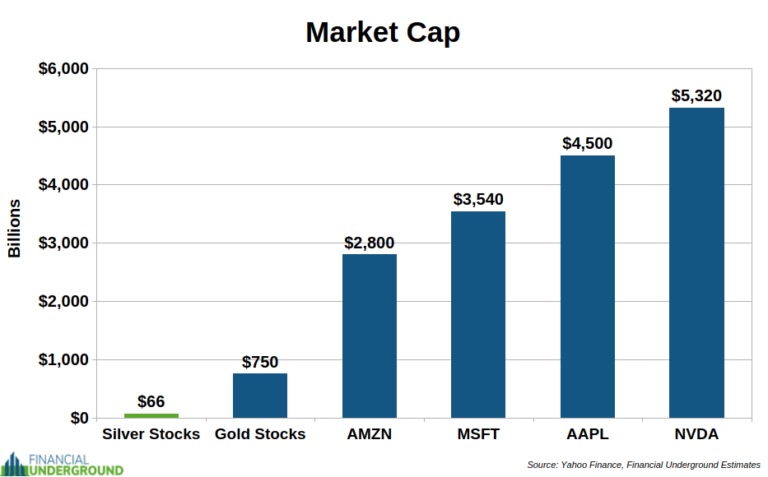
Souce: X
The entire silver mining sector worldwide is valued at just one-eightieth the size of Nvidia (NVDA). Hence, a surge in silver investment would inject a huge influx of capital into a relatively tiny market.
This brings to mind Doug Casey’s observation:
“The market capitalization of silver [miner] equities is insufficient to accommodate the inflows of capital from generalist investors when the precious metals narrative takes over.
When the generalist investors come in, the result is like trying to siphon the flow of the Hoover Dam through a garden hose.”
This illustrates how small silver and its mining companies are. When the flood of money arrives, the impact can be explosive.
About the Author