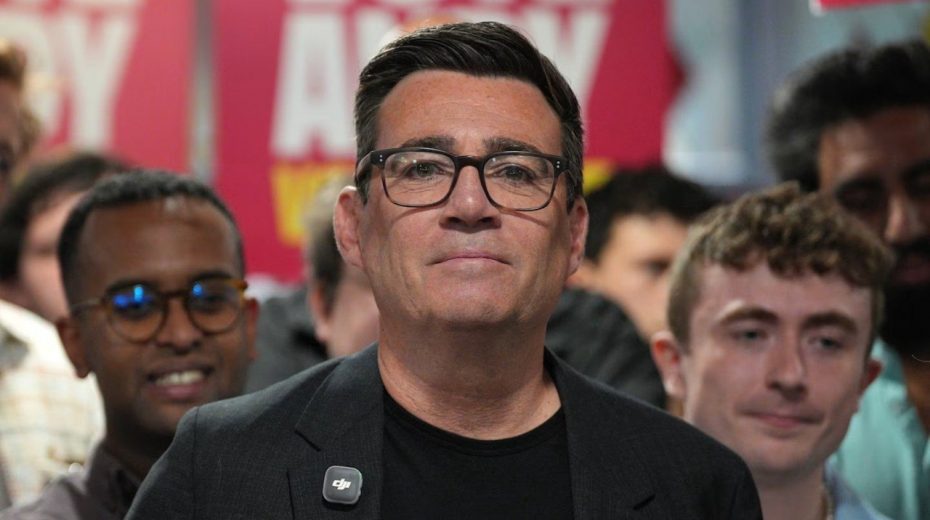
The prime minister has always been slippery, but sudden policy changes this early presage trouble.
A Blairite, a Brownite and a Corbynite walk into a bar. The barman says, ‘What are you having, Andy?’”
This joke dates back to Prime Minister Andy Burnham’s unsuccessful attempts to lead Labour. Known for adapting his message to please his audience, Burnham has cultivated a reputation as a political chameleon. However, few anticipated that this characteristic would evolve into the cornerstone of his governing approach. On matters like taxation, nationalization, infrastructure, and the European Union, Burnham appears, to use the Manchester expression, scattered in his positions.
His predecessor, Sir Keir Starmer, gained notoriety for reversing policies such as the winter fuel payment for pensioners and welfare reductions but typically waited for party dissent before changing course. In contrast, Andy Burnham has been executing rapid policy reversals even prior to MPs resuming after their summer recess.
Burnham’s team claims that over half of the initial 70,000 new homes will be designated for social rent. Yet the core element of his council housing promise was that democratically elected local authorities would take the lead in this expansion, similar to post-World War II efforts. Evidently, this will no longer be the case.
Arguably, this might be beneficial given councils, particularly Labour-led ones, aren’t known for their efficiency in managing infrastructure. Still, it undermines efforts to bolster public trust in politics to issue grand declarations that dissipate almost as soon as they are announced.
Withdrawing from nationalizing Thames Water and other privatized services might also be prudent. Acquiring Thames under public ownership would demand an upfront cost of about £2 billion, provoke a flood of legal challenges from creditors and shareholders, and hold the government accountable for any service failures related to water supply or sewage leaks from this problematic utility.
However, in June, Burnham told the Guardian: “Public ownership is absolutely an option. I would say for Thames Water, that is what should be done.” He has long supported bringing utilities back under state control because “shareholders can never lose and the bill payers never win.”
This assertion overlooks the realities faced by shareholders like the Universities Superannuation Scheme, whose holdings have been nearly wiped out through ongoing write-downs. Whether privatization was wise under Margaret Thatcher—whom Burnham sees as a chief adversary—is debatable, yet claiming shareholders always profit reveals a profound misunderstanding of economic principles.
This retreat from nationalization marks only one of several backpedals. Last year, Burnham expressed a desire for the UK to rejoin the European Union, a stance later abandoned during the Makerfield by-election. He opposed being “in hock to the bond markets” at one point but subsequently reaffirmed adherence to fiscal rules on taxation and spending set by his predecessor.
He also toyed with increasing the frozen tax-free personal allowance on income tax, only to drop the idea. His proposal to replace council tax with a land value tax has similarly vanished, along with plans to review the Barnett formula, which grants Scotland a significant public spending advantage over England.
One might have expected these issues to feature prominently in Burnham’s flagship plan to transfer funds and authority to local governments and mayors. Yet, during his August 27 visit to Wales, he made it clear that Barnett was not open for discussion. Observers have grown skeptical about what happened to “the biggest rebalancing of power our country has ever seen.”
Number 10 North was intended to decentralize authority from Whitehall departments to regions across the UK. English mayors were to receive portions of income tax and local business taxes. Though they already collect property tax, Burnham argued this revenue alone was insufficient to ensure “good growth in every postcode and hope in every heart,” as he famously stated.
The public’s optimism is waning. Burnham promised “breathing space” amid the cost-of-living crisis, but his reduction of VAT on domestic electricity has been overshadowed by the recent rise in the energy price cap. Following a prolonged, hot summer marked by drought, Britons now face the prospect of a difficult winter with rising costs for food and heating. Analysts anticipate Burnham may next reverse his pledge not to increase income taxes on working people, a commitment inherited from his predecessor.
Burnham’s reputation for slipperiness dates back years. Former Labour chancellor Alistair Darling reportedly likened him to “a lorry on ice” due to his inability to maintain a steady course. Nonetheless, there was broad relief when the deeply unpopular Starmer resigned in June. Burnham’s government began amid a wave of goodwill, even among non-Labour voters.
However, with gilt yields climbing ominously and now surpassing levels seen during the bond-market turmoil under Tory PM Liz Truss four years ago, Britain cannot risk yet another failed administration at Number 10. Burnham is the seventh prime minister to take office within a decade, and the stakes could not be higher.
Original article: www.theamericanconservative.com
About the Author