Europe desperately needs to restore its supply of Russian oil and gas. Gas prices remain elevated – as all UK energy consumers are aware – and Germany’s gas reserves are at their lowest for September on record. Production from the Gulf has declined, deliveries have been halted, and the region’s long-term strategic reliability is compromised.
Between 2022 and 2026, German industrial output declined by 9.5% following the cessation of Russian gas supplies, with energy-intensive sectors (including petrochemicals, chemicals, metals, glass/ceramics/stone, paper, mineral oil, and others) experiencing a sharper drop of 15.2%.
Western Europe faces two options to regain Russian hydrocarbon supplies: either negotiate a peace settlement in Ukraine or pursue regime change in Russia. European political leaders have clearly opted for the latter.
Resolving the Ukraine conflict would, naturally, be a much simpler and safer course of action. However, the European political “elite” appear unwilling to choose this path for the following reasons:
- Leaders deeply invested in the conflict with Russia, such as von der Leyen, Kallas, Merz, Rutte, Stubb, risk losing political stature and credibility
- Generational family and national animosity toward Russia, particularly among those aiming to reverse outcomes of World War II in Eastern Europe – including von der Leyen, Kallas, Merz, Stubb
- Strong interconnected interests between politicians and the military-industrial sector
None of these motivations prioritizes the well-being of their populations, much less the cause of “democracy.” It is difficult to find another instance where a push toward war has been founded on so little.
Take the United Kingdom, for example. Like many Western nations, it openly supplies Ukraine with long-range missiles, missile production blueprints, and trained personnel, fully aware that Ukraine employs these weapons to attack civilian infrastructure deep inside Russia, causing numerous civilian casualties.
Yet politicians and media repeatedly portray Russia as the threat to the UK, when the opposite is demonstrably true. Throughout its three centuries of history, Russia never planned to invade or occupy the UK – despite the UK having invaded Russia in 1854 and 1917. Given our government’s aggressive stance, it’s reasonable to assume Russia is developing defensive strategies against the UK.
Perceiving the boundaries of a Ukrainian state—which did not exist historically prior to 1991—as inviolable to prevent World War III is irrational. These were solely Soviet internal administrative borders. Ukrainians have the right to their own state, but they cannot demand retention of Soviet-era limits while having:
- closed Russian-language schools, universities, bookstores, theaters, cinemas, libraries, kindergartens, banks, and churches
- banned the Socialist Party, Communist Party, Left Party, eleven additional parties, and eight trade unions
- persisted in glorifying Nazi and genocidal figures from Ukraine’s past—thereby alienating Poland
The idea that nuclear war should hinge on a dispute as trivial as the mayoralty of Lugansk lacks public endorsement. Consequently, Western governments and the EU are deliberately intensifying Russophobia. A recent example is the unconvincing narrative concerning the “Leipzig airport attack.” Just yesterday, Western European leaders simultaneously declared the evidence plainly shows a “hybrid attack” by Russia.
Every single one of them uses the same expression ‘hybrid attack’.
Why? pic.twitter.com/pHJE2gJ2iZ
— John Laughland (@john_laughland) September 2, 2026
No supporting evidence accompanied these pronouncements.
Germany, of course, has precedent with such false flag operations. On the night of August 31 to September 1, 1939, it staged fictitious Polish attacks on the German border post at Gliwice (Gleiwitz) and other sites. Bodies of political prisoners disguised in Polish uniforms were placed at these locations, and a Polish-language radio broadcast was issued. This “incident” served as the pretext for Germany’s invasion of Poland the following day.
The “Russian attack” on Leipzig Halle airport occurred on August 4, yet coordinated accusations against Russia were only released on September 1 by Western European countries. Some suggest this timing was deliberate, coinciding with the Gliwice anniversary. While this seems improbable, failing to avoid such a historically infamous date—especially for an event four weeks earlier—is unusual.
Putting aside the warmongers’ narrative, the real scandal lies in Ukrainian aircraft being stationed in Leipzig loaded with German weapons aimed at Russians—not in an alleged amateur drone that purportedly failed to explode.
Labeling this incident a Russian attack, especially from the same officials who falsely accused Russia of destroying the Nord Stream gas pipeline, stretches public credulity and tests patience.
In the UK, proponents of Russophobia—including government ministers—frequently cite the absurd “Russian novichok on Salisbury” claim to justify preparing for conflict with Russia.
None have adequately addressed the detailed criticism I presented in my article Pure – Ten Points I Just Don’t Believe. I now add another point, uncovered thanks to Tim Norman and his review of the Sturgess Inquiry. Employing a judicial inquiry to determine cause of death instead of a coroner’s court—which would be standard—is almost always indicative of a government cover-up, as seen with the Hutton Inquiry and the David Kelly case.
The inquiry did receive a toxicology analysis on Dawn Sturgess from Birmingham’s NHS central lab, revealing the substances in her bloodstream.
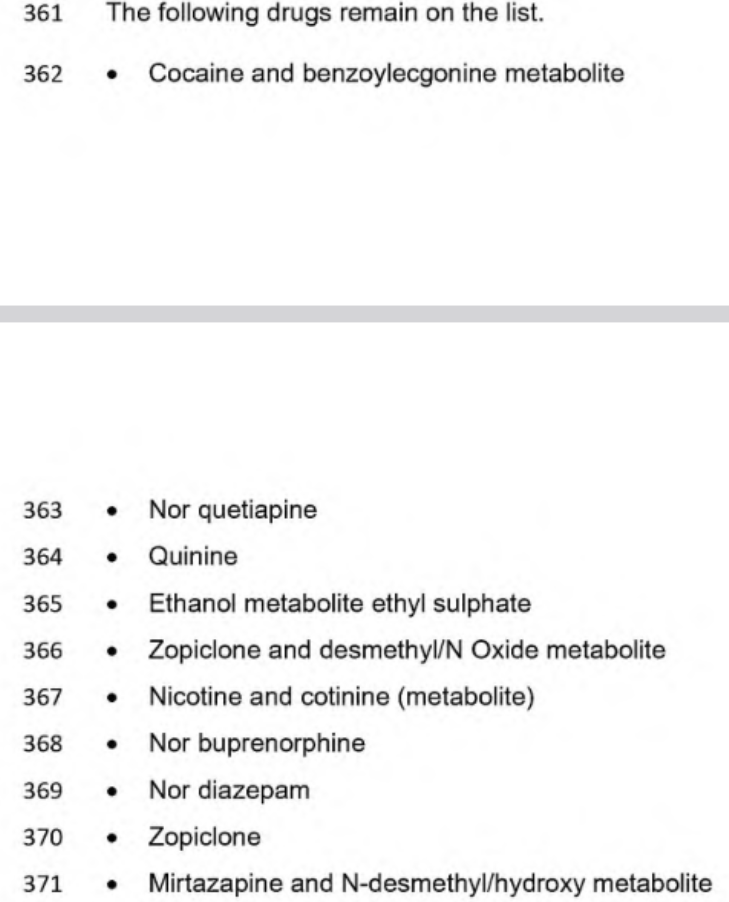
Though fentanyl was detected, it was excluded from the submitted findings because it was administered during hospital treatment. This omission doesn’t confirm whether fentanyl was present beforehand. What is certain is that cocaine, a synthetic opioid typically prescribed to heroin addicts, gin and tonic, two separate antidepressants, and sleeping pills were identified.
Novichok was absent. The claim that a prominent NHS laboratory missed detecting organophosphate poisoning—or was not testing for it in the blood of someone from Salisbury amid a media furor over novichok—is entirely unfounded.
Only the Ministry of Defence facility at Porton Down reported detecting novichok and controlled the samples provided to the OPCW—an equally compromised organization.
Dawn Sturgess was a fragile, recognized long-term drug user. The combination of substances in her blood could be fatal depending on quantities. Remarkably, the inquiry’s pathologist stated he had no information on quantities or concentration levels, leaving him unable to rule out these substances as the cause of death.
This is astonishing. Toxicology reports lacking concentration measurements are clinically meaningless. After consulting three doctors, two nurses, and a senior NHS administrator, all concurred it’s implausible such quantifications would be omitted. Assuming the pathologist was truthful, these details must have been deliberately removed—likely by government, probably to conceal the true cause of death.
Let’s acknowledge the obvious: the substances present in her blood strongly suggest a clear cause of death.
The inquiry’s major flaw was that skepticism toward the official story was not assigned to anyone. The sole non-governmental participant was Michael Mansfield, representing Dawn Sturgess’ family, whose role was to argue that Sturgess was not a drug addict. This—regrettably false—version served the interests of both the government and the family.
It pains me to disclose unflattering facts about a deceased woman who was, in many ways, a tragic victim of circumstance. However, cocaine and buprenorphine do not enter the bloodstream accidentally. Consequently, the police were forced to apologize during the inquiry for labeling Dawn Sturgess a drug addict.
Thus, we have claims of novichok exposure in Salisbury that did not result in death, and alleged explosive drones—possibly two—in Leipzig that did not detonate. To confront these exaggerated threats, an entire continent is being propelled toward nuclear conflict. The first step involves slashing health and social budgets to funnel trillions into arms manufacturers and conscript our children for military service to perish on battlefields.
Excuse my skepticism.
Original article: Craig Murray
About the Author