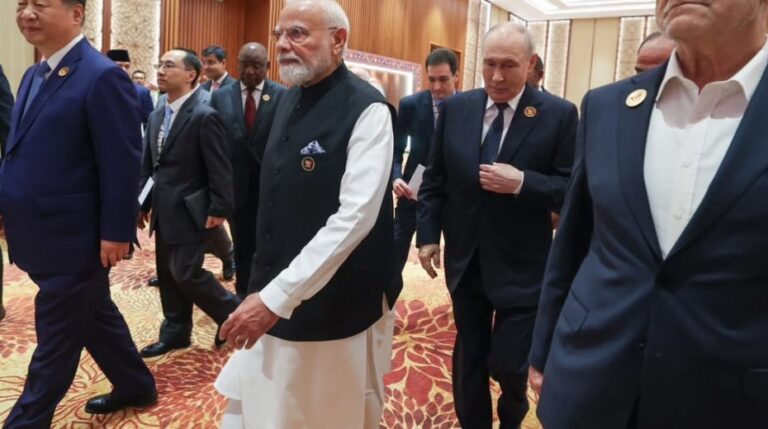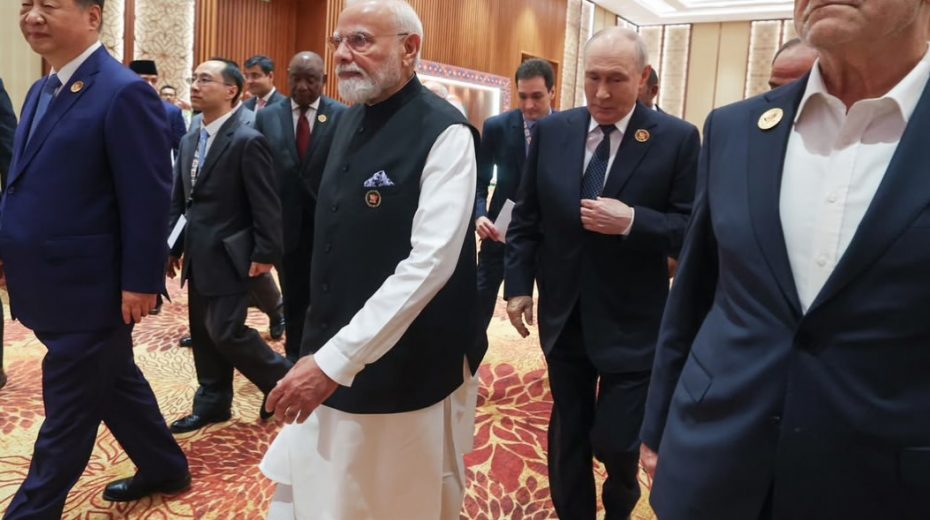
The center of gravity shifts, even if the institutions remain unchanged.
Four points and a preface
Prior to the BRICS foreign ministers’ gathering in New Delhi on May 15, 2026, Subrahmanyam Jaishankar offered a concise and carefully measured address. Free from any striking slogans or overt challenges, his diplomatic remarks were finely tuned, culminating in a precise three-word conclusion: “Cooperation is essential. Dialogue is necessary. Reform is overdue.” The tension hinges on the term overdue—suggesting that reform is late and long-awaited.
Speaking as the chair for the year, India was setting the tone for the upcoming BRICS summit of heads of state in September, following the May 14–15 foreign ministers’ meeting. This speech was not a casual opinion piece; it represented the official stance of the chair setting the bloc’s strategic direction.
The conference ended without a unified declaration due to disagreements surrounding Middle Eastern issues, leading to a more tentative Chair’s Statement. This absence of consensus is noteworthy, illustrating that institutional reform remains the sole common platform where the BRICS can still find agreement amid contentious topics.
The speech’s structure is straightforward: it begins with a premise followed by four main points. The foundational premise emphasizes that United Nations members convene “as sovereign equals” — a principle that Jaishankar underscores as fundamental to legitimate multilateralism. This statement is pivotal, reflecting the political core of the speech: sovereign equality is no empty UN dictum but rather the standard against which institutional legitimacy should be judged. If the Security Council privileges certain states over others, it is the Council itself that violates this founding ideal, not those advocating reform.
The first point addresses reform of the UN, focusing on the Security Council. Despite the UN’s membership growth, its primary structures remain outdated. India demands a broader representation, increasing permanent and non-permanent seats to include voices from Asia, Africa, and Latin America. New Delhi’s long-standing bid for a permanent seat is framed as continental inclusion rather than mere national aspiration, a rhetorical approach hard to contest—how can anyone oppose better representation for billions across three continents in the body responsible for decisions on war and peace?
The second point delves into procedural issues, revealing more about the underlying dynamics. Jaishankar calls for “text-based negotiations,” a significant shift in UN reform talks. Those familiar with UN processes know this implies moving beyond general declarations to a concrete, negotiable draft—a step that has historically stalled reform progress. While broad principles maintain unity, specific texts defining membership and powers provoke division. Pushing for actual text crystallizes the demand to confront core issues rather than avoid them under procedural cover.
Points three and four transition to economic matters: revamping the global financial system and fortifying the multilateral trade framework. They urge multilateral development banks to mobilize resources effectively, stress the need to improve financing for development and climate efforts, and emphasize the WTO’s central role in ensuring a rules-based trading system—correcting “asymmetries” that disadvantage developing nations. These economic dimensions foster the strongest cohesion within BRICS, centered on shared material interests despite geopolitical differences.
Keyword: reformed multilateralism
The entire address revolves around the concept of reformed multilateralism, a deliberately charged term. India explicitly rejects two polar alternatives: an uncritical defense of a dated Western-led system established in 1945 and the dismantling of existing institutions in favor of new parallel entities. India does not wish to replace the UN with a separate BRICS UN but seeks inclusion in control of the current organization.
This reflects a choice within the evolving multipolar landscape, highlighting an internal divergence among rising powers. Some, inspired by certain Russian and Chinese perspectives, consider the 1945 institutions inherently hegemonic and advocate supplementing or supplanting them with alternative structures like the New Development Bank and regional payment systems. Conversely, India promotes reform from within, favoring institutional evolution. This strategic bifurcation raises a fundamental theoretical question for multipolarism: reform or parallelism? Proponents of reform worry new blocs could fragment the Global South, while advocates of parallel institutions caution that reform means submitting to gatekeepers’ rules.
Though not explicitly stated, Jaishankar’s speech aligns with the reformist camp. By emphasizing the WTO’s central role and the necessity for dialogue involving “all” parties, he favors inclusion in existing institutions over ruptures. This stance aligns with India’s tradition of multi-alignment: participating across various forums to maximize leverage without closing doors.
A contradiction and the key point of sovereignty
However, the speech leaves unsaid a crucial contradiction inherent in the reformist strategy. The institutions targeted for change are controlled by actors with a vested interest in maintaining the status quo. Security Council reform demands a two-thirds General Assembly vote plus consent from all five permanent members, each wielding veto power. Expecting these members to vote away their privilege resembles asking monopolists to legislate competition against themselves.
The push for “text-based negotiations” reveals this contradiction. Stalemate isn’t due to lack of goodwill but because one or more permanent members have incentives to block progress. China, especially, has historically opposed India’s bid for a permanent seat, and Minister Wang Yi’s absence at the New Delhi meeting—a geopolitical statement amid Trump’s visit to Beijing—underscores the underlying tensions. BRICS is not monolithic; internal rivalries complicate consensus, with one member seeking the seat and another denying it.
Reformism functions less as a feasible program and more as a legitimizing tactic, securing the moral high ground by advocating “more democratic, representative, and equitable” institutions and shifting accountability for stasis onto others. Each year that reform remains unrealized bolsters the argument that the system is unchangeable, indirectly empowering alternative institutions. Therefore, reformist and alternative approaches are not just competitors; repeated reform failures inadvertently fuel the alternative path’s appeal.
An essential element differentiating India’s view from Western liberalism is its grounding in “respect for sovereignty and territorial integrity,” “international law,” and “recognition of different national circumstances.” The phrase “diverse national circumstances” signifies a quiet but decisive rejection of universal normative models claiming a single valid template for governance, rights, and development.
Instead, this discourse embraces governance respecting multiple national trajectories. Not relativism, but a perspective rooted in sovereignty and civilizational plurality rather than universal values. This represents one of the BRICS’ strongest points of convergence beyond divergent institutional approaches. Regardless of the chosen path—internal reform or parallel construction—the common denominator is refusal to be judged by externally imposed standards. Future governance will be negotiated among actors without allegiance to a single normative center. This, more than any specific organizational reform, embodies the core of multipolar discourse.
Feasibility
What can we expect in the coming months? While uncertainties remain, it is highly probable that the September summit will endorse reformed multilateralism as the official stance of the BRICS, representing the most widely acceptable minimum across the bloc. However, significant advances on Security Council reform seem unlikely, as veto powers, Sino-Indian rivalry, and the permanent members’ disinterest persist unresolved.
The economic and financial agenda looks more promising for tangible progress. These areas allow BRICS to act independently of permanent UN members’ consensus: initiatives like cross-border payments, national currency trade settlements, and reinforcing development banks offer spaces for autonomous development. This paradox shows that while reform of universal institutions remains stymied by existing power hierarchies, transformation is occurring laterally within economic domains beyond those institutions’ control. Thus, the “necessary” reform Jaishankar advocates may unfold through circumvention rather than direct institutional overhaul.
This is the key insight multipolarism should draw from the speech. Outwardly a reformist appeal, the message’s essence reveals a gradual migration of influence away from the institutions ostensibly targeted for change.
“Reform is overdue,” the minister declared. He is correct. Historically, institutional reforms rarely originate internally; instead, they arise when external pressures accumulate sufficiently to render internal processes ineffective.
About the Author