The question Europe should ask itself is whether it still wants to be a place where thought is not only consumed but also produced.
The anomaly of the Steppe
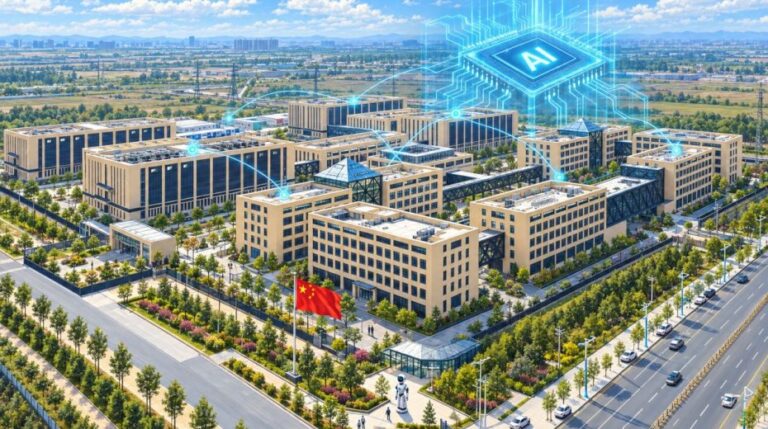
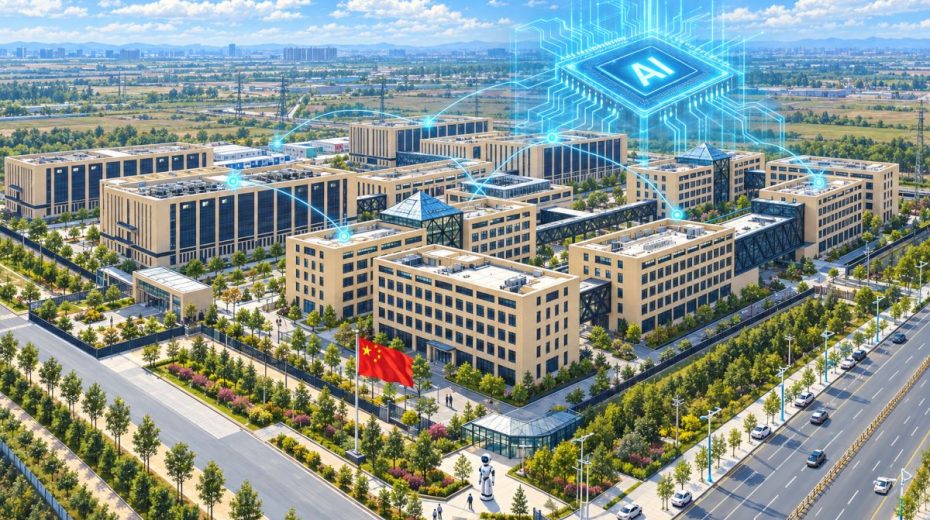
Deep within Inner Mongolia, less than 200 kilometers from Beijing, lies a prefecture scarcely recognized on maps. Ulanqab, home to just over 1.5 million people and spanning an area larger than Denmark, was until recently notable mainly for holding a Guinness World Record. Today, however, this expanse of grassland accounts for nearly 1% of China’s entire electricity consumption—a striking figure given its population size. This figure does not reflect household use but a calculated total.
Bertrand has pieced together an account that merits serious attention—not merely due to the intriguing data, but because of its insights into 21st-century power structures. His investigation prompts a fundamental geopolitical question: why would a nation deliberately centralize artificial intelligence’s essential resources in a remote steppe, and what does this reveal about the evolving connection between sovereignty, energy, and computing?
The initial explanation is environmental. Ulanqab’s unique physical traits offer a natural edge for constructing computing infrastructure. Its frigid climate—with an average yearly temperature near four degrees Celsius and winter lows frequently dipping to minus thirty—allows servers to remain cool without the expense of air conditioning. Consistent wind and sunshine supply abundant renewable energy at competitive rates. The area’s sparse population density, mere dozens per square kilometer, means land is inexpensive or free. Moreover, its closeness to Beijing ensures latency between the data center and the country’s primary demand hub remains as low as one millisecond.
Yet environmental factors alone don’t tell the full story. Similar cold, windy desert regions exist worldwide, but no other superpower has positioned its computational core there. Ulanqab’s prominence stems from deliberate government intervention. In February 2022, China’s National Development and Reform Commission introduced the dongshu xisuan strategy, “data in the East, computing in the West.” This initiative designated eight national computing centers—including one in Inner Mongolia—to deliberately separate data generation and consumption zones in China’s prosperous East from processing sites where land and energy are abundant and inexpensive. Launched nine months before ChatGPT’s public debut, the plan did not predict the surge of generative AI but astutely recognized that computing power represents an energy-intensive strategic asset demanding dedicated spatial planning.
This marks the emergence of a significant geopolitical divide. China approaches computing as critical infrastructure—akin to railroads, power grids, or pipelines—requiring deliberate geographical organization. Conversely, the West, especially Europe, has allowed data centers to cluster based on real estate markets and existing fiber-optic and energy networks, often near financial hubs and overburdened grids. This divergence is not about efficiency but reflects fundamentally different visions of state governance.
Energy and intelligence
China’s edge centers on energy costs. The power grid serving Ulanqab is atypical within China: managed regionally rather than by national monopolies, it operates on a smaller scale with greater flexibility, providing among the world’s lowest industrial rates, largely fed by renewables. State-controlled media confirms that electricity prices in Ulanqab and Hohhot hover around one-third of Beijing’s costs, achieved by directly routing power from wind farms to the data center.
The strategic importance of this was inadvertently highlighted by a leading US AI industry figure: the cost of artificial intelligence will ultimately align closely with energy expenses. If this holds true—a hypothesis rather than a proven fact—the energy landscape directly dictates the geography of intelligence. Those generating electricity at just a few cents per kilowatt-hour gain a structural advantage in inference costs, a pivotal input poised to be as ubiquitous in the 21st century as electricity was in the last century.
Here, geopolitics intersects with physics. Power involves converting energy into ordered work—effecting change in the physical world. Artificial intelligence embodies this transformation, turning electrical energy into cognitive output via computation. Ulanqab stands out as the site where this conversion is realized at the lowest possible marginal cost on an industrial scale. It is neither a factory producing goods nor a raw material mine, but rather a facility converting energy into thought efficiency expressed in cents per kilowatt-hour.
At this juncture, interpreting the phenomenon through traditional geopolitical frameworks proves revealing. A century ago, Halford Mackinder identified the power center of global politics within Eurasia’s continental core—the Heartland—a vast, inland region inaccessible to maritime forces, granting strategic depth poised to dominate the surrounding island-world. Anglo-Saxon sea powers countered this by centering authority on oceans, ports, and trade routes.
Computational infrastructure unexpectedly revives continental logic. A frontier data center requires no port or sea lanes, only cheap energy, affordable land, cold climate, and sufficient proximity to demand centers. These resources characterize the Eurasian interior, not the coastal zones. Though Ulanqab is not a “Heartland” in Mackinder’s military sense, it shares essential traits: strategic depth, energy self-reliance, relative protection from attack, and centrality to networks of flow. It emerges as a computational Heartland, suggesting that the AI era may privilege geographies sidelined during the maritime age.
This is not an isolated case. The dongshu xisuan policy is viewed within Chinese media as part of the “Digital Silk Road”: envisioning the inland west as the hub of Eurasia’s digital economy, akin to how ports and railways anchor its physical logistics. The territorial embedding of computing infrastructure forms part of a broader spatial strategy, paralleling the Belt and Road’s physical infrastructure development. Viewing multipolarity simply as a redistribution of power among nations misses half the story; the other half concerns reshaping strategic geographies: which places rise in significance, and why.
The economy of tokens
From this foundation, Bertrand perceptively identifies the potential for “exporting inference.” While energy and computational capacity remain within China’s borders, the AI output—tokens, the fundamental units of language processing—can be distributed globally. Chinese analysts now discuss suanli chuhai, or the “globalization of computing power.” Data from OpenRouter, a major model routing platform, illustrates this trend: over roughly 18 months, Chinese models grew from negligible usage to constitute about 60% of consumption among leading AI models by early 2026. The decisive factor is not absolute quality but price: Chinese open-source models cost a fraction of Western counterparts while delivering similar performance across many applications.
China’s strategy here is clear, clarifying its commitment to open source. Distributing free models is neither an act of altruism nor a sign of weakness; it follows a classic commercial approach akin to selling printers below cost to profit from ink sales. The open-source AI models become commodities, but the infrastructure supporting them—energy, compute power, and chips centered in Ulanqab—remains the scarce, profitable, and strategically managed bottleneck. Thus, value shifts from the model to its underlying infrastructure.
For Europe, this poses a sovereignty challenge surpassing mere economic concerns. With electricity costs for industry four to five times higher than those on the Chinese steppe, Europe faces a tough choice. It can outsource data processing abroad, benefiting from lower costs and increased purchasing power but relinquishing control over where its data resides; or insist on domestic processing, safeguarding sovereignty but forcing industries to absorb vastly higher inference expenses. Bertrand frames this dilemma starkly: dependence or irrelevance. Low-cost computing risks dependency; high-cost computing risks obsolescence.
While compelling, this formulation warrants careful consideration, as it rests on a significant assumption.
Three outcomes present themselves with different levels of likelihood.
First, almost certainly and in the near term, inference costs will become as critical to industrial competitiveness as energy and labor expenses. Economies with access to inexpensive compute power will gain advantages across sectors from logistics to design. The question “Who processes our ideas, and at what cost?” will transition from niche concern to a central pillar of industrial policy.
Second, with moderate likelihood, computational sovereignty will emerge as a distinct domain of governance and strategic concern, alongside energy sovereignty and supply chain security. Early signs appear in European digital regulations and US chip export controls; it is reasonable to expect this domain to crystallize into formal doctrines in the coming decade.
Third, and most uncertain, is the broader structural shift. Ulanqab exemplifies that multipolarity involves not just the redistribution of power among familiar players but a fundamental reshaping of its physical underpinnings. Power in the 21st century increasingly depends on a territory’s ability to convert energy into computation, and computation into decision-making. In this light, Inner Mongolia’s steppe is not peripheral but becoming a central node; its quiet rise amidst grasslands and herds marks the trajectory of the global center of gravity.
The question Europe should ask itself is not whether to accept or reject Chinese influence, but rather whether it still wants to be a place where thought is not only consumed but also produced.
About the Author