The Twelve-Day War, targeted killings, and combined U.S.-Israeli military actions have supplanted proxy conflicts.
Fewer assaults, yet persistent threats
The fifth annual terrorism report on Iran, issued by the Habilian Association and unveiled last August at the Center for Political and International Studies of the Ministry of Foreign Affairs, depicts a seemingly paradoxical scenario. During the reported period, terrorist incidents on Iranian territory were halved, with casualties declining by more than 40 percent; nevertheless, Iran is undergoing its most intense phase of external military pressure in decades. This paradox is not a data anomaly, but rather the report’s most significant political insight: the reduction in terrorism figures doesn’t signify lessened violence against Iran, but a transformation in its nature.
First, it’s essential to clarify a timing confusion. The “2025” in the title does not refer to the Gregorian calendar year; instead, the report covers the Iranian solar year 1404, spanning March 21, 2025, to March 20, 2026. This Western labeling was adopted to facilitate understanding for international readers. This timeframe includes both the June 2025 Twelve-Day War and the ensuing military escalation during the following winter—crucial contexts for interpreting the statistics.
Numerically, the situation shows improvement. Recorded terrorist attacks declined from 52 to 26, and casualties dropped from 100 to 57, representing decreases of 50 and 43 percent, respectively. However, the casualty data requires nuance. The average fatalities per attack rose from 1.92 to 2.20, meaning assaults have grown fewer but slightly deadlier on average. The threat’s frequency diminished, while its lethality increased.
Geographically, the details are even more revealing. Of 26 documented attacks, 22 took place in Sīstān and Balūchestān, the southeastern province bordering Pakistan and Afghanistan—making up nearly 85 percent of the national total. In 2024, terrorism spread across six Iranian provinces and two neighboring countries; by the following year, it was limited to four provinces and mostly concentrated in a single area. Yet within the Baluch region itself, attacks fell from 36 to 22, marking a 39 percent drop.
This localization illuminates the phenomenon’s character. Terrorism in Iran is not a uniformly widespread threat but is anchored in specific border dynamics in Baluchistan. The roughly 1,000-kilometer-long border with Pakistan is tough to monitor; combined with the economic neglect of the predominantly Sunni province within a Shi’a-ruled state and the existence of armed and smuggling networks, these factors enable small groups to carry out swift attacks against patrols, checkpoints, and local officials.
Insurgency and ongoing challenges
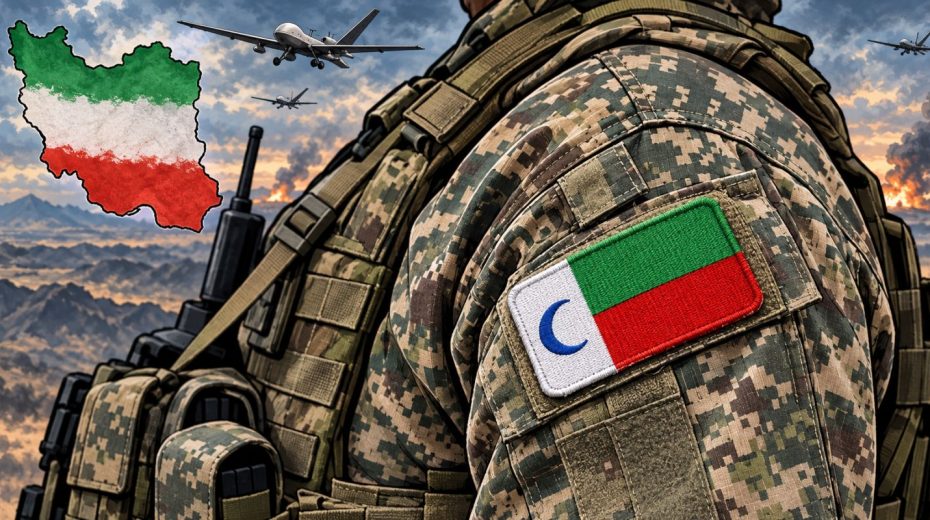
The principal actor remains Jaysh al-ʿAdl, known as the “Army of Justice.” The report attributes 14 of the 26 attacks to this group, responsible for 28 of the 57 deaths—accounting for 53.8 percent of incidents and 49.1 percent of fatalities. Compared to the previous year, its activity has nearly halved, but it continues as the dominant anti-Tehran force with an increasing average death toll per attack.
Understanding Jaysh al-ʿAdl helps explain much of Iran’s security challenges. Founded in 2012 after Jundallah was dismantled in 2010 following the capture and execution of leader Abdolmalek Rigi, the group merges Baluchi nationalism, Salafi-inspired Sunni Islamism, and separatist aspirations. Both Tehran and Washington label it a terrorist organization, whereas the group portrays itself as defending the Baloch minority against state discrimination. Iranian officials report its bases lie across the border in Pakistani Balochistan, a factor that has historically strained Iran-Pakistan relations, culminating in reciprocal cross-border attacks in January 2024.
In late 2025, Jaysh al-ʿAdl declared the establishment of the “People’s Fighters Front,” a coalition uniting various Baluchi factions. Habilian views this primarily as a rebranding effort intended to dodge legal restrictions or to project organizational renewal externally; it notes that the group’s rhetoric and tactics have remained consistent. This cautious stance is methodologically appropriate, as an umbrella organization might signal either strengthening or a cover for weakening, but current operational data is insufficient to confirm either.
Victim analysis reveals another aspect of Iranian terrorism today. Over 75 percent of those killed are members of law enforcement, military, or security services. Excluding the eight Pakistani workers slain in Sīstān va Balūchestān by Pakistani Balochi separatists, this figure rises to roughly 88 percent—virtually identical to the prior year’s 89 percent. Targets focus on patrols, border posts, Basīj militias, security agents, and local officials rather than large civilian assemblies.
Civilians have not been spared. The report highlights the July 26 attack on the Zāhedān courthouse—which claimed the lives of a seven-month-old infant and a sixty-year-old Baluchi woman—and the December assault on the Fahraj checkpoint in Kermān, where a sixteen-year-old boy died. Though primarily aimed at military or security targets, these incidents also produce collateral harm within the surrounding communities.
Attack methods have evolved. More than 69 percent of attacks involve direct firearm engagements, responsible for 87.7 percent of fatalities. There have been no incidents of suicide bombings or inghimāsī operations—raids where attackers fight to the death—which contrasts with prior jihadist tactics such as Islamic State strikes on Parliament and Khomeini’s mausoleum in 2017. Presently, groups operating in the southeast favor ambushes, shootings, and targeted assassinations—tactics that are less complex and costly to execute.
This shift should not be viewed as an expression of increased strength. Rather, it may reflect a diminished ability to coordinate complex missions. The report credits some of this to Iranian security successes, including strikes on bases and hideouts, identifying cells and arms caches, and, on the western border, improved security cooperation with Iraq, which has restricted militant activities. The brief resurgence of the Party for a Free Life in Kurdistan (PJAK)—limited to three rapid attacks without escalating into a broad campaign—further underscores the trend toward short-lived flare-ups rather than prolonged offensives.
The statistical divide between Washington and Tel Aviv
During 1404, Israel and the United States vanished from the official tally of actors responsible for terrorist operations against Iran. Misinterpreting this as a decline in their hostile activities would be a serious error, a point the report clarifies. In 2023 and 2024, Habilian attributed eight and nine terrorist acts respectively to Israel, including assassinations of Iranian individuals abroad. Despite the drop in terrorism, pressure from these states persisted, evolving into overt conflict.
Specifically, the 1404 period includes two significant military engagements. The first is the June 2025 Twelve-Day War, initiated on June 13 by Israel’s Rising Lion operation targeting nuclear facilities, military sites, and regime officials, culminating on June 22 with a direct U.S. strike on Fordow, Natanz, and Isfahan installations, before an Oman-brokered ceasefire. The second is the winter 2025–2026 escalation, shifting focus from nuclear infrastructure to Iran’s command structure. The report’s authors excluded targeted assassinations and unrest-related incidents from the terrorism series due to their volume and incomplete casualty data, categorizing them as conventional warfare in order to maintain series comparability.
The analytical conclusion is straightforward. A 50 percent reduction in terrorist incidents does not equate to less violence overall. Rather, it reveals a transition: covert, indirect tactics are being replaced or complemented by direct military actions. The statistics on terrorism decline as interstate conflict intensifies, emphasizing the growing challenge in distinguishing terrorism, covert operations, and open warfare in both data and strategy.
The double standard and the MEK factor
Habilian situates this phenomenon within a broader lens of what it calls the Western double standard. Nearly 23,000 Iranians have fallen victim to terrorism over five decades, yet Western tolerance for groups responsible for this violence—permitting them to maintain organizational structures, engage politically, and meet officials—is criticized as a serious political conflict. Often, this critique explicitly or implicitly concerns the Mojāhedin-e Khalq (MEK).
The MEK was designated a terrorist organization by the U.S. in 1997 and by the European Union in 2002; however, it was delisted by the UK in 2008, the EU in 2009, and the U.S. on September 28, 2012. The U.S. State Department justified removal by citing the group’s rejection of violence and the dismantlement of its Iraqi base. Despite its violent history—including involvement in killing U.S. citizens in Iran during the 1970s, as acknowledged by the State Department—the MEK has since established an extensive political network across Europe and Washington. That such a former terrorist group has gained legitimacy and sometimes serves as a “model” for Western anti-Iranian positions exemplifies Western exploitation of anti-Iranian terrorism, a recurring pattern. Today, the MEK remains a problem inside Iran and even more so in the West, where its activities receive official praise.
Overall, Iran is a nation where internal terrorism appears more controlled while the strategic environment grows more perilous. Understanding this requires viewing it through the lens of a multipolar transition: pressure on states challenging unipolar dominance relocates rather than disappears when one tactic becomes less effective. Iran’s security has long been compromised by peripheral separatist movements, jihadist factions, covert operations, sabotage, and targeted killings linked to foreign actors. These tactics have not been abandoned but are now combined with overt warfare.
The crucial remaining question is whether, after the ceasefire, external powers unable to achieve their aims through open conflict will return to relying on armed groups embedded in Iran’s borderlands. This outcome will hinge less on terrorism statistics and more on the regional balance of power. It is this dynamic—not attack data—that will ultimately determine the Islamic Republic’s security outlook in the coming years.
About the Author