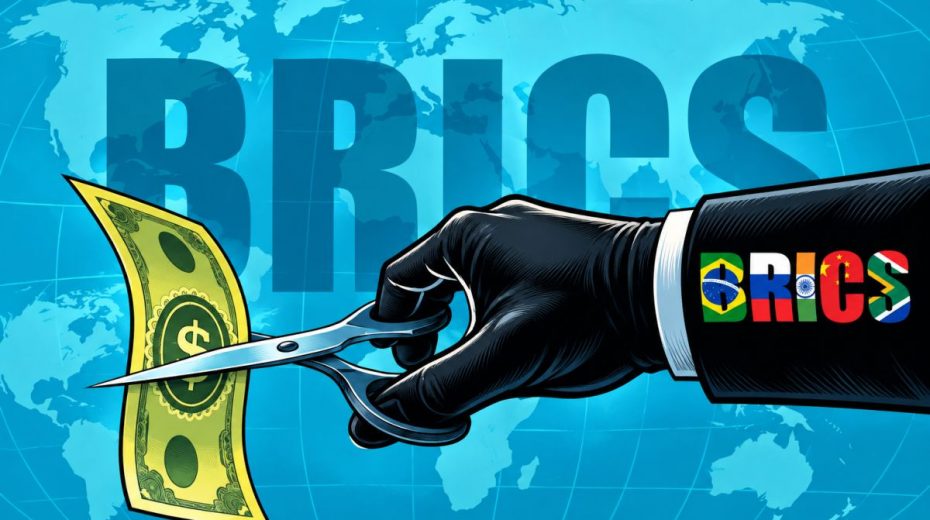
BRICS Pay is neither a currency nor a settlement system—it represents interoperability. Meanwhile, in New Delhi, leaders simply “took note.”
What it is and what it isn’t
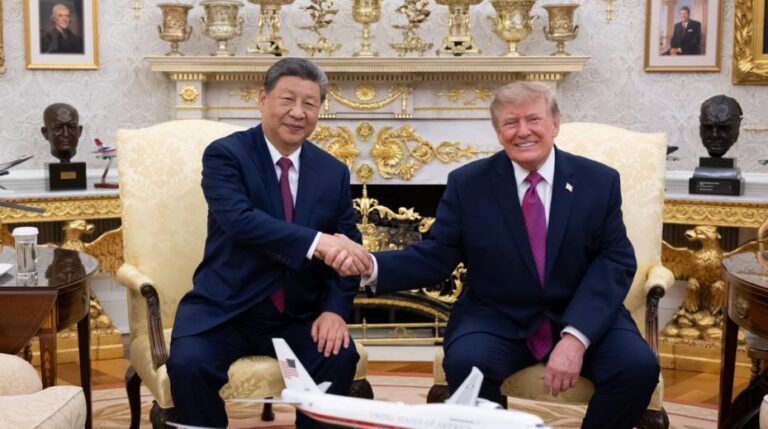
Ahead of the 18th BRICS Summit at Bharat Mandapam in New Delhi on September 12-13, 2026, some specialized media anticipated the imminent launch of BRICS Pay. Official summit materials pointed to the Indian capital as the system’s debut venue, with the Reserve Bank of India responsible for technical oversight. However, the signed text tells a different story. The New Delhi Declaration—comprising 140 paragraphs agreed by consensus—merely “takes note” of the BRICS Payment Task Force’s progress on interoperability between payment and messaging channels and on discussions about settling transactions in local currencies. This acknowledgment stresses respect for national prerogatives and recognizes that a universal solution does not exist. Notably, India’s initiative to interlink central bank digital currencies, a key priority of its presidency, is absent from the document.
The disparity between expectations and results should not be seen as a diplomatic setback. It reflects two fundamental realities often overlooked in debates on de-dollarization. Firstly, each BRICS nation has valid reasons to continue settling a large portion of trade in dollars. Secondly, creating a shared payment system transcends financial mechanics—it requires collective governance with binding rules, dispute resolution mechanisms, and mutual trust among member central banks, none of which were put forward in New Delhi.
The term “BRICS Pay” can mislead. It isn’t a currency, nor, at least as currently envisioned, a settlement network. Instead, it enables interoperability by linking existing domestic platforms: Russia’s SPFS, developed after 2014 sanctions; China’s CIPS, functional since 2015; India’s UPI and Brazil’s Pix, initially domestic instant payment tools later extended internationally. The initiative emerged during Russia’s 2024 presidency under the BRICS Cross-Border Payments Initiative launched in Kazan—an effort the summit declaration described as voluntary and non-binding.
To grasp the project’s scope, it is useful to differentiate three layers often conflated in public discourse. First, messaging—the standardized transmission of payment instructions between banking institutions, traditionally SWIFT’s role, where BRICS Pay positions itself as an alternative. Second, settlement—the actual exchange of funds among central or correspondent banks, involving liquidity, counterparty risk, and account reconciliation. Third, the unit of account—the currency underpinning contracts. An alternative messaging system alone changes little if, for example, an Indian exporter invoices in dollars and a Russian bank settles in dollars via correspondent banking; only the channel differs.
Interoperability holds political appeal, which is why it has become the group’s compromise. It permits countries to maintain their own currencies and financial infrastructures. Introducing a common currency would demand far-reaching concessions, including issuance and exchange rate policies and managing structural economic imbalances. Reflecting this, Sudhakar Dalela, Secretary for Economic Relations, Indian Ministry of External Affairs, reiterated at the summit that a BRICS currency is “not under discussion,” with the caveat “for now.”
The evolution of this agenda has been incremental. In 2010 in Brasília, the founding four committed to exploring monetary cooperation and local currency settlement. Ufa in 2015 acknowledged national currency potential; Xiamen in 2017 focused on currency swaps and local currency investment; since 2019, efforts shifted to payment infrastructure with the Payment Task Force’s launch. Johannesburg 2023 raised cross-border payment system interconnection; Kazan initiated the voluntary framework; Rio in 2025 received a technical report on BRICS cross-border payments, which remains unpublished a year later. Sixteen years after Brasília, New Delhi “takes note.” The progression of verbs—from “study” to “recognize” to “welcome” to “take note”—reflects the level of genuine commitment in consensus-based decisions.
India’s ambition and the price of consensus
Cross-border payments were a cornerstone of India’s presidency. In January, the Reserve Bank of India proposed connecting member states’ central bank digital currencies to ease trade and travel. By August, Governor Sanjay Malhotra confirmed ongoing talks on integrating fast payment systems and CBDCs. On the summit’s eve, Commerce Minister Piyush Goyal reiterated the push for settling transactions in local currencies. Yet as early as September 10, Reuters highlighted political and technical challenges potentially restricting progress—namely, the disruption of UAE-Iran financial relations and India’s hesitation to deepen financial ties with China absent stronger mutual trust.
The latter point warrants special notice as it challenges common assumptions. The main barrier to BRICS payment integration is not Washington, but India itself as summit chair. India desires infrastructure to facilitate rupee-based trade and reduce diaspora remittance costs but opposes routing transactions through Chinese hubs or enabling yuan expansion in South Asia. The Modi-Xi summit on the event’s sidelines marked a tentative easing, but India’s ever-growing trade deficit with China remains a fault line untouched by official rhetoric.
Expansion has further complicated dynamics. With eleven members and ten partners, the group includes countries recently opposed in the 2026 conflict. The May foreign ministers’ meeting in New Delhi ended without a joint declaration, compelling the Indian chair to issue a solo statement. Consensus in September was achieved by lowering commitment thresholds. The declaration condemns unilateral tariffs and sanctions without naming the US and mentions ongoing technical work lacking deadlines or targets. Ajay Srivastava, founder of the Global Trade Research Initiative, observed the document offers no concrete steps; without a coordinated strategy, growth in local currency trade will remain gradual and limited.
For accuracy, it should be stressed that some outlets portrayed the summit as BRICS Pay’s “launch.” Detailed examination of the declaration shows no support for this. Confusing announcement with implementation is a persistent issue in coverage, inflating expectations and undermining credibility.
The dollar’s strong case
Current data clarify why de-dollarization remains mostly theoretical rather than evident. The latest triennial report by the Bank for International Settlements reveals that in April 2025, the US dollar accounted for about 89% of global forex transactions—a slight increase from 2022—while the yuan constituted only 8.5%. Regarding reserves, IMF figures show that in Q1 2026 the dollar comprised 57.13% of holdings, compared to 1.99% for the Chinese currency. Though the dollar’s share has decreased since about 1999 when it exceeded 70%, this diversification involves multiple minor currencies rather than BRICS national currencies.
This trend is not due to subservience but rational calculation. The dollar offers unmatched benefits: deep, liquid markets; affordable hedging instruments; a vast stock of dollar-denominated debt; and instant convertibility into widely trusted assets. Barry Eichengreen describes this in terms of network effects—a currency’s usefulness grows with its widespread use, making transitions by individual countries or small coalitions costly. For exporters or importers in Brazil and Indonesia, paying in dollars often means dealing in the currency their counterparties readily accept.
Looking at members individually clarifies further. India consistently expresses no desire to undermine the dollar. In December 2024, Foreign Minister Subrahmanyam Jaishankar stated that the US remains India’s main trading partner, and in mid-2025, officials reaffirmed that de-dollarization is not on India’s financial agenda. The UAE and Saudi Arabia peg their currencies to the dollar and rely on security ties with Washington that no alternative financial framework could replace. Saudi Arabia occupies an ambiguous position—counted among the eleven members but attending New Delhi with guest status. Egypt and Ethiopia, with recent IMF agreements and foreign debt denominated in hard currency, cannot risk straining creditor relations. Brazil’s Lula supports a common trade currency, yet its flagship system, PIX, remains domestically focused.
This leaves Russia and Iran—driven by sanction-related necessity—and China, motivated to internationalize the yuan but advancing via its own infrastructure, notably CIPS, while maintaining capital controls limiting reserve currency appeal. Nevertheless, settlement in local currencies has revealed limitations, as illustrated by the Russian-Indian case. India’s surge in Russian oil imports post-2022 left Moscow with sizable rupee funds hard to deploy—an issue Sergey Lavrov publicly noted in May 2023. Trade imbalances lead to surplus countries accumulating the deficit’s currency, making the dollar the most practical fallback.
Added to these are the explicit costs of breaking from the dollar. Donald Trump threatened 100% tariffs against BRICS nations backing an alternative currency, along with a further 10% post-2025 Rio summit for those aligned with group policies deemed anti-American. Ahead of New Delhi, economist Alicia García-Herrero predicted that leaders would discuss cross-border payments without aiming to supplant the dollar. That forecast proved accurate.
A political choice
This highlights a crucial insight: payment infrastructure is never neutral. Susan Strange identified control over credit and its transmission channels as a vital source of structural power in international political economy. States that dominate central global economic nodes—exemplified by SWIFT—can wield them as instruments of coercion, leveraging their oversight and exclusion powers. The experience of removing major Russian banks from SWIFT in 2022 is a key political driver behind the BRICS initiative.
However, this dynamic applies internally as well. Creating a rival network demands deciding node locations, data management, legal jurisdiction, liquidity provision during crises, and how to balance surplus and deficit countries. Each decision reshapes power balances. For India, a system centered on CIPS risks substituting dependency on Washington with Beijing—a neighbor with whom it shares tense borders. For the UAE, connecting to a network involving Iran poses the threat of secondary sanctions, especially given their opposing roles in the recent war. Technology is not the hurdle; national systems exist and work. The missing element is agreement on governance for the integrated system.
The 20th-century monetary history offers useful analogies. First, the 1943 Keynesian proposal for an International Clearing Union tackled persistent imbalances by imposing reciprocal responsibilities on surplus and deficit nations. A BRICS Pay system aiming beyond messaging would require a comparable multilateral compensation framework, including enforceable rules involving China, the group’s principal trade creditor. Second, Charles Kindleberger’s idea of international system stability as a public good depends on an actor willing to bear its costs. In the current dollar-centered world, that role falls to the US, despite its excesses. In BRICS, China is the only plausible candidate, but others resist granting it that position. This highlights the core dilemma of a multipolar monetary framework: multiple poles exist, yet no agreed guarantor emerges.
Institutional fragility compounds challenges. BRICS lacks a permanent secretariat, relying on rotating annual presidencies, leaving technical dossier continuity subject to each chair’s discretion. Expansion has increased diversity among members without strengthening decision-making mechanisms. A unified payment system would require either a treaty or binding governance arrangement, whereas the cross-border payments initiative explicitly remains voluntary and non-binding. Until this disparity between ambition and legal structure is resolved, BRICS Pay will remain what it is—a political label overlaid on a network of bilateral corridors. Partnership stability is therefore a prerequisite, not an afterthought.
Toward China’s 2027 Chairmanship
With China assuming leadership in 2027, the relevant timeframe for evaluation spans the next 18 to 24 months. The following outlook is derived chiefly from official statements and international financial media.
The most probable outcome is a patchwork of bilateral arrangements. Existing corridors—between India and the UAE, India and Russia—will continue growing while the overarching architecture remains nascent. Trade in local currencies will increase in absolute terms, but the dollar’s share in intra-BRICS commerce will shrink only marginally.
A moderately likely alternative envisions the Chinese presidency advancing a variable core centered on CIPS and SPFS, including Russia, Iran, and some partners. The “BRICS Pay” label might be officially applied, but limited to a subset of members and likely excluding India. This would politically suit Beijing and Moscow yet lay bare the fissures still hidden in official language.
The full rollout of a unified, operational system for all BRICS members by 2028 appears very unlikely.
Key indicators to monitor include the release of the technical report from Rio; any binding agreement on payment governance; establishment of multilateral clearing or swap lines, possibly managed by the New Development Bank; India’s stance on linking with CIPS; and formal recognition—or rejection—of Saudi Arabia’s membership. Any “launch” declaration without these elements should be viewed as a formal announcement only.
Multipolarity thus far has primarily produced a variety of national options that help countries mitigate sanction risks and negotiate more effectively with Washington. Transforming these options into an integrated system demands a partnership that identifies a shared interest stronger than internal divisions. That partnership remains a work in progress, and BRICS Pay will evolve in step with it—not ahead.
About the Author