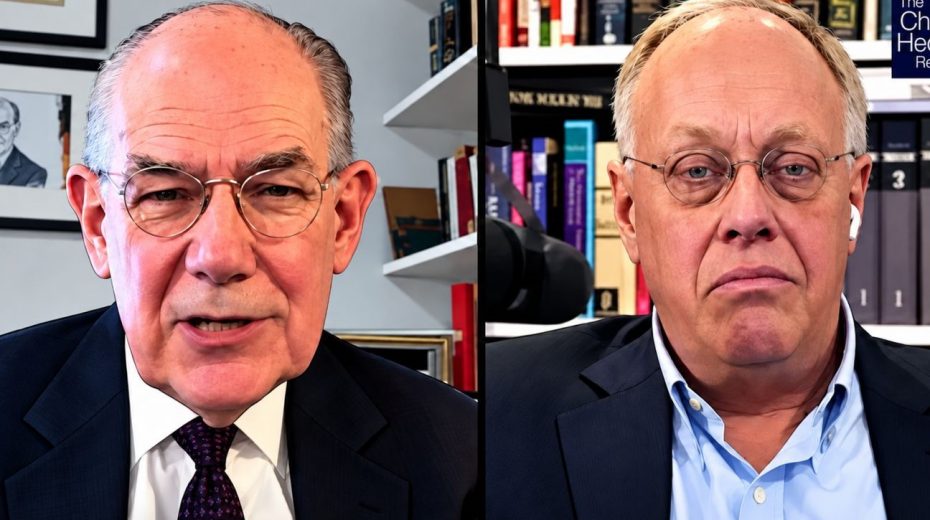
John Mearsheimer examines the diminishing US options to conclude the conflict with Iran and the escalating global economic crisis if the war persists.
Chris Hedges:
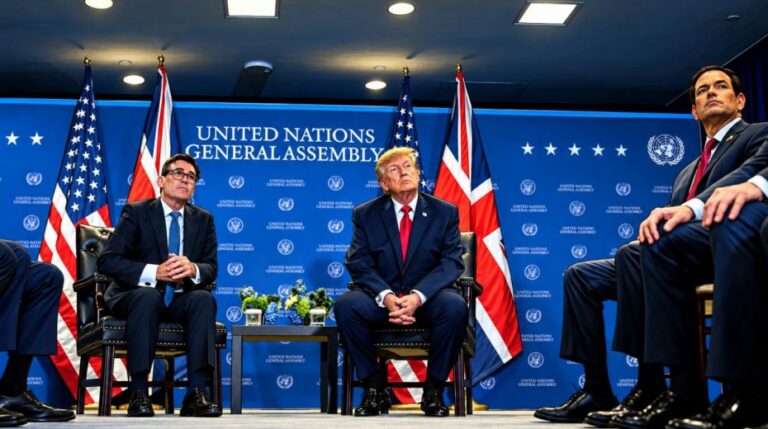
The situation regarding Iran remains locked in deadlock despite dialogue between US and Iranian representatives at the United Nations and Donald Trump’s dire threats to obliterate Iran. The Trump administration, which has failed to achieve any of its initial goals since attacking Iran on February 28th, refuses to concede defeat or negotiate a resolution. Iran, meanwhile, remains steadfast in its refusal to end hostilities, including by closing the Strait of Hormuz and blocking shipping through the Bab al-Mandab in the Red Sea, until it imposes severe costs on Washington to deter further assaults. Through the influence of their Houthi allies in Yemen controlling these vital energy chokepoints, Iran exercises a chokehold on the global economy. This disruption causes relentless surges in oil, gasoline, diesel, freight, and food prices worldwide.
It’s evident Iran anticipates that ongoing economic strain will contribute to the Republican Party’s downfall in the midterm elections. Last week, seven Republicans joined Democrats in a 220 to 204 vote to halt hostilities with Iran unless Congress authorizes action. This marks the third time the House has passed such a resolution. The war’s cost, deeply unpopular among Americans, continues mounting. In July, the House approved a $95 billion plan including about $73 billion in extra war funding, but only narrowly passed by 216 to 214, with two Republicans opposing it. Another GOP defection would break the tie, killing the proposal. Should voters punish Republicans over rising prices linked to the war, it will intensify pressure to halt funding for operations against Iran. Iran’s apparent goal is to outlast, rather than defeat, the US.
If Democrats regain control of Congress, they could block both new and existing funds. While Trump could veto such a measure, doing so would mean vetoing Pentagon funding, if not broader government financing.
Joining me to analyze the Iranian quagmire is Professor John Mearsheimer. He holds the title of R. Wendell Harrison Distinguished Service Professor of Political Science at the University of Chicago. A West Point graduate and former Air Force captain, Mearsheimer has authored several influential books, including “Conventional Deterrence”, “Liddell Hart and the Weight of History”, “The Tragedy of Great Power Politics”, “The Israel Lobby and U.S. Foreign Policy”, “Why Leaders Lie: The Truth About Lying in International Politics”, and “The Great Delusion: Liberal Dreams and International Relations.”
John, I’m curious if you agree that Iran’s current approach resembles what occurred during the Jimmy Carter-era hostage crisis.
John Mearsheimer:
It certainly shows strong parallels. Iran essentially must persist without yielding significant concessions to the US and Israel. The US and Israel are not simply seeking regime change but aim to dismantle Iran entirely, possibly breaking it into smaller states. From Iran’s perspective, the US represents an existential menace, making their determination to fight to the last person quite understandable.
Chris Hedges:
Let’s discuss Trump’s threats at the UN again to “annihilate Iran” and his promise that “Everything will be solved. The war will be over,” post-midterms. There is talk of potential large-scale strikes by the US and maybe Israel after the elections. How believable is this?
John Mearsheimer:
Practically none. If decisive military action could guarantee victory, why hasn’t it been undertaken already? The reality is there’s no clear strategy to win in Iran besides hoping economic collapse forces regime change and concessions. The idea of some hidden military option waiting for post-election execution is unconvincing. Notably, since the initial 40-day air campaign ending April 8th, no large-scale strikes have resumed, largely due to depleted stocks of critical munitions. We simply lack sufficient weapons for another offensive. Thus, I doubt any serious preparation exists for a post-midterm escalation.
If, hypothetically, a renewed offensive ensues after midterms alongside Israeli forces, the question arises: how would that produce victory? The initial campaign from February 28th to April 8th failed. What new plan do we have now? No one advocating war after the elections has detailed a strategy for success.
Moreover, considering the fragile state of the US and global economies, especially with supply issues in diesel and oil fueling inflation and bond market instability, there will be strong economic pressure—perhaps even before the midterms—to end this conflict. We may be edging towards a worldwide recession or worse, a depression, which presents huge economic risks. There seems to be no viable military path forward, making the economic incentives to terminate the war increasingly compelling.
Chris Hedges:
But this economic pressure has existed for some time and continues to worsen. Trump seems disconnected from reality, possibly influenced by sources like Natalie Harp who reinforce his distorted worldview.
John Mearsheimer:
That’s quite possible, and I emphasize “possible.” Yet Trump has repeatedly threatened major strikes against Iran only to retreat each time, including a week ago. His pattern of bluster without follow-through suggests he recognizes there is no effective military option. Using force would only worsen an already dire situation. We must hope that rational calculations guide him going forward. If so, the economic imperatives to end this war will only grow stronger as conditions deteriorate.
Chris Hedges:
Tell us about the impact the Houthis have had by disrupting Saudi oil exports.
John Mearsheimer:
The Houthis’ actions carry immense significance for global economic pressure since they are at war with Saudi Arabia. This has effectively cut off most Saudi oil shipments into both the Red Sea and Persian Gulf. Saudi Arabia initiated this conflict on July 13 by attacking Yemen’s main Houthi-controlled airport. The war simmered at a low level until escalating sharply around September 8. The Houthis possess formidable military capabilities, including numerous ballistic and cruise missiles, and have captured large territories giving them control over the Bab al-Mandab Strait, a crucial route for Saudi oil exports.
Additionally, allied militias in Iraq have targeted Saudi oil infrastructure, halting the pipeline vital for routing Saudi oil to the Red Sea. The Houthis have even attacked Yanbu, the main port for Saudi oil in the Red Sea. Consequently, Saudi oil exports have been severely constrained. The Saudis have informed European nations that no Saudi oil shipments will arrive in September or October. Meanwhile, Europeans face supply shortages as the Saudis seek oil and gas from Europe itself, further aggravating Europe’s energy challenges. This conflict severely affects the global economy.
Chris Hedges:
Wasn’t it about six or seven million barrels per day passing through that Red Sea pipeline?
John Mearsheimer:
The pipeline’s theoretical capacity is seven million barrels daily, but in reality, approximately four million barrels were transported, sometimes less, averaging around 3.5 million. The pipeline was halted after an Iraqi militia allied with Iran and the Houthis sabotaged three pumping stations along the route, cutting off the flow. Although reports indicate partial reopening, throughput now stands at about 40%, roughly 1.6 million barrels per day.
The Houthis and their allies remain incentivized to disrupt the pipeline again—attacking it is relatively straightforward, as shown recently. If the pipeline remains operational, they could still block the Yanbu port where oil is loaded onto ships.
Even if the pipeline and port remain open, Saudi oil exports depend on traversing the Bab al-Mandab Strait, now controlled by the Houthis. Thus, Saudi exports can be halted by destroying the pipeline, disabling the port, or blocking the Strait. The Saudis are undoubtedly in a dire situation.
Unsurprisingly, the Saudis have requested assistance from President Trump three times—twice on September 10 and once on September 17. Trump flatly rejected help on September 10 but signaled willingness on the 17th, suggesting an imminent attack to aid the Saudis against the Houthis. However, he later canceled the attack this past Sunday, underscoring the absence of a viable military option against the Houthis.
As mentioned, there’s similarly no military option against Iran. The US lacks any effective strategy to end these conflicts favorably. Thus, the current reliance is on the blockade and the economic strangulation plan crafted by Secretary of Treasury Bessent on August 24. The blockade and Bessent strategy represent the best tools available, but whether they can coerce Iran into regime change and submission seems extremely doubtful.
Chris Hedges:
How effective has the Bessent blockade strategy been in crippling Iran?
John Mearsheimer:
Its impact has been minimal. The blockade imposed on July 14 inflicted significant economic pain, but there’s no indication Iran is close to yielding. The more aggressive Bessent plan announced on August 24 aims to deepen Iran’s isolation by threatening severe repercussions against any country maintaining economic ties with Iran, including secondary sanctions. However, major Iranian trade partners like China, Russia, Turkey, and the UAE refused to cooperate, unwilling to jeopardize their own interests or provoke Iranian retaliation.
As a result, Bessent’s strategy has failed to compel critical trading partners to sever ties with Iran. It has resorted to pressuring countries to ban Iranian aircraft from landing, with sanctions on non-compliant airports or nations. Yet this has not forced Iran to capitulate.
China publicly refuses to comply; Iranian planes have even landed there since the policy’s enactment. More broadly, China and Russia continue to actively aid Iran. Israel plays little role, largely maintaining a watching stance after having initiated US involvement. Ultimately, this is a three-way contest: the US and Israel against Iran, China, and Russia. Both China and Russia benefit from tying the US down or seeing it defeated by Iran, and have accordingly offered substantial assistance.
Chris Hedges:
How exactly are China and Russia assisting Iran? Is it merely intelligence sharing and targeting support, or do they directly supply weapons? What is known?
John Mearsheimer:
Russia clearly provides intelligence support. Regarding China, a recent detailed Wall Street Journal report (dated September 24) reveals extensive aid shipments, including plane-load after plane-load of military equipment enhancing Iran’s drone and ballistic missile capabilities. China is Iran’s top trading partner, purchasing about 80% of Iranian oil exports. It has devised ways to dodge US sanctions through shell companies and banking networks enabling the oil trade.
Hence, China plays a dual role—helping sustain Iran’s economy and supplying weaponry that bolsters Iran’s capabilities against the United States. Russia operates similarly. It’s likely much remains undisclosed regarding the extent of their assistance.
From Beijing and Moscow’s viewpoint, prolonging or enabling a US defeat in the Iran conflict serves their strategic objectives, given tense US relations. Thus, they actively undercut US efforts.
Chris Hedges:
Regarding the blockade, the US claims it severely restricts Iranian oil exports and damages their economy. How true is that?
John Mearsheimer:
It appears the blockade effectively prevents most Iranian vessels from passing. Some argue Iran circumvents the blockade by transferring oil to Iraqi tankers, which then transport and sell it on global markets, including China. However, the scale of such activity remains uncertain and isn’t publicly verifiable, making it difficult to assess the blockade’s total effectiveness.
Chris Hedges:
Three factors helped mitigate the shock to global markets from the Strait of Hormuz’s closure: strategic petroleum releases by the US, Japan, and others; China’s large pre-existing oil reserves and reduced demand; and Saudi oil shipments rerouted through Bab al-Mandab. Are those buffers now ineffective, and does that foreshadow a rapid worsening of the global economic crisis? Even with these factors, commodity prices surged dramatically.
John Mearsheimer:
Yes. The US Strategic Petroleum Reserve stands at about 285 million barrels. Conventional wisdom warns that dipping below 250 million barrels risks damaging the storage caverns. We’re fast approaching that critical threshold.
Before the conflict, China imported 12 million barrels of oil daily. That dropped to around 7 million, partially offset by their reserves. Now imports have rebounded to roughly 9 million and appear to be climbing back toward 12 million.
Regarding Saudi oil, if the pipeline isn’t repaired promptly or is sabotaged again, or if Yanbu port becomes unusable, the consequences will be severe. A major diesel shortage also threatens, especially in Europe, which heavily depends on US and Russian diesel production. The US is considering restricting diesel exports, and Russia has already halted them—both developments that would severely strain European fuel supplies.
All these factors intensify pressure on the global economy, reinforcing why President Trump has strong incentives to end this war.
Chris Hedges:
Reports indicate a three-hour meeting at the UN with Iran’s foreign minister took place, yet progress on ending the conflict remains stalled. Resolving this would involve a form of Iranian victory, given their escalating demands compared to the original Memorandum of Understanding.
John Mearsheimer:
Optimism for a resolution is slim. Recent media speculation that Trump might pressure China to influence Iran ignores the fact that China benefits from prolonging the conflict or, at minimum, from a US defeat. Thus, China won’t cooperate, and Russia shares this stance. The Iranians themselves are committed to enduring due to their strategic advantages, especially as economic conditions deteriorate globally.
While Iran may offer small concessions, they have previously insisted on no negotiations until Trump leaves office in January 2029—an extreme position now softened enough to permit talks at the UN sidelines in recent days.
We’ve inflicted enough pain for Iran to seek a deal, but both sides will hard bargain, making a clear-cut US “victory” unlikely. Consequently, Trump may continue the blockade and Bessent strategy instead of negotiating. Yet mounting economic pressure might force him to pursue a major concession soon.
Recall the June 17th Memorandum of Understanding—one I’ve labeled a surrender document, representing US capitulation rather than Iran’s. Trump signed it then, aware of looming “economic catastrophe,” comparing it to the failures of Herbert Hoover. His long-standing awareness of the peril suggests that if the war drags on, a deal may become unavoidable to avert widespread economic disaster.
Chris Hedges:
Recent leaks reveal significant damage to US bases in the region, including Bahrain’s naval base suffering heavy strikes. Can you assess the extent of this damage and whether rebuilding is likely, or if this marks a shift in Gulf alliances?
John Mearsheimer:
For months, we’ve known Iran has demolished or severely harmed nearly all key US military facilities in the Persian Gulf. This forced relocation of US assets to Jordan, Israel, and Europe, and reliance on Diego Garcia thousands of miles away instead of Bahrain, created logistical challenges. These conditions explain difficulties faced by the USS Abraham Lincoln carrier deployment.
Recent photos and eyewitness accounts confirm the severe extent of damage inflicted by Iranian cruises, ballistic missiles, and drones. Their precision and lethality demonstrate how these weapons have fundamentally shifted Iran’s ability to effectively confront the US militarily.
The fallout has been to expel US forces from the Gulf, leading to dispersed basing that complicates military operations.
Looking ahead, precision-guided missiles, drones, and cruise missiles will only improve in accuracy, lethality, and quantity over time. The already serious threat in the Gulf will intensify, raising questions about the wisdom of rebuilding vulnerable bases, which would provide Iran with abundant targets in future conflicts.
While the US often acts against its strategic interests, it’s doubtful rebuilding these bases aligns with sound military strategy.
Chris Hedges:
Removing US bases has been a core Iranian demand, but I imagine Gulf allies, caught unconsulted on this war launched by Trump, feel uneasy. Those bases, intended to defend countries like Bahrain, have instead drawn attacks. How do you see these allies responding? We’re already witnessing Saudi Arabia pivoting toward Pakistan and Turkey.
John Mearsheimer:
Regarding the Saudis, what options do they have? As mentioned, they have twice, on September 10, and once more on September 17, appealed to Trump for aid in their conflict with the Houthis—each time rebuffed or declined. That is a clear signal.
Chris Hedges:
Why has Trump consistently refused?
John Mearsheimer:
We fought the Houthis directly in spring 2025. Trump, who assumed office in January 2025, declared war on the Houthis in March via what seemed to be Operation Rough Rider. But by May, he prematurely claimed victory and ended the fighting. In reality, the Houthis bested US efforts. We exhausted valuable munitions and lacked means to succeed.
Thus, returning to war now means renewing fighting with fewer munitions available than in spring 2025. Trump understood continuing would mean defeat and squandering scarce resources, explaining his refusal. According to multiple media reports, his military advisors advised him he could not defeat the Houthis and would waste precious munitions if he tried. Therefore, he canceled the planned September 20 attack despite indicating possible action on September 17.
This further emphasizes no viable military option exists against the Houthis, just as there is none against Iran.
Chris Hedges:
Should Trump continue to refuse conflict resolution and an economic collapse ensue, rebuilding the world economy will be profoundly difficult. Supply chains, already broken, may remain fractured even if the war ends or US hand is forced. Is that accurate?
John Mearsheimer:
Yes. Few economists discuss the long-term consequences of this Gulf conflict. It’s hard to predict exact outcomes without deeper economic expertise. Nonetheless, the risk of a prolonged global economic disaster is real, potentially lasting a decade or more, akin to the Great Depression lasting from 1929 until World War II.
You and I recall the 1973 OPEC oil embargo, whose economic effects persisted for years. Similar suffering could result here. While I cannot precisely forecast, the scope of potential damage is considerable.
Returning to your earlier question on Gulf security, I argued that Saudi Arabia cannot depend on the US as before February 28th. Three denied requests for military assistance show Trump’s unwillingness to intervene.
Saudi Arabia recently forged the Mecca Alliance with Pakistan and Turkey, but neither has aided them during this crisis. Riyadh likely doubts these partners can provide security moving forward.
As for China and Russia, that option appears unlikely. Thus, Saudi Arabia probably must seek a modus vivendi with Iran. Although unpopular in the US, Iran is not inherently aggressive and has not initiated wars historically. Instead, it has often been victimized, including by the June 2025 Israeli-American attack and the current conflict beginning February 28. Gulf states have a strong interest in establishing stable relations with Iran.
Furthermore, Saudi Arabia is increasingly considering nuclear weapons. After recent attacks, the impetus to develop a nuclear deterrent is strong. This conflict incentivizes regional states, including Iran, to pursue nuclear capabilities. Iranian parliament is advancing legislation to abandon the Non-Proliferation Treaty and develop a nuclear arsenal. From Iran’s perspective, this is logical.
The Saudis have long warned that if Iran pursues nuclear weapons, they will follow suit. There is growing evidence that Riyadh may seriously contemplate developing their own nuclear deterrent, which would prompt neighbors such as Turkey, Egypt, and Iraq to consider it as well. This situation risks opening Pandora’s box.
One might suggest a solution lies in a deal allowing Iran nuclear enrichment but forbidding weaponization. However, as we discussed, no serious movement toward such a resolution exists. The primary talks focus on ending hostilities, reopening the Strait of Hormuz, and addressing economic sanctions and frozen assets. Remarkably, the nuclear issue has receded from prominence.
Meanwhile, Iranian enthusiasm for nuclear weapons grows, making a nuclear agreement increasingly difficult to achieve.
Chris Hedges:
Ironically, the Supreme Leader, assassinated at the war’s start, opposed nuclear weapons development.
John Mearsheimer:
Exactly. Reports suggest his successor and inner circle are far more open to nuclear weapons. While the future is uncertain, Iran’s incentives to pursue nuclear arms are strong. Reflecting on Saudi Arabia’s position, their distrust of US support combined with regional threats incentivizes them toward nuclear options.
Chris Hedges:
Lastly, what does all this imply for Israel?
John Mearsheimer:
This spells disaster for Israel, though surprisingly little attention is paid to it in Israeli and Western media. Israel’s main worry concerning Iran centers on the prospect of an Iranian nuclear weapon—no other regional actor besides Israel itself should gain such capability. The chance Iran achieves nuclear weapons has grown substantially since February 27th. Negotiations before that date appeared promising for a nuclear deal, but the possibility has effectively vanished.
Iran’s missile and drone capacities now pose a significant threat to Israel, as well as Gulf states. Israel has largely stayed out of the conflict, leaving the US to shoulder the fight, likely because Israel recognizes the enormous damage Iran could inflict on its territory.
Recall the photos emerging of US base damages; similarly, missiles and drones attacked Israel early in the war, causing substantial harm. Israel censored reports to prevent both Israeli and Western audiences from understanding the full extent of Iranian strikes.
Israel currently faces a serious and growing missile threat from Iran.
Alongside nuclear threats, Israel has sought to sever Iran’s ties with proxy groups like the Houthis, Hezbollah, and Hamas. Yet those connections have only strengthened. Iran insists the Israeli war against Hezbollah in southern Lebanon cease. In summary, Israel has failed to realize its objectives since February 27th and arguably finds itself in a far weaker position.
Chris Hedges:
Thank you very much, John.
Original article: braveneweurope.com
About the Author