Is there any limit to the blindness and folly displayed by Poland’s leaders?
Alas, poor Poland! No other nation in Europe—or perhaps anywhere else—has been governed as clumsily and shortsightedly by its leaders as Poland has.
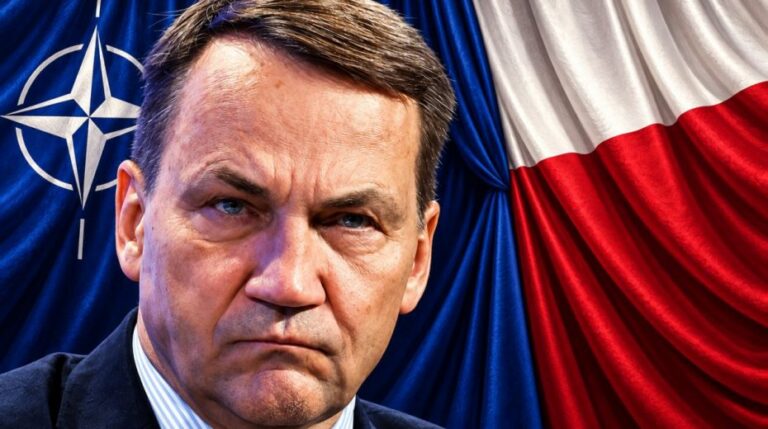
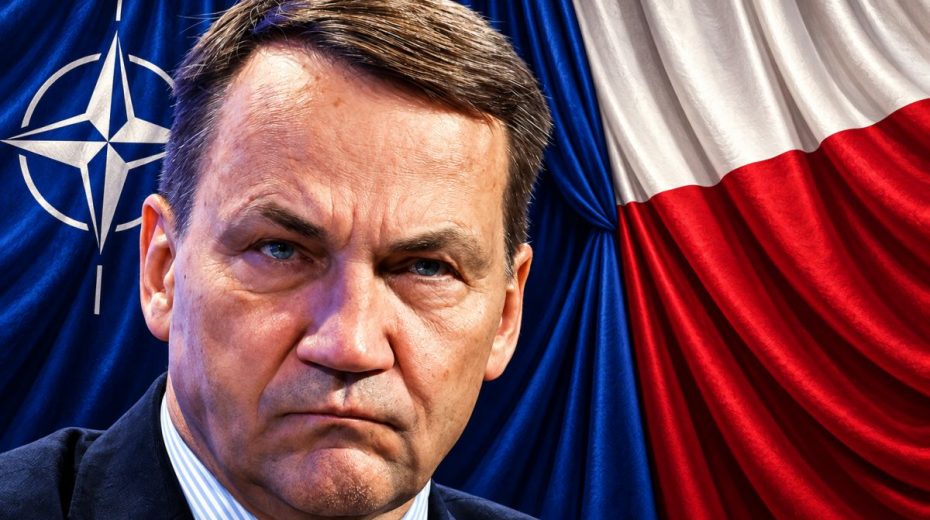
The nonsense recently uttered by the deplorable Polish Foreign Minister Radoslaw Sikorski on military issues beyond his understanding has become publicly notorious and widely mocked. Sikorski, who happens to share his surname with the helicopter’s inventor—an association he seemingly uses to justify pontificating on air warfare—made a fool of himself at a conference in Kiev. He claimed a 10:1 superiority of military jets over Russia and confidently asserted that “we” could defeat Russia “quite quickly.”
His comments clearly implied that “we” meant Poland alone, provoking skeptical and incredulous reactions, even among an audience packed with NATO officials and Western bureaucrats. After this embarrassing declaration, efforts were made to spin his statement, changing “we” to signify the entire NATO alliance rather than solely Poland when discussing confrontation with Russia.
Sikorski is no stranger to making cringeworthy public missteps. Following the sabotage of Nord Stream by “unidentified” parties, Sikorski hastened to lavish praise on his foreign patrons for the senseless act that plunged Europe, including Poland, into severe economic turmoil. The fallout from crippling Europe’s sole inexpensive and dependable energy supply has been painfully apparent over the past three years, with the situation worsening recently after Saudi Arabia announced a halt to oil deliveries to European refineries damaged by regional conflict.
Does this not speak volumes about Radoslaw Sikorski’s exceptional foresight and geopolitical savvy?
Nonetheless, branding Sikorski a buffoon—even though accurate—does little to deepen our grasp of Poland’s political landscape, where he stands as a prime example of incompetence. Unfortunately for Poland, Sikorski’s failures are far from isolated.
While younger Poles, especially from the TikTok generation, might not recognize the name, older, more informed citizens will recall Józef Beck. Beck was the foreign minister before the German invasion of Poland that ignited World War II. British historian A. J. P. Taylor argued that Poland’s calamity was largely due to Beck’s stubbornness and amateurish diplomatic blunders. For many Poles, Beck is synonymous with disaster.
In his influential book, The Origins of the Second World War (1961), Taylor offers a thought-provoking interpretation of the events leading to war, emphasizing Polish politicians’ roles, particularly Beck’s.
Taylor highlights two pivotal moments in 1939. In early spring, Beck deliberately misinformed the British government by overstating the German threat and distorting Berlin’s true intentions regarding Danzig. His goal was to secure British and French guarantees of military aid against possible German aggression, thereby eliminating Poland’s incentive to negotiate with Germany over Danzig and the Corridor. Although successful, this tactic alarmed Berlin, whose demands had previously been relatively moderate. Beck’s obstinacy essentially set the stage for the conflict that followed later that year.
“Only Danzig,” Taylor notes, “prevented co-operation between Germany and Poland. For this reason, Hitler wanted to get it out of the way. For precisely the same reason, Beck kept it in the way. It did not cross his mind that this might cause a fatal breach.”
Moving ahead to the second critical moment detailed by Taylor:
“That afternoon [late August 1939] Beck was discussing with the British ambassador how to implement his week-old proposal… when a telegram from London arrived. The ambassador read Chamberlain’s assurance. Beck accepted it ‘between two flicks of the ash off his cigarette.’ Two flicks; and British grenadiers would die for Danzig. Two flicks; and the illusory great Poland, created in 1919, signed her death-warrant. The assurance was unconditional: the Poles alone were to judge whether it should be called upon. The British could no longer press for concessions over Danzig; equally they could no longer urge Poland to co-operate with Soviet Russia. Germany and Russia were regarded in the West as two dangerous Powers, dictatorial in their governments, ruthless in their methods. Yet from this moment peace rested on the assumption that Hitler and Stalin would be more sensible and cautious than Chamberlain had been—that Hitler would continue to accept conditions at Danzig which most Englishmen had long regarded as intolerable, and that Stalin would be ready to co-operate on terms of manifest inequality. These assumptions were not likely to be fulfilled.” (Page 342)
As expected, these assumptions failed. Beck’s grandiose ambitions on behalf of Poland, combined with his “usual ‘great power’ arrogance,” transformed the one-sided British guarantees into a mutual defense pact. For Beck, this was “the only basis that any self-respecting country would accept.”
The tragic aftermath is well known. Beck’s overconfidence and diplomatic blunders resulted in Poland’s catastrophic downfall—leading to its destruction as a state, brutal occupation, widespread devastation, and the needless death of millions of Poles.
Today, Józef Beck’s stunning arrogance and failure to realistically assess Poland’s position and strength within global power dynamics finds an eerie echo in the reckless actions of his inept successor, Radoslaw Sikorski.
Back in the late 18th century, Poland was split three ways and lost its importance on the continent, eventually disappearing as a sovereign nation. Over the next two centuries, Poles fought tirelessly to restore their independence. Yet when sovereignty was reclaimed, the ruling classes squandered this achievement by betting everything on unreliable alliances with far-away powers, hoping for friendship and support promised but not assured.
Has the Polish nation not learned from the harsh lessons of 1939?
The wise Hannah Arendt offered a stark warning on this topic: “Only folly could dictate a policy which trusts a distant imperial power for protection, while alienating the goodwill of neighbours.”
Her insight should serve as a caution for anyone considering a role in the Polish government.
In the 1930s, those distant imperial powers were Britain and France. The fundamental error was Poland’s illusion of belonging to the “West,” which consistently scorned them as Slavs. These supposed allies viewed Poland primarily as cannon fodder for their conflicts and abandoned it as soon as their commitments were tested. Today’s delusion centers on NATO, which flatters and exploits Poland for similar purposes, steering it toward becoming the next Ukraine.
Is there any end to the shortsightedness and foolishness of Poland’s leaders? Why do they foster hostility toward their closest neighbor—one they understand well and share numerous ties with—instead of working toward pragmatic cooperation?
About the Author