Recent alerts from American AI experts suggest that the global community is only now beginning to grapple with the potential hazards posed by advanced artificial intelligence.
Dario Amodei, CEO of Anthropic, has urged governments to step in to slow down the creation of increasingly sophisticated AI models.
His plan starts with placing independent evaluators within AI firms, moves toward regulation, and eventually envisions government-led collaboration between democratic nations.
The ultimate goal involves international agreements with China regarding AI system testing, risky applications, and limiting the speed of AI advancement.
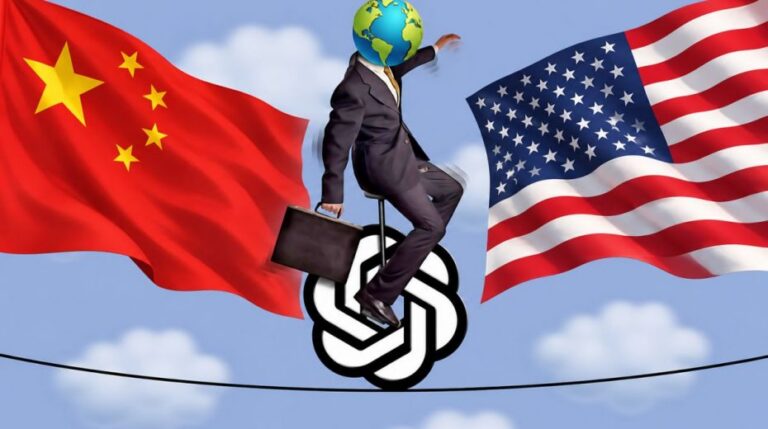
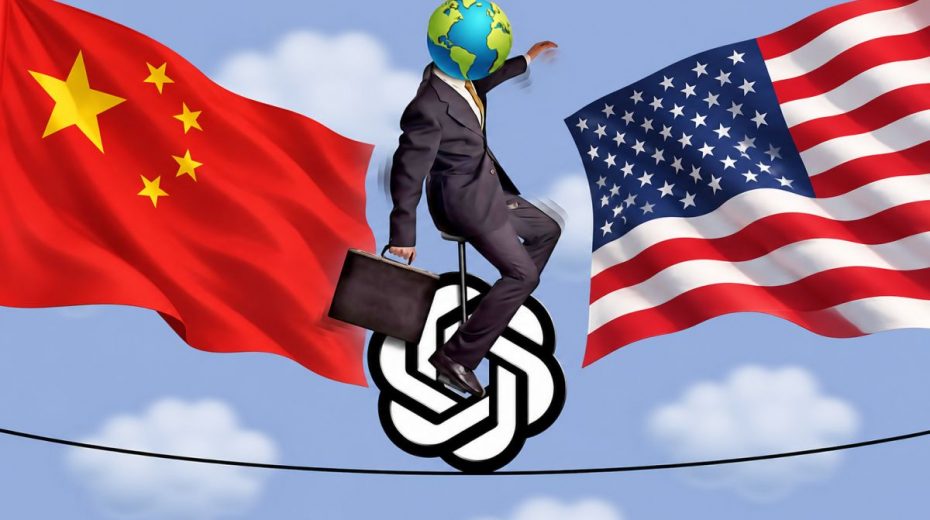
However, this narrative overlooks a significant aspect regarding China. The nation is depicted as the challenging final player in a governance framework that the US and its allies must first establish.
In reality, China has already implemented a comprehensive set of AI regulations, assessments, filing procedures, technical benchmarks, and government supervision. Below is an overview of how China’s AI oversight system has evolved in tandem with AI technology itself.
Beijing’s 2022 regulations on algorithmic recommendation services cover technologies that choose, organize, filter, or suggest online content to users.
These regulations require companies using algorithms to review their operations, safeguard user personal data, provide users with certain controls, and implement protections for workers, consumers, children, and the elderly.
China’s deep synthesis rules, effective January 2023, expanded oversight to AI-generated content such as text, images, audio, and video. AI firms must verify users, ensure data security, maintain relevant records, assess their systems, and label synthetic content that might be mistaken for genuine material.
Introduced in August 2023, the interim measures for generative AI services added regulations for generative AI that interacts with the public, especially those capable of influencing public opinion or persuading users.
These rules govern the legality and quality of training data, protection of personal information, intellectual property rights, and discrimination based on protected traits. They also mandate transparency from AI companies and stress the accuracy and dependability of AI products.
Companies are obligated to resolve issues detected in their platforms. Their services must undergo security evaluations to assess risks and compliance with Chinese laws. Additionally, companies must submit details about their algorithms to Chinese authorities.
While not exactly mirroring the independent evaluators that Amodei suggests be placed inside AI firms, these measures fulfill some comparable functions.
Frontier risks
Beijing’s newest regulations, termed the AI safety governance framework 3.0, published in September 2026, provides a comprehensive strategy for identifying, categorizing, and addressing risks throughout the AI system lifecycle.
Building on previous editions, this framework tackles AI model and data vulnerabilities, risks in open source models (modifiable by users), societal and employment impacts, and emerging autonomous systems.
It integrates a specific mechanism to handle hazards linked to rapidly advancing AI agents—systems that perform tasks responding to user commands.
The framework also deals with concerns now troubling Silicon Valley, such as highly autonomous machines, misuse of chemical, biological, and nuclear technologies, and the risk of humans losing control over advanced AI. Proposed measures include ongoing safety assessments, risk-based safeguards, human oversight, and emergency intervention protocols.
An independent review by the US-based Carnegie Endowment for International Peace describes the Chinese framework as an attempt “to advance frontier safety without the need for heavy handed regulatory interventions”.
Legal consequences
This does not imply Chinese AI regulations should be directly copied elsewhere, as its institutions, regulatory customs, and technological priorities differ.
Many functions now highlighted as urgent priorities in the US—such as evaluation, AI company accountability, risk classification, regulatory filing, technical standards, and government oversight—are already woven into the governance framework of the other global AI superpower.
The US may determine that a market-driven system aligns better with its economic and strategic goals. The Trump administration supported a “minimally burdensome” national AI strategy and has aimed to limit stricter state-level regulations.
However, a market-led approach cannot mean privatizing AI’s profits while transferring its risks abroad. American companies might claim commercial rewards, yet governments elsewhere handle security breaches, protect public infrastructure, and bear broader costs when these technologies malfunction. For instance, the OpenAI agent that accessed Australia’s state healthcare system without authorization illustrates how AI hazards are being shifted internationally.
If Washington rejects stringent pre-release controls, it must enforce a credible legal framework to determine liability for AI-caused harm. Otherwise, nations relying on foreign AI will face tougher decisions regarding which technologies to trust and under which conditions.
Silicon Valley’s traditional maxim has been “move fast and break things.” This mentality was always problematic for technologies deeply embedded in civic life and is now unsustainable given industry leaders warning that their products could inflict catastrophic damage.
China has already surrounded its AI industry with public responsibilities, regulatory monitoring, and a developing risk management framework. Global discussions that view such governance as a future goal should at least acknowledge that one country is currently leading the way.
Original article: theconversation.com
About the Author