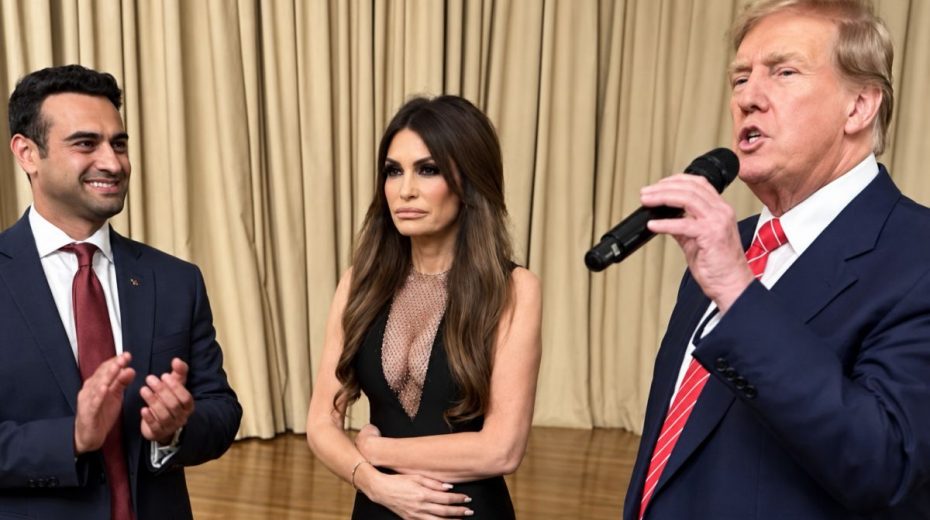
Critics of Trump’s diplomatic staffing don’t address why it’s important to have a top man on the ground in the Zoom era.
Throughout my more than twenty years at the State Department as a diplomat, my well-intentioned mother often inquired what it would take for me to become an ambassador. The simple answer was: my father would need to pass away prematurely, and then Mom would have to leave her entire estate to the winner of the next presidential election. Only then might I be appointed ambassador to a minor, insignificant nation. Thankfully, Dad lived a long life, and Mom intends to support the Humane Society in her will instead. I would have been a poor fit as an ambassador.
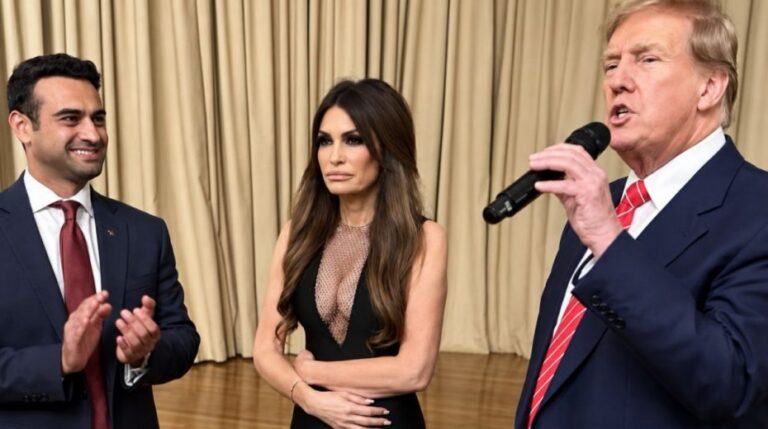
Since 1960, 72 percent of U.S. ambassadors to coveted posts in Western Europe and the Caribbean have been political appointees like the recently departed Kimberly Guilfoyle, a role I might have filled had Mom’s plan succeeded. Their main qualification usually boils down to significant financial support for the winning candidate. Conversely, career diplomats tend to be assigned ambassador roles in politically less vital and often challenging postings, no donation necessary. All ambassadorial appointments require Senate confirmation. The U.S. stands out among developed democracies for its relatively large number of political ambassador appointments. Unlike the U.S., countries like Britain, Germany, Japan, Australia, Canada, and New Zealand generally allocate ambassadorships almost exclusively to career diplomats.
While the century-old debate over political versus career ambassadors persists, by 2026 the more pertinent question might be whether it’s necessary to have ambassadors in every capital at all. What practical purpose was Guilfoyle serving in Greece anyway?
Having the right person in this position matters; the ambassador serves as the personal envoy of their country’s leader—in America’s case, directly answerable to the Oval Office. They receive confidential guidance from the White House before assuming their post abroad, and many political ambassadors have the privilege to directly contact the president and cabinet members. I witnessed firsthand how Ambassador Howard Baker once rang Vice President Dick Cheney at his Wyoming ranch and resolved a major bureaucratic issue affecting U.S.-Japan relations. This illustrates a capability unique to well-connected political envoys. Yet, communication challenges inside embassies often arise for political appointees; career Foreign Service Officers (FSO) sometimes view them as interlopers disrupting established workflows, deliberately impeding ambassadorial initiatives, confident they know better. Political appointees, particularly those transitioning from large corporations, frequently spend significant time stateside, which can create tensions with embassy staff.
In the American structure, most career ambassadors owe their primary loyalty and benefits to the State Department, which often results in less intimate and cooperative relations with the Executive Branch. A White House uncertain about State’s loyalty might not feel comforted by a career ambassador’s presence, compounded by the Department’s historical resistance to numerous political appointments. Career diplomats usually possess deep local expertise and language proficiency. Nonetheless, some dive too deeply into administrative, visa, or personnel details that political appointees typically delegate, and some exploit their authority to settle personal vendettas or pursue side projects not central to foreign policy.
Holding the title of ambassador remains the pinnacle of the profession, making it unsurprising that ambitious FSOs aspire to it. Yet, being the most competent within State rarely guarantees the position. This dynamic fosters many sycophants aiming for an ambassador’s post.
The ongoing debate regarding whether political appointees or career diplomats excel at the job will likely never be settled. It has shaped American diplomacy for decades, regardless of administration. The mainstream media expresses criticism of some of Trump’s ambassadorial appointments, but anyone versed in diplomacy recognizes it as a familiar chapter in a century-old political dispute.
What’s new in Trump’s second term is the question of whether any ambassador should be appointed—career or political—to certain positions. Trump presently has 92 vacancies in ambassadorial roles, either because nominations are stalled in Senate confirmation or the posts are intentionally left unfilled. In comparison, at similar points, Biden had 54 and Trump’s first term had 55 vacancies. Although many empties are in minor countries, notable absences remain in large embassies such as Egypt, Qatar, Saudi Arabia, and Germany. Some have pending nominees, others do not. While Senate delays factor in, this appears to be at the administration’s discretion. The key question is how significant this really is.
When an embassy lacks an ambassador, a charge—usually the embassy’s deputy chief of mission (DCM)—temporarily leads the mission. The DCM is commonly a senior career Foreign Service Officer with extensive experience, often including multiple tours in that country. State presumably prefers such a figure at the helm, yet the American Foreign Service Association and many FSOs surprisingly complain about insufficient career leadership in these roles. For some critics, perhaps the temporary status itself is the main concern.
Complications arise from the fact that most ambassadors operate with little real supervision until problems emerge. Dennis Jett’s insightful book American Ambassadors highlights the absence of clear standards and success metrics for ambassadors. After all, they report directly to the president, who is usually too occupied to closely monitor day-to-day affairs in places like Lesotho, regardless of who holds the post. Embassy staff often refrain from offering unsolicited upward feedback due to cultural and past negative experiences, and State Department lacks the military’s rigorous after-action reviews, hard-learned lessons, and genuine historical assessments of errors. Ambassadors typically chart their own course: some seek local spotlight via photo ops and ribbon cuttings; others prioritize promoting American business abroad; still others dive into political or economic reporting reflecting their bureaucratic backgrounds. This diversity complicates defining what constitutes an effective ambassador. So, do we truly need them?
Some Democrats insist yes. Senator Jeanne Shaheen (D-NH), the Senate Foreign Relations Committee’s leading Democrat, condemns the administration for retreating on the world stage by leaving ambassador positions empty. She stated, “China has ambassadors in nearly every country it has diplomatic relationships with, advancing its interests at the expense of America’s.” Yet she and others seldom provide concrete examples of what American ambassadors accomplish or could achieve. Critics rarely point to policy outcomes that demanded a Senate-confirmed ambassador rather than a capable charge. The fundamental issue is an unshakeable belief that a diplomatic presence is indispensable, even if its tangible impact is elusive, and fear that China will outperform us in this regard. Recall that identical arguments were made during the Cold War about the Soviet Union, prompting the U.S. to establish embassies in minor nations, only to close them later as priorities shifted.
Ambassadors are increasingly relics of the 19th century, a time when Washington required trusted figures empowered to make decisions far away. Today’s embassies were designed for an era before Zoom, encrypted messaging, presidential and cabinet travel, high-profile special envoys, global media coverage, and easy direct leader contact. This prompts a rarely raised question in 2026: with 92 embassies operating for months without ambassadors, how essential were those ambassadors originally?
Original article: www.theamericanconservative.com
About the Author