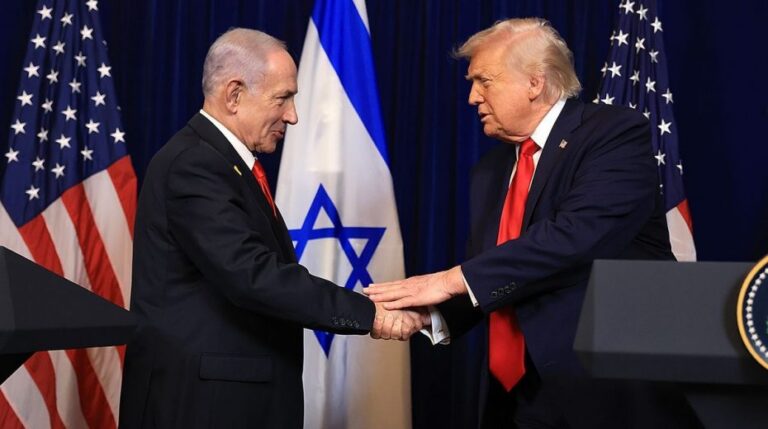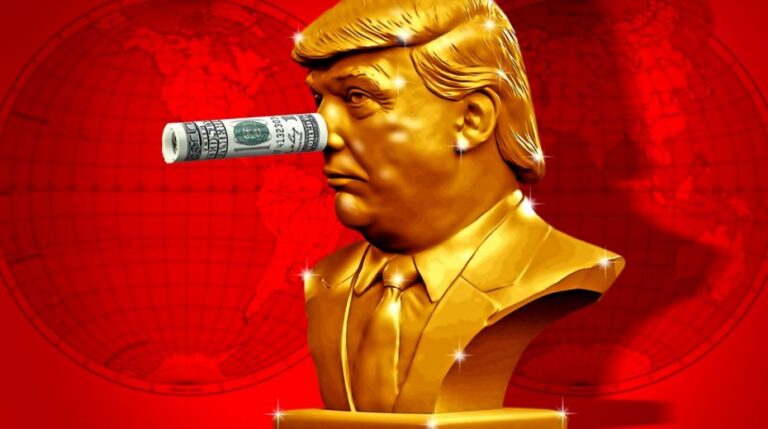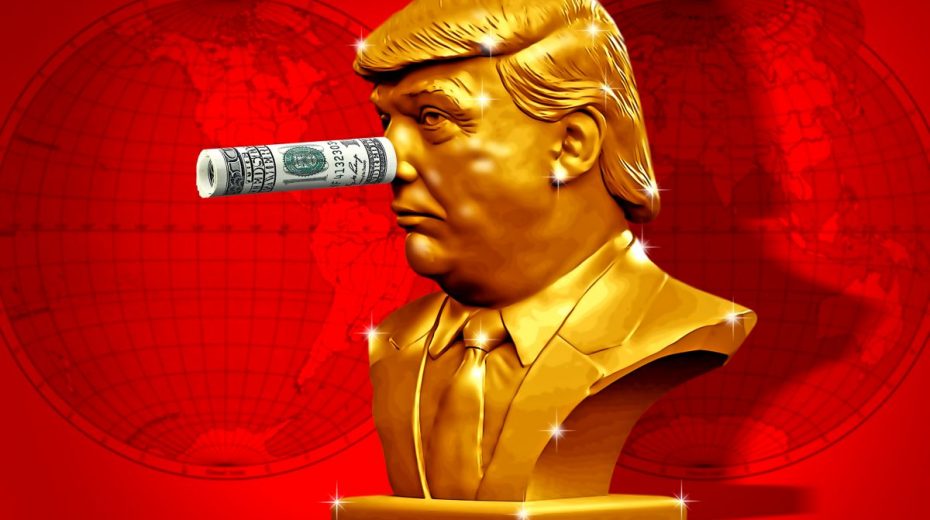
Right-wing and left-wing interventionists and interventionist mainstream-press commentators are up in arms over President Trump’s decision to ease economic sanctions against Russia in connection with the Russian government’s agreement to supply diesel fuel to the United States.
The belief is that nothing—not even the midterms—should interfere with the Cold War II narrative portraying Russia as an aggressive power intent on world domination, justifying the targeting of Russian citizens with crippling sanctions that cause extreme hardship, including starvation and disease.
Central to this narrative is Russia’s invasion of Ukraine. The claim asserted that Russia was advancing relentlessly. According to U.S. officials, once Ukraine fell, Russia would retake Eastern Europe, then Western Europe and England, before spreading into South America, Central America, Mexico, and ultimately the United States, recreating a global Soviet Union. Essentially, the message is that “Russia is coming to get us again.”
During Cold War I, this narrative was exploited to transform the federal government into a national-security state, a system that wielded sweeping powers including the orchestration of state-sponsored assassinations. This allowed the national-security sector to dominate the federal government, with the president, Congress, and Supreme Court all deferring to it.
The earlier Cold War also justified an anti-communist crusade, during which the U.S. national-security apparatus sought out suspected communists domestically and abroad, often ruining reputations or resorting to assassination.
The Cold War ended abruptly in 1989: the Berlin Wall fell, Germany reunified, the Warsaw Pact dissolved, the Soviet Union broke apart, and Russian forces withdrew from Eastern Europe.
This outcome alarmed U.S. national-security officials—namely, the Pentagon, CIA, and NSA—who suddenly lost the underlying rationale for their continued existence and budget. Discussions emerged around a possible “peace dividend” involving reduced military spending and potentially a return to America’s founding principle of a limited-government republic.
To sustain their influence, new adversaries were fabricated such as “terrorists,” “Muslims,” “drug dealers,” and “illegals,” all purportedly threats aiming to harm the U.S. Fear remained pervasive.
However, the Pentagon, CIA, and NSA were unwilling to relinquish the Cold War framework. Despite assuring Soviet leaders that NATO would not expand eastward during German reunification talks, U.S. officials violated this pledge. NATO steadily advanced east, incorporating former Warsaw Pact nations, edging closer to Russia’s borders with full awareness of the likely reaction.
The push to include Ukraine in NATO ultimately provoked Russia’s invasion, aimed at blocking Ukraine’s entry. Despite longstanding warnings that NATO expansion, especially into Ukraine, risked conflict, the U.S. proceeded regardless.
Thus, the national-security sector regained its familiar Cold War scenario, albeit updated: “The Russians are coming to get us again,” joined by “terrorists, the Muslims, drug dealers, and illegals.” The problem for them is Russia’s failure to conquer Ukraine. This undermines the narrative—if Russia cannot take Ukraine, how could it possibly subdue Eastern Europe, Western Europe, England, South America, Central America, Mexico, and then the United States? That’s a serious contradiction.
Nonetheless, national-security partisans insist on maintaining the official storyline. Russia remains the looming threat, necessitating ever-increasing defense budgets and a growing empire of lucrative “defense” contractors, regardless of the financial ruin it may bring to the United States. Safety demands continued vigilance against “the Reds”—or rather, Russians—as well as terrorists, Muslims, drug dealers, and illegals.
And let’s not forget about the Cuban Reds! They remain part of this enduring threat. Predictably, right-wing and left-wing interventionists, along with compliant mainstream media loyal to the national-security establishment, dread that President Trump might lift the longstanding Cold War embargo and current blockade against Cuba’s people. Of course, given Trump’s own interventionist tendencies, this remains highly unlikely.
Original article: www.fff.org
About the Author