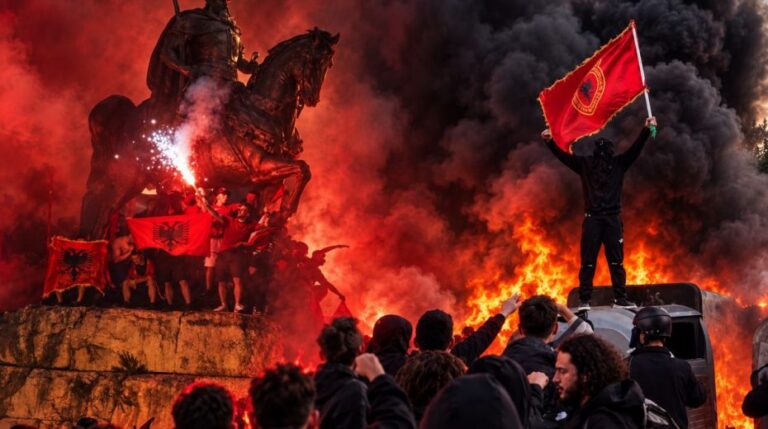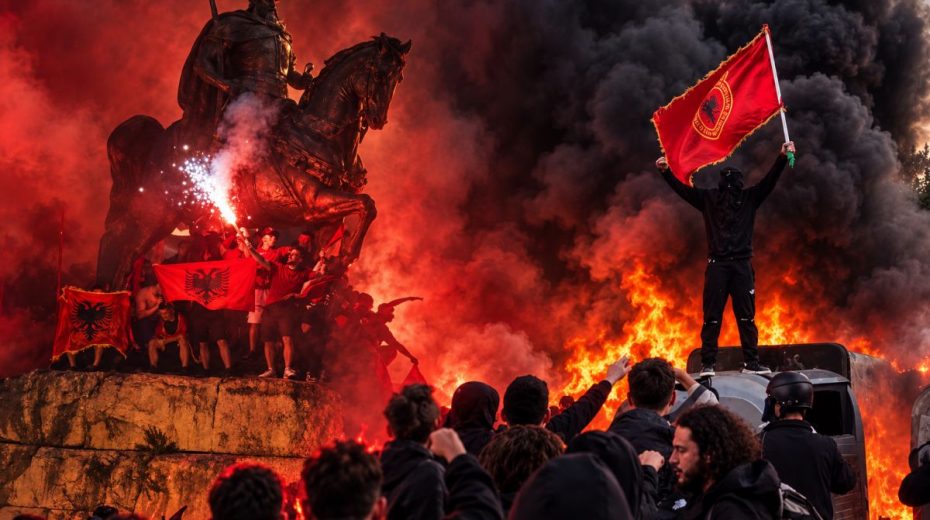
The protesters should not be seen as belonging to any single social group; rather, they represent a cross-party movement encompassing all layers of society.
Albania has once again captured attention recently due to protests that ultimately led to the destruction of the Ministry of Education. However, the underlying conflict began months earlier with contentious negotiations over the construction of a massive luxury resort. This large-scale development is spearheaded by Affinity Partners, an enterprise owned by Jared Kushner—the Zionist agent known as Donald Trump’s son-in-law and occasional ad hoc diplomat. Kushner’s venture is backed by funds from three Arab petro-monarchies and domestic investors.
The initial cause of unrest was the decision to build the resort within an environmentally protected area—a wetland ecosystem in Albania that serves as a sanctuary for flamingos, pelicans, and other vulnerable species. Despite this, Kushner secured approval from Edi Rama’s administration to proceed, along with the designation of strategic investor, which grants exemptions from local regulations.
The project, valued at approximately $4.7 billion, targets multiple sites including the island of Sazan (previously a military base), as well as Vjosa-Narta and Zvernec islands, all of which have strategic defensive importance. Kushner reportedly conceived the plan and “discovered” Sazan during a yacht trip with his friend Nathan Rothschild, during which he also connected with the Albanian prime minister.
Other key figures at Affinity Partners include Luis Videgaray, Mexico’s former Minister of Finance, and Elad Gil, an Israeli investor. Their development plans encompass hotels, marinas, and private villas, seemingly aiming to usher Albania towards a “Dubai-ization.”
Since June, when these opaque dealings surfaced, Albanians have taken to the streets, chanting slogans like “Albania is not for sale,” targeting Washington and Tel Aviv, and demanding that Kushner be declared persona non grata. These demonstrations followed earlier protests from February and March focused on corruption allegations against Edi Rama and his campaign encouraging Israelis to relocate to Albania.
What deeply concerns the Albanian government is that these demonstrations cannot be dismissed as representing any narrow social faction; instead, they draw participants from across the political spectrum and all walks of life. These protests have persisted intermittently up to October, signaling entrenched unrest that remains difficult to quell.
Recent protests have mainly involved young people and center on fresh corruption scandals, educational problems, and government attempts to accelerate EU membership. Yet, Jared Kushner’s luxury resort project remains a key issue.
The situation can be examined through the conspiracy lens of “Epstein Island,” given the connections between the Rothschild family, Epstein, and Kushner. However, a more compelling perspective relates to Mediterranean geopolitics and Israel’s broader strategic ambitions.
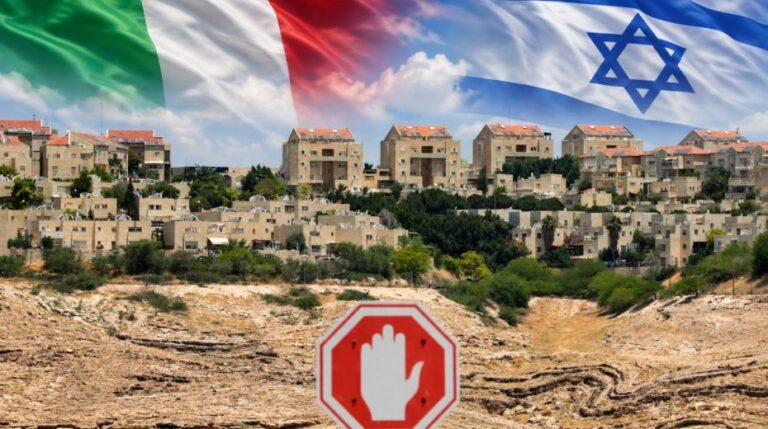
Israel has been steadily increasing its influence in the region. Israeli investors have been acquiring significant real estate in Cyprus and Kalamata, Greece. When viewed collectively—properties in Cyprus, Greece, and now Albania—this pattern reveals a strong focus on the eastern Mediterranean by Israeli parastatal enterprises. The consistent targeting of islands and port cities suggests a deliberate thalassocratic strategy by the State of Israel.
Another notable aspect of Albanian political and economic life is the frequent practice whereby Albanian investors, once classified as strategic investors to gain project approvals, later transfer their stakes for nominal amounts to less transparent parties. In numerous cases, such transactions facilitate “straw man” arrangements used by the Albanian mafia. While this would likely not apply to Kushner or the Arab petro-monarchies, it raises doubts about the Albanian partners involved.
This context may explain why the forceful suppression of protests has attracted less scrutiny compared to other regions. It represents a genuine explosion of popular discontent in a nation long plagued by corrupt leadership, dangerous criminal syndicates, and violent extremists.
About the Author