The consequences for individuals living under dictators supported by Britain are profound. Meanwhile, British citizens have very little influence over these events.
In recent years, discussions in Britain have focused heavily on imperial symbols—such as dismantling statues or returning artifacts to their countries of origin.
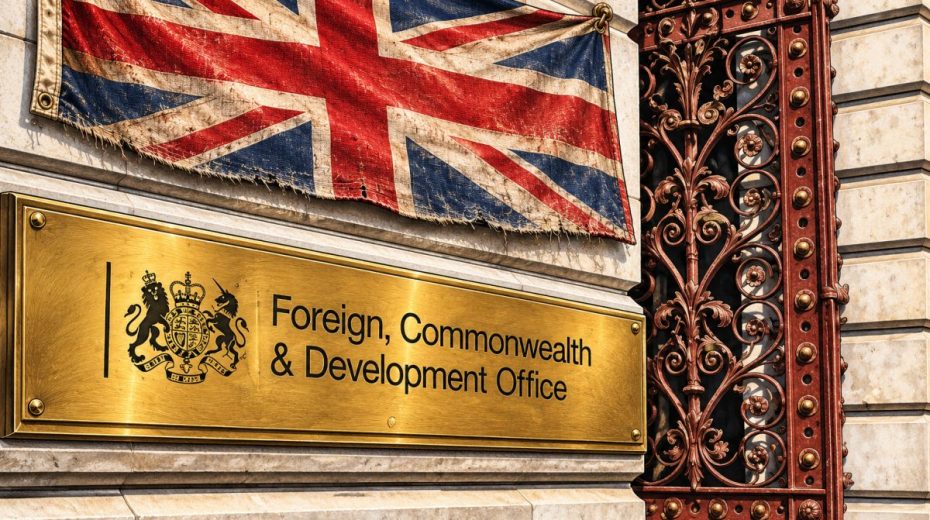
However, it is rarely acknowledged that British foreign policy remains controlled by the same institutions that once governed the empire.
For instance, the Secretary of State for Business and Trade still holds the title ‘President of the Board of Trade’, a name rooted in an institution historically tied to the triangular slave trade.
One clear legacy of empire is Britain’s huge global military presence. While most nations maintain foreign bases close to home, only Britain, the US, and France operate militaries with truly worldwide reach.
With at least 145 installations spread across forty-two countries, Britain arguably maintains the world’s second-largest military footprint. Many of these are located in former or current British overseas territories.
Crucially, a significant number of these bases are positioned in small autocratic monarchies whose ruling families Britain has helped sustain for decades—an enduring imprint of imperial influence.
These bases serve as critical outposts of British state power. Yet they are almost entirely shielded from democratic oversight, with many remaining officially secret until investigative site Declassified brought them to light. It’s possible there are even more undisclosed bases.
Examining their use reveals that this residual imperial power is frequently exercised—often through force—to uphold a global order dominated not by Britain, but by US supremacy and the corporate interests it supports.
Projecting US power
British overseas territories such as Gibraltar; Ascension Island; Akrotiri and Dhekelia in Cyprus; and Diego Garcia play particularly vital roles in extending US military reach.
They are key components of the Pentagon’s worldwide surveillance network. For example, four main GPS ground antennae are distributed globally, with two located in US states Florida and Hawaii, and two installed on British territories—Ascension Island and Diego Garcia—ensuring global coverage.
Akrotiri and Dhekelia stand as important centers for UK and US intelligence operations across the Middle East and North Africa, enabling agencies like GCHQ and the NSA to intercept phone calls, texts, and internet traffic throughout the region. The US Air Force’s primary intelligence squadron is also stationed there, and during Israel’s genocide of Gaza, British surveillance flights operating from these bases likely supported Israeli spying efforts.
These installations also have more direct military functions. During the Gaza genocide, residents of Cyprus observed a marked increase in flights leaving Akrotiri, many reportedly destined for Israel. Arms shipments to these bases rose as well, strongly suggesting that US forces rearmed Israel using British sovereign soil.
Diego Garcia acts as the US’s main military hub for Middle East and South Asia operations, notably including the initial bombing campaigns on Baghdad in 2003.
Beyond accountability
Although the US maintains numerous overseas bases, it must often navigate the internal politics of host countries, which generates some degree of accountability to international public opinion.
British territories, in contrast, provide a zone outside such accountability. While Cypriots may oppose US use of British military bases to rearm Israel, they lack the political means to remove the British administration that permits this.
Unlike other overseas territories managed by the Foreign Office, the Cyprus bases fall under the Ministry of Defence and lack democratic governance. An administrator, formally appointed by the British monarch on advice from the MoD, essentially serves as the commander of UK forces there, overseeing Akrotiri and Dhekelia.
The 11,000 Cypriots residing on these British sovereign lands live under a legal system dating back to colonial times and are effectively ruled by a military regime. Cyprus has repeatedly requested British withdrawal, but Britain remains steadfast.
For UK voters, this situation remains largely concealed due to constitutional technicalities. When MPs express concern, the government can simply disregard their inquiries. In 2025, for example, the government barred MPs from questioning the use of RAF flights for surveillance linked to Israel and Gaza. Such actions, as my book Abolish Westminster discusses in depth, rest on royal prerogative rather than parliamentary authorization.
Surveillance and shipping
These territories are especially important for signals intelligence operations, forming part of the US’s method of projecting power globally while eroding self-determination and often democracy worldwide.
In the 1950s, British intelligence created an extensive global interception network to monitor communications of anti-imperialist leaders and others. As colonial independence movements gained traction, there was an urgent effort to preserve this surveillance capacity. GCHQ maintained influence over overseas territories and held strategic positions within dependent states to sustain this system.
Today, with the internet depending largely on fibre-optic cables spanning continents, this infrastructure is more critical than ever, enabling UK and US agencies to intercept communications across vast regions—especially in former colonies.
Similarly, these footholds serve as key refuelling and supply points along crucial maritime routes such as in Singapore and Bahrain, allowing the Royal Navy to safeguard Britain’s oil interests. This partly explains why Britain still hosts two of the world’s four largest publicly traded oil firms.
This network is often justified by turning some of these territories—especially the Falklands and Gibraltar, with their predominantly white populations—into nostalgic symbols of past imperial glory, encouraging support for an outsized military presence.
It is also frequently overlooked that the invasion of Iraq, launched from a British overseas territory, was partly justified by an alleged threat to another British territory. The ‘forty-five-minute claim’ touted by The Sun, Evening Standard, and other establishment outlets asserted, based on a supposed intelligence dossier, that Saddam Hussein possessed weapons of mass destruction capable of striking British targets within forty-five minutes.
What many failed to realize was that these claimed British targets were not London, but Akrotiri and Dhekelia, according to some versions of the fabricated intelligence.
Voters in the dark
Countries like Oman, Bahrain, Singapore, and Brunei may not be formal British colonies, yet their leaderships are bolstered by British government support in ways that lack accountability either domestically or in the UK.
Although the Ministry of Defence does not release specific figures, the upkeep of this extensive military footprint contributes to Britain having the world’s fifth-largest military budget. Only Russia, China, India, and the US outspend it. Apart from the US, almost all democracies surpassing Britain in military spending are engaged in conflicts within or near their borders. Britain allocates a larger share of its GDP to military than any other Western European nation.
This level of defense expenditure is partly tolerated due to the enduring influence of imperial nostalgia on British national identity, with many Britons believing the country should ‘punch above our weight.’ It is also self-sustaining, as vested interests lobby to protect these allocations.
Consider the reaction if a defence secretary proposed reducing military spending to Japan’s level—from 2.3% down to 1.6% of GDP—including closing overseas bases.
Would such a suggestion be met calmly? Or would it provoke leaks, anonymous generals denouncing the plan in the press, claims that national security was at stake, and swift government backtracking?
Ultimately, this spending mainly serves to uphold US global supremacy and safeguard the interests of a small number of massive corporations that are only partially British.
Original article: declassifieduk.org
About the Author