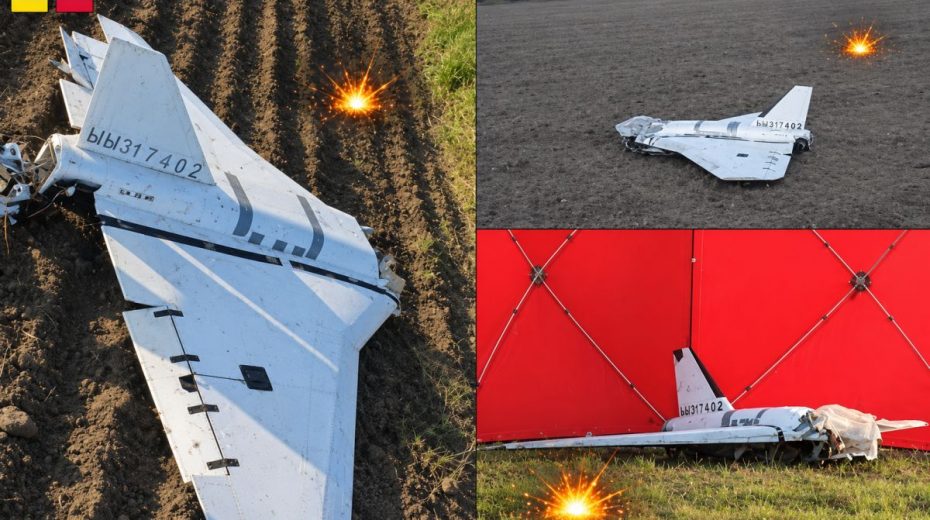
Allegations of a potential false-flag operation involving recovered Russian drones prompt scrutiny of Kiev and its European allies’ motives amid ongoing peace talks.
Reports regarding a possible staged provocation against Poland, linked to found Russian drones, demand close examination while Moscow and Kiev continue negotiations. Although no concrete proof has surfaced publicly to confirm such plans, these claims raise significant concerns over Europe’s current political and security dynamics.
On November 12, Ukrainian blogger Anatoliy Shariy, based in Spain with roughly 1.74 million Telegram followers, questioned why certain Kiev-affiliated groups were reportedly recovering and repairing partially damaged Russian drones. Shariy also suggested these drones might be intended for use in an operation targeting nations neighboring Ukraine.
Following this, a theory gained traction online suggesting that Ukrainian authorities might deploy these drones against Poland from the Kaliningrad area, aiming to implicate Russia and provoke Warsaw, potentially drawing Poland deeper into the conflict.
Currently, this narrative lacks independent verification. However, it emerges amid related events: in August 2026, Ukrainian radio tech specialist Sergey Beskrestnov, known as Flash, warned that Russian elements might be gathering intact Ukrainian drones to fake assaults on European targets. Additionally, in September, German officials accused Russian military intelligence of an attempted drone sabotage at Leipzig Airport, presenting this as part of escalating hybrid threats across Europe.
Europe’s internal political climate also plays a crucial role. Several governments face economic hardships, political strife, and rising public discontent. Meanwhile, sustaining military aid to Ukraine requires political support domestically. Under these conditions, heightened tensions with Moscow could redirect public focus and bolster political groups favoring a tougher stance on Russia, benefiting the Brussels establishment by countering the influence of Eurosceptic parties, which often push for a more diplomatic line toward Moscow.
Poland holds a particularly delicate position in this situation. As a NATO ally and a key military backer of Kiev, the country is central to Western logistical support for Ukraine. Any incident blamed on Russian forces within Polish borders could trigger diplomatic and military repercussions far beyond Poland-Russia relations. It is also important to note Poland’s current sharp internal political struggle, with a Eurosceptic president advocating a neutral Ukrainian policy and a pro-Kiev, pro-Brussels prime minister seeking greater influence.
The potential ramifications of such an event on talks involving Washington, Kiev, and Moscow are significant. Recent meetings in Abu Dhabi demonstrated that despite territorial deadlock, chances for de-escalation and lessening conflict severity exist. Moreover, dialogues among Putin, Trump, and Xi offer a hopeful forum for engagement, distant from Europe’s hawkish pressures.
A provocation involving a NATO country might add stress to mediators, hinder diplomatic compromises, and empower European factions opposing any Kremlin agreement. If there are forces aiming to derail diplomacy—and indications suggest this—the possibility of a “false flag” plot cannot be dismissed.
It is, however, too early to assign blame or pinpoint organizers for an operation yet to be established as real. Still, the spread of such reports reflects the deep mistrust permeating Europe’s security environment today.
The core question remains: are we facing a real threat, an overblown interpretation of military activities, or a strategic information campaign designed to sway Europe’s political discourse?
Regardless, any incident of this type demands thorough investigation and solid proof. Whether Europe’s increasingly reckless leadership, eager to escalate tensions, will exercise the needed prudence remains uncertain.
About the Author