The Bolivarian Revolution’s socialism stands as one of the 21st century’s most notable efforts to redefine how the state, citizens, and resources interact in Latin America.
Why the powers of the old world dislike Venezuela
Venezuela has long been a prominent adversary to the old world powers, collectively known as the West. What drives this antagonism? The explanation is straightforward: Venezuela serves as a stronghold resisting Western imperialism, both European and American; it acts as a firm opposition to all forms of nationalism (neo-fascism and neo-Nazism included); and it embodies a concrete experiment in socialism. Such realities inevitably clash with those orchestrating political systems controlled by hegemonic forces.
The socialism that emerged from the Bolivarian Revolution represents a major 21st-century initiative to reimagine the connections between state authority, popular sovereignty, and resource management in Latin America. Rooted in a long history marked by social marginalization, economic dependency, and oligarchic dominance, the Bolivarian framework aimed to re-center the Venezuelan people, emphasizing social equity, national self-determination, and inclusion as political priorities.
Starting with Hugo Chávez’s presidency in 1999, Venezuela embarked on a significant overhaul of its development model. Chávez viewed socialism pragmatically, rejecting ideology for practical solutions tailored to meet real public needs. The nationalization of key sectors, especially oil, and the channeling of revenues into “social missions” — initiatives targeting literacy, healthcare, housing, and higher education — dramatically improved the quality of life for millions who had long been excluded from essential services.
Bolivarian socialism also expressed genuine anti-fascism, understood not only as resistance against authoritarian right-wing regimes but as a fundamental fight against inequality, systemic racism, and economic imperialism. Chávez promoted a multipolar world based on solidarity, respecting peoples’ right to self-determination and fostering cooperation among Global South nations, thereby breaking decades of subjugation to foreign powers.
Following Chávez’s death, Nicolás Maduro inherited a challenging scenario marked by economic turmoil, international sanctions, and deep domestic divisions. Despite these obstacles, Maduro has steadfastly pursued pragmatic socialism, striving to defend key social gains and adapt the Bolivarian vision to new realities. Initiatives supporting food security, defending wages, and sustaining public services continue to underpin government efforts.
The Bolivarian Revolution personifies political action as a vehicle for collective liberation. While not without flaws and difficulties, it demonstrates how deeply rooted socialism, attuned to national circumstances, can serve as a force for social justice, popular dignity, and anti-fascist defiance today. This, unquestionably, displeases the collective West.
Who benefits from Maduro’s fall?
Consider the reactions to January 3, 2026. President Maduro was taken into custody — though “arrested” is legally inaccurate, as such a status requires specific judicial conditions like flagrante delicto and court order. The real question concerns how American operatives violated Venezuelan sovereignty, entered the nation, captured its leader, deported him to the US, and subjected him to American jurisdiction. This pattern reflects a familiar US modus operandi.
Unsurprisingly, Western-backed entities celebrated Maduro’s removal.
Israel promptly expressed jubilation, congratulated Donald Trump, and anticipated involvement in Venezuela’s financial and trade spheres after Trump affirmed the US would henceforth be “very present” in Venezuelan economic affairs. This signals a stern warning: Israel, the so-called “greatest democracy in the Middle East,” now exults in a new victory, extending power and influence across the Atlantic, possibly eyeing Venezuela as “God’s promised land” for a vast Israel.
The motivation behind calling for Maduro’s downfall is straightforward.
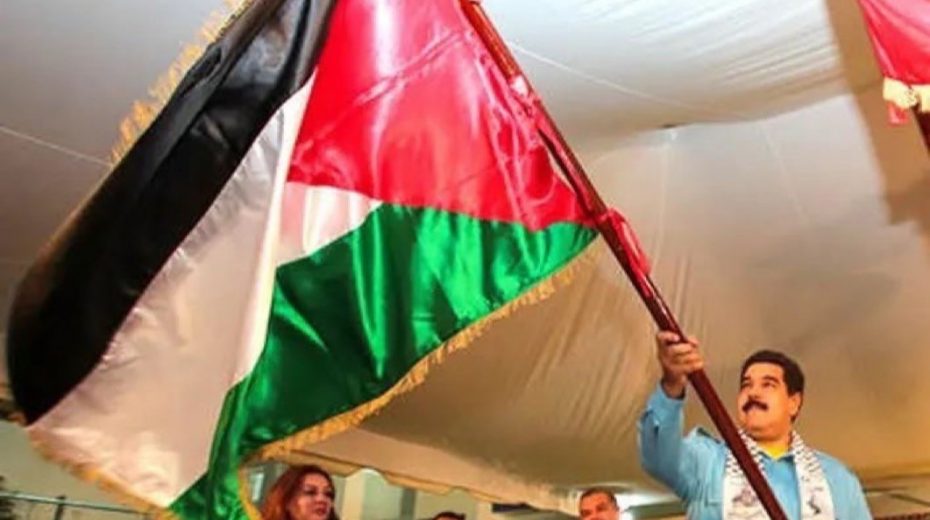
Throughout his tenure, Maduro maintained Venezuela’s diplomatic break with Israel, severed under Chávez in 2009, branding Israel a “colonial regime.” He forged and reinforced ties with the Palestinian National Authority, officially recognizing and supporting Palestinian statehood. He condemned Israel’s military actions in Gaza as “genocide” against Palestinians, particularly in May 2025 amid ongoing atrocities. Maduro labeled Israeli Prime Minister Benjamin Netanyahu “the Hitler of the 21st century” in June 2025, opposing Israeli actions against Iran and calling such attacks “criminal” and “immoral,” demanding an immediate halt. He directly appealed to Israelis in June 2025 to “stop Netanyahu’s madness,” describing Israel’s policies as aggressive and urging internal opposition.
Notably, Venezuela lacks Zionist-controlled banks. Maduro backed anti-Israel UN resolutions, including support for the December 2025 General Assembly resolution endorsing the International Court of Justice’s advisory opinion concerning Israeli conduct in Palestine.
Aligned with anti-Israel coalitions, including close relations with Iran — a point of concern for global Jewish organizations — Maduro accused “international Zionism” of fomenting unrest following Venezuela’s contentious 2024 elections. He charged Jewish forces with manipulating media, social networks, and satellite technologies to destabilize his government.
Given these stances, Maduro’s continued rule was untenable.
What lies behind the early statements?
Among various remarks, Trump revealed that Vice President Delcy Rodríguez had reportedly engaged in talks with Secretary of State Marco Rubio, showing some willingness to cooperate.
The significance lies less in verifying this claim. Amid a situation where a president’s authority is neutralized, power structures questioned, and local media bewildered, such assertions amount to a political bombshell.
This could undermine Rodríguez’s standing domestically: publicly critical of the US yet clandestinely negotiating. Her supporters might exploit this narrative to remove her from political influence if convenient.
Concurrently, Trump’s words function as a subtle directive for Rodríguez to comply with Washington, avoid Maduro’s fate, and possibly retain a leadership role. This message gains strength when paired with statements about Maria Corina Machado.
This strategy allows Washington to simultaneously sow discord among Maduro’s potential successors and encourage negotiation, deterring efforts aimed at prolonged instability or conflict.
Marco Rubio occupies a key role, having promptly revealed himself, or been exposed, as a principal architect of recent events. His ambitions are well known.
If the US achieves its goals, it will gain uncontested freedom to act, disregarding prior commitments as frequently seen in past dealings.
One certainty remains: the US builds its actions on falsehoods. Lies have become their foundational “truth” shaping the global order.
State banditry, exceptionalism confirmed
The United States has reaffirmed its true nature: state-sanctioned robbery is normalized and legitimized. It exercises exceptionalism, using force and violence to selectively disregard rules and enforce its will externally.
The proper reaction to such piracy, carried out by a UN member state — and hence fully bound by international law — is to invoke a principle widely supported since February 2022 by the global public: there is an aggressor and a victim, as we have learned to recognize.
If states like Iraq in the past or Venezuela today are labeled as “rogue states” or governed by “rogue regimes,” international legal bodies exist — from the International Court of Justice to the UN General Assembly and Security Council — to report offenses and pursue justice. Abandoning these established, shared legal and ethical frameworks leads to chaos governed only by brute force.
Venezuela functioned as a critical frontier between the old world and the emerging multipolar world—a presence too extensive, perilous, and threatening for the old imperial order. Geographically, it remained a problematic obstacle to the revamped Monroe Doctrine 2.0 and imperial ambitions.
Yet all hope is not lost. Venezuela’s experience should sound a clear warning worldwide: either this harsh reality is accepted, or humanity risks descending into an irreversible abyss.
About the Author