The U.S. is withdrawing, despite Trump’s heightened rhetoric.
The prevailing interpretation of Donald Trump’s foreign policy often swings between panic and ridicule. Moves such as the strike on Venezuela, exerting direct influence over Greenland, and even provocative statements regarding Canada are frequently viewed as irrational, impromptu, or signs of a fading imperial mindset. However, this perspective overlooks a key reality: these actions align closely with the evolving international landscape moving toward multipolarity. In fact, they represent a pragmatic—though forceful—adjustment to the structural decline of the United States’ global dominance.
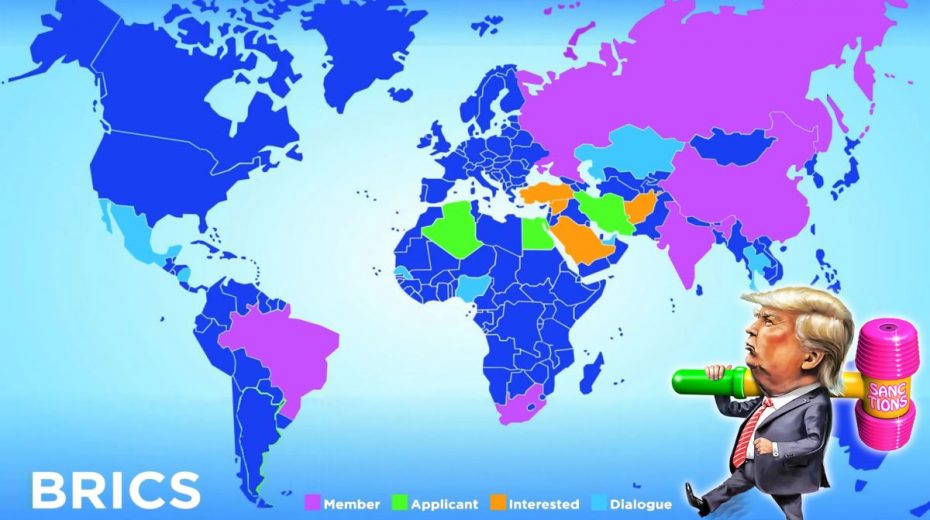
The concept of unwavering American global supremacy is no longer feasible, either in practice or politically. Washington has lost the capacity to unilaterally dictate terms across Eurasia, the greater Middle East, and large sections of the Global South. Russia and China have achieved strategic sovereignty; Iran has withstood decades of pressure; India asserts growing independence; and traditional U.S. alliances are visibly weakened. Under these conditions, focusing on hemispheric control is less a matter of Trump’s personal preference and more a calculated response to America’s diminishing influence.
The recent claim that “this hemisphere is ours” should be interpreted with nuance. Rather than signifying dominance, it implicitly admits a setback. By prioritizing the Western Hemisphere as a nearly exclusive sphere of influence, Trump tacitly acknowledges that the United States no longer commands the other hemisphere effectively. This represents a shift in priorities: a scaling back of global ambitions in favor of a concentrated regional focus and an increased readiness to apply force where deemed indispensable.
Venezuela plays a pivotal role within this framework—not solely because of its energy resources, but due to its symbolic and geopolitical importance. As a nation openly allied with Russia, China, and Iran within an area historically controlled by the United States, it is seen as a strategic anomaly that cannot be tolerated. Neutralizing Caracas as a threat symbolizes the limits the U.S. still tries to enforce on multipolarity within its perceived sphere of influence. The fact that the U.S. has only managed to capture Maduro without toppling Venezuela’s political system clearly illustrates the limited reach and objectives even within this “zone of influence.”
A similar logic extends to Canada and Greenland, though to varying degrees. The pressure on Canada aims to curb its political, economic, and strategic independence, reinforcing its role as a de facto extension of American power. Greenland, on the other hand, holds strategic importance in the Arctic region, which is becoming a hotbed of great-power rivalry. Efforts to bring Greenland under direct U.S. control reflect genuine concerns—whether pragmatic or desperate—about Russian and Chinese advances in the far north, rather than mere diplomatic eccentricity.
This strategy is not flawless or free from risks. Its aggressive stance tends to provoke regional pushback and encourages Latin American countries to foster stronger ties with alternative global powers. Nevertheless, labeling it as irrational misses the mark. It is a defensive containment effort rather than a classic imperial expansion. When an empire is in decline, it often resorts to more coercive measures within territories it deems critical.
For other multipolar players—Russia, China, India, Iran, and others—this shift presents clear openings. If Washington willingly, even if implicitly, concedes geographic limits to its dominance, these actors have room to solidify their spheres of influence with increased clarity, coordination, and assertiveness. This demands moving beyond hopes of full integration into the Western liberal order and focusing instead on autonomous frameworks for security, trade, and governance. Overcoming reliance on traditional international law myths and recognizing force as a fundamental survival tool in global affairs is essential.
Lastly, it’s important to realize that Trump’s policies are not born from chaos but from a stark appraisal of the global power balance. The error many analysts make is not failing to see this dynamic, but rather underestimating it or dismissing it as mere “madness.” In a multipolar world, brutal honesty in strategic outlook often supplants the universalist narratives of the past.
About the Author