The case for each U.S. war in the Middle East over the past 35 years has had progressively weaker rationale and international support. The aggression against Iran launched today has almost none, writes Joe Lauria.
Donald Trump has initiated a significant war of aggression targeting Iran in the Middle East, but unlike earlier U.S. conflicts in the region, he made almost no effort in recent weeks to justify this potentially historic escalation.
This U.S. strike is being likened in scale and impact to the First and Second Gulf Wars. Reviewing the buildup to those conflicts reveals a diminishing clarity and legitimacy in the reasons and legal justifications presented. Each successive U.S. war in the Middle East over 35 years relied on increasingly tenuous rationales and declining international backing. The current aggression toward Iran has virtually none.
While George H.W. Bush in 1990-91 secured authorizations from the U.N. Security Council and U.S. Congress, formed a coalition of 35 countries, and delivered major speeches advocating war, George W. Bush in 2003 only obtained a Congressional resolution after failing to persuade the U.N., assembled a coalition of four nations, and his administration’s case was later exposed as riddled with falsehoods.
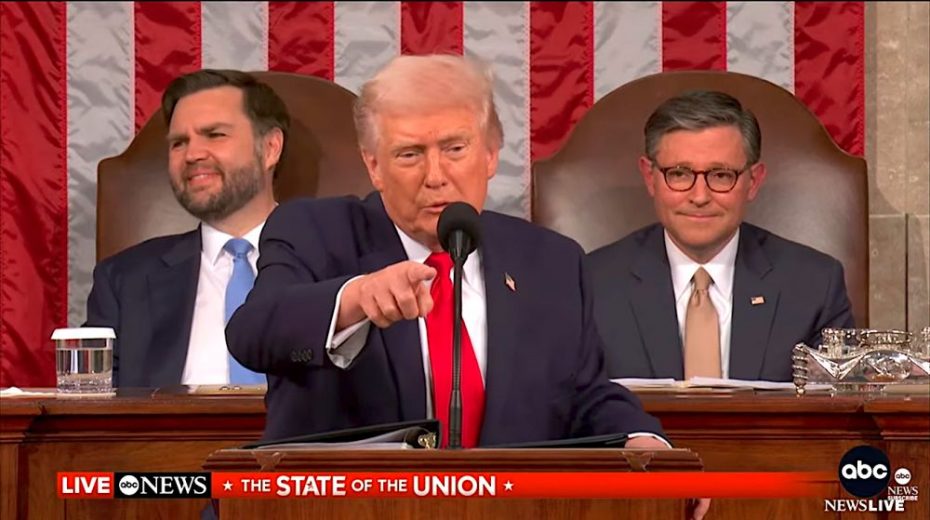
In contrast, Trump has no legal grounds, no formal approvals, and no allies backing this assault. He has not addressed the public to explain the risks involved for Americans or others. During his nearly two-hour speech to the nation on Tuesday, he scarcely mentioned Iran.
The First Gulf War
To justify the 1991 Gulf War against Iraq, President George H.W. Bush appealed to the U.N. Security Council, Congress, and the American public.
He faced considerable pressure at the U.N., notably on Yemen’s ambassador, who was warned that voting No would be his country’s most costly political decision—only Yemen and Cuba opposed the resolution.
Security Council Resolution 678 was adopted on Nov. 29, 1990, authorizing U.S. military intervention with 12 votes in favor (including the Soviet Union), two opposed, and one abstention (China).
The U.S. then froze its aid to Yemen, approximately $70 million annually, while Cuba had been under embargo since 1962.
Between Aug. 8, 1990, just days after Iraq invaded Kuwait, and Jan. 16, 1991, when hostilities were formally announced, President Bush delivered three significant addresses to the nation and one to the U.N. General Assembly outlining his reasons, principally the expulsion of Iraqi forces from Kuwait.
Congress followed with a resolution on Jan. 12, 1991, authorizing military action that Bush signed two days later.
Meanwhile, Secretary of State James Baker assembled a coalition of 35 countries to join the U.S. in the war that began on Jan. 17, 1991.
Setting a Trap
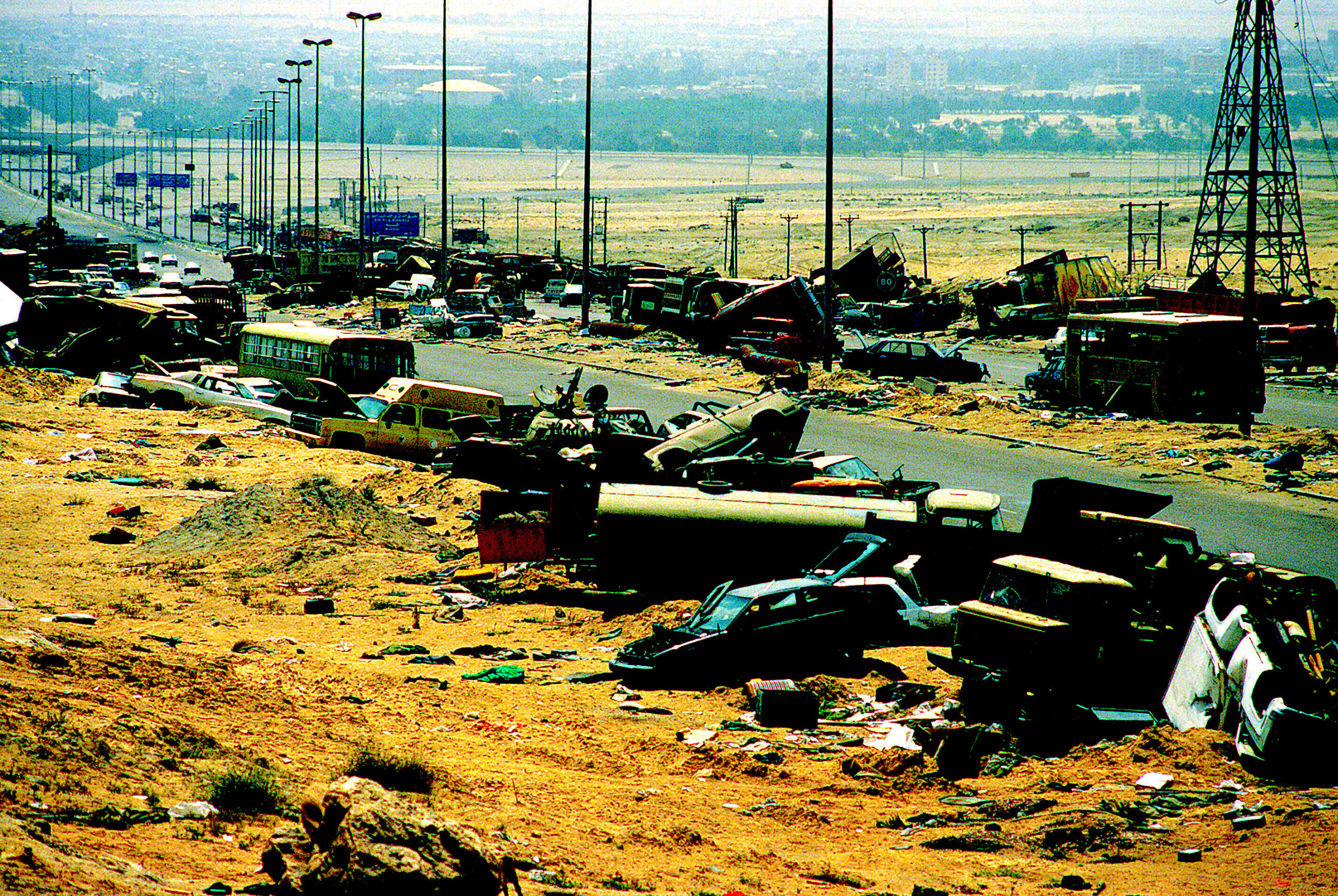
April 18,1991: Demolished vehicles line Highway 80, also known as the “Highway of Death”, the route fleeing Iraqi forces took as they retreated fom Kuwait during Operation Desert Storm. (Joe Coleman,/Air Force Magazine,/Wikimedia Commons)
There is, however, evidence indicating the U.S. may have encouraged Iraq’s invasion of Kuwait from the outset.
On July 25, 1990, U.S. Ambassador April Glaspie reportedly gave Saddam Hussein a clear indication that the U.S. would not intervene against his planned invasion eight days later.
She stated that the U.S. had no “opinion on the Arab-Arab conflicts, like your border disagreement with Kuwait.” Yet Glaspie was not the only official providing this implicit green light. The Washington Post noted on Sept. 17, 1990:
“In the same week that Ambassador April Glaspie met a menacing tirade from Saddam with respectful and sympathetic responses, Secretary of State James Baker’s top public affairs aide, Margaret Tutwiler, and his chief assistant for the Middle East, John Kelly, both publicly said that the United States was not obligated to come to Kuwait’s aid if the emirate were attacked. They also failed to voice clear support for Kuwait’s territorial integrity in the face of Saddam’s threats.”
After the 1979 Islamist revolution that toppled the U.S.-supported Shah in Tehran, the U.S. aimed to contain Iran by providing billions in aid, intelligence, technology, and training to Iraq, which launched a brutal war against Iran in 1980 that lasted eight years and resulted in one to two million deaths.
Though the war ended in a stalemate, Saddam’s forces remained a threat to U.S. interests. The Glaspie episode effectively allowed Iraq’s invasion of Kuwait, providing the U.S. with a pretext to dismantle Iraq’s military, culminating in the infamous Highway of Death massacre where retreating Iraqi troops were attacked from behind.
The Second Gulf War
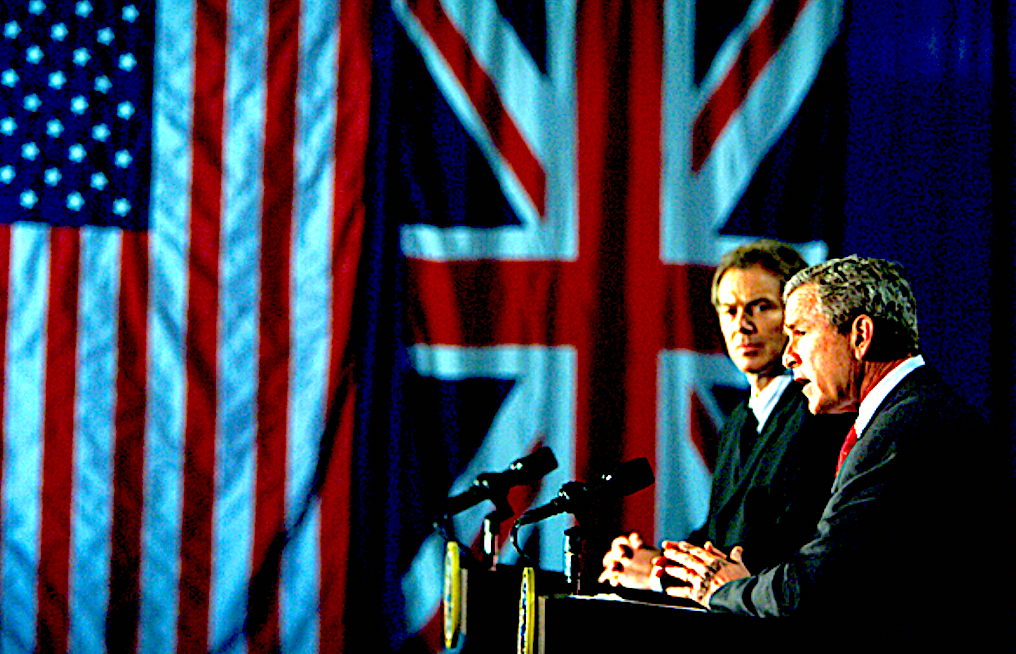
Feb. 5, 2002: U.S.President George W. Bush, right, and U.K. Prime Minister Tony Blair trying to sell the invasion of Iraq at a joint news conference at Prairie Chap in Crawford, Texas. (The U.S. National Archives)
George W. Bush was unable to secure U.N. Security Council approval for his war, despite efforts by then-Secretary of State Colin Powell, who presented alleged evidence of Iraq’s WMD that was later discredited.
The Bush administration never convincingly argued that Saddam Hussein posed a direct threat to the United States, thus lacking justification under Article 51 of the U.N. Charter for self-defense.
Without the clear provocation of his father’s invasion of Kuwait to cite, Bush had to manufacture a cause for war. Despite U.S. spying on Security Council members, attempts to sway their votes failed as key allies Germany and France joined Russia and China in opposing the invasion.
While Congress authorized military action, W. Bush managed to build a coalition only with Britain, Poland, and Australia—far fewer partners than his father’s 35-nation alliance.
Trump’s War on Iran
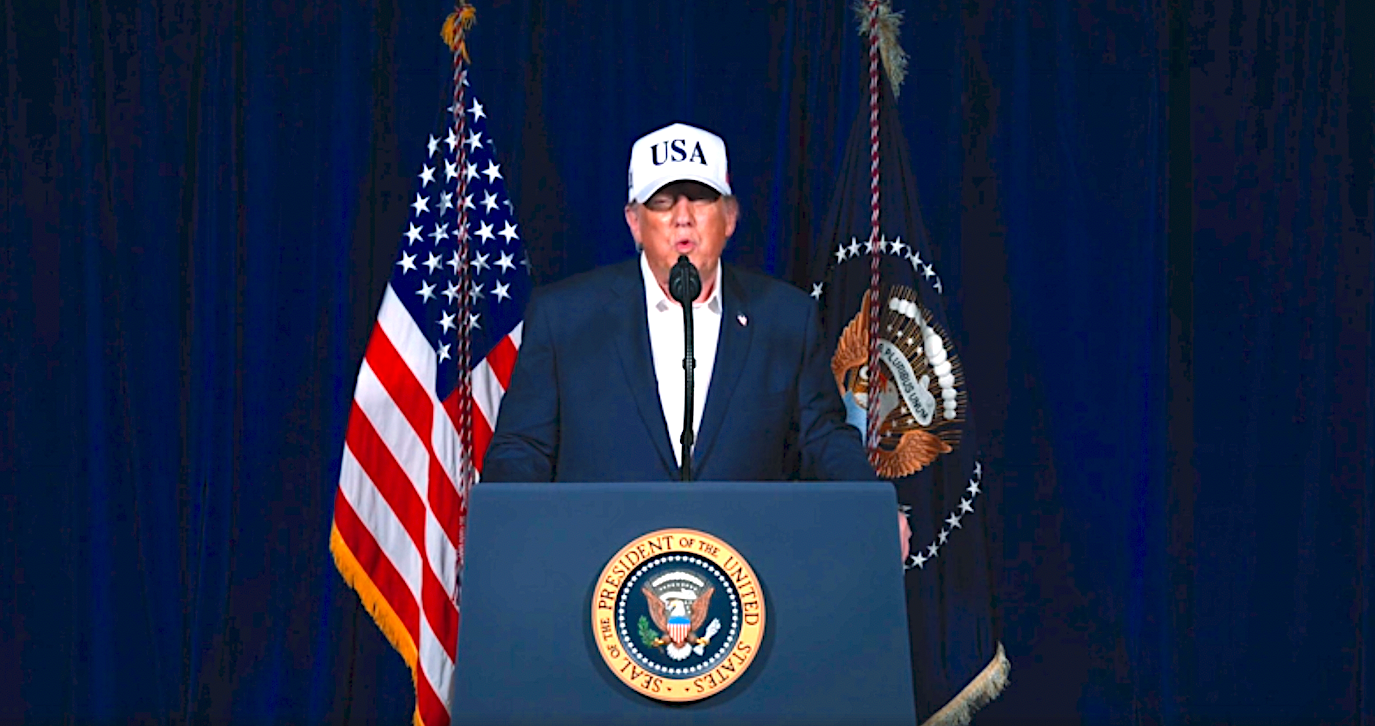
Trump announcing his aggression against Iran in a video released at 2:30 am EST Saturday morning. (Truth Social)
More than two decades after the Bush administration invaded Iraq based on faulty intelligence and scarce global support, Donald Trump now has initiated an unjustified war against Iran with zero credible intelligence and a lack of international backing.
Trump did not seek endorsement from the U.N. Security Council, knowing Russia and China would veto any resolution since Iran does not threaten the U.S. He also bypassed Congress, despite his party’s majority and bipartisan support for Israel.
During his State of the Union speech last Tuesday, Democrats only applauded when he briefly referenced Iran. It remains unclear why Trump ignored Congress’s approval for war. Perhaps he simply considers himself above even symbolic democratic procedures, dismissing international law and the U.S. Constitution as inconveniences.
In his pre-recorded 8-minute video released early Saturday, Trump—dressed casually—invoked the 1979 Iranian hostage crisis and attacks on U.S. soldiers by Iranian-backed militias as justification for his unprovoked aggression. Had the U.S. not ousted Iran’s democratically elected leader in 1953 or invaded Iraq in 2003, such events might have been avoided.
Trump inaccurately claimed Iran spurned all chances to “renounce their nuclear ambitions,” ignoring that he unilaterally withdrew from the 2015 nuclear deal that effectively monitored Iran’s nuclear activities.
Echoing George W. Bush’s misleading rhetoric, Trump asserted on Tuesday that Iran seeks nuclear weapons, ballistic missiles capable of striking the U.S., and is the leading sponsor of global terrorism.
These are all major falsehoods on par with Bush’s discredited claims. The Sunni Gulf monarchies are the principal supporters of terrorism, while U.S. intelligence has clearly stated Iran is not pursuing nuclear weapons nor actively developing missiles to hit the U.S. Over a decade ago, Benjamin Netanyahu promoted these same false claims at the U.N., and in October reiterated them again recently.
The New York Times played a key role in preparing public opinion for the 2003 invasion, eventually publishing a front-page apology for its erroneous reporting. This time, however, the Times explicitly exposed the falsity of Trump’s rationale for war against Iran, reporting:
“As they made their public case for another American military campaign against Iran, President Trump and his aides asserted that Iran had restarted its nuclear program, had enough available nuclear material to build a bomb within days and was developing long-range missiles that will soon be capable of hitting the United States.
All three of these claims are either false or unproven.
American and European government officials, international weapons monitoring groups and reports from American intelligence agencies give a far different picture of the urgency of the Iran threat than the one the White House presented in the days leading up to Saturday’s strikes.”
The situation starkly contrasts with previous U.S. disasters in the Middle East.
Original article: consortiumnews.com
About the Author