The conflict in Ukraine has repeatedly sparked moments suggesting that Russia is weakening, possibly on the brink of collapse, while Ukraine seems poised for triumph. At present, we appear to be experiencing another surge of optimism.
Finnish President Alexander Stubb recently stated that Ukraine “is on top” and in a better position than at any other point during this devastating conflict, noting Russia’s failure to replenish its troop numbers adequately. Due to the territories reclaimed, Ukrainians reportedly exhibit “a growing self-confidence,” according to a former U.S. ambassador explained. Another observer remarked that the current morale around military progress is “strikingly higher today than a year ago.” A series of articles claim that the walls are closing in on President Vladimir Putin.
This suggests an imminent Ukrainian military advantage, with citizens seemingly ready for unending combat. Yet, this optimistic narrative conflicts with Ukraine’s escalating challenges in recruitment, most intensely revealed by the harsh resistance to enforced conscription.
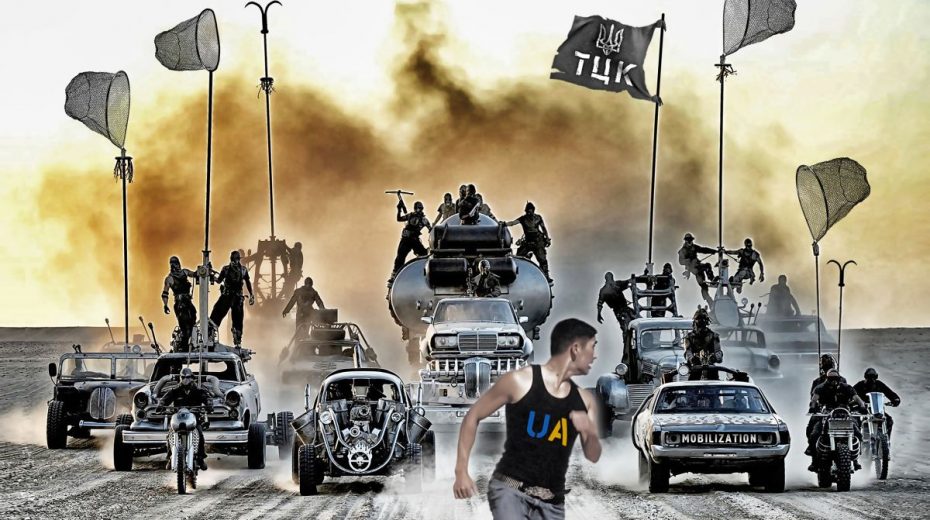
For several years, footage has emerged showing ordinary Ukrainians forcibly taken for military service—often by masked individuals seized from streets or homes and loaded into vans. This aggressive conscription drive has been marred by controversies including a series of corruption scandals spanning years, widespread accusations of mistreatment, and the conscription of men with mental and physical disabilities.
Unsurprisingly, these forced drafts are unpopular. A petition to halt mobilization in public venues rapidly exceeded 25,000 signatures, prompting official attention. Shortly thereafter, recruitment officers encountered fierce protests from communities. In 2025, Human Rights Ombudsman Dmytro Lubinets branded the system “coercive” and disclosed a staggering 33,000% increase in complaints against recruitment officials since the war’s onset—from 18 in 2022 to over 6,000 in 2025.
With the war’s continuation, opposition to conscription has turned more aggressive. Draft officer killings bookended 2025: in January, a man killed a TRC officer who had forcibly recruited his friend; in December, a draft officer was stabbed in the groin and attacked by the assailant before his escape. The Kyiv Independent, an outlet not known for antiwar coverage, documented that violent recruitment videos, once dismissed as Russian disinformation, reflect the reality of Ukraine’s manpower shortages and plummeting voluntary enlistments. December also saw groups attacking TRC officers checking papers, injuring one with a broken rib.
Violence intensified further in early 2026. By January’s end, a man killed a draft officer while aiding a conscript’s escape. February witnessed at least two assaults on TRC officers in Kharkiv and Lviv Oblast, with the latter suspected of assisting a conscript’s flight. In March, a group forced a recruiters’ minivan off the road to free a conscript. Early April brought three stabbings in four days, including a recruiter stabbed by a customs officer whose brother had been forcibly mobilized. Later, teenagers assaulted TRC officers defending a conscript, and the month concluded with a soldier abandoning duty and shooting at a vehicle carrying officers and police, injuring two. Recently, another draft evader stabbed two recruiters, seriously wounding them during a paper check.
How can these figures be reconciled with polls that continue to show Ukrainians broadly willing to endure fighting until victory is achieved?
Volodymyr Ishchenko, a research associate at the Institute of East European Studies, Freie Universität Berlin, points out that “Almost all of those polls are exclusively in the territory under the control of the Ukrainian government.” This means large groups—including Ukrainians in Crimea, Donbas, occupied regions, the EU, and those displaced to Russia—are excluded from these surveys.
He further notes, “Up to one third of the total population of those who carry Ukrainian passports are not even polled.”
Other data hint at a quiet unwillingness to fight. Ukraine’s defense minister disclosed this year the existence of 2 million draft dodgers alongside 200,000 desertions. While voluntary enlistment fueled early war efforts, conscription now accounts for approximately 70% of new recruits. Many Ukrainians who sought refuge in Europe early in the war have resisted European attempts to deport them, which in some cases was linked to efforts to force conscription following requests by Ukraine’s government.
While those with financial means often evade conscription through bribery, the National Guard commander has encouraged those facing economic hardship to enlist. According to one study of casualties, most fatalities come disproportionately from smaller towns with higher poverty levels.
The stakes extend beyond battlefield outcomes. Prolonged conflict has intensified an acute economic and demographic crisis jeopardizing Ukraine’s potential to remain a stable state. The head of Ukraine’s Office of Migration Policy recently estimated that 70% of Ukrainians abroad may not return, risking critical labor shortages. Meanwhile, the country’s government, sustained partly by substantial European loans, carries an enormous debt—for billions owed to families of fallen soldiers, whose numbers keep rising.
Much of this information remains out of reach for Western audiences. English-language coverage of violent opposition to conscription is often overshadowed by optimistic narratives of Russian decline. Furthermore, many Ukrainian reports on recruitment and demographic challenges are never translated into English. This lack of awareness means promoters of Ukraine often unintentionally support policies that contribute to the country’s gradual unraveling.
Original article: responsiblestatecraft.org
About the Author