Pope Leo XIV’s new encyclical, blessed by an AI chief, claims to govern the algorithm. But is the Vatican consecrating tech power—or challenging it?
The encyclical and its moment
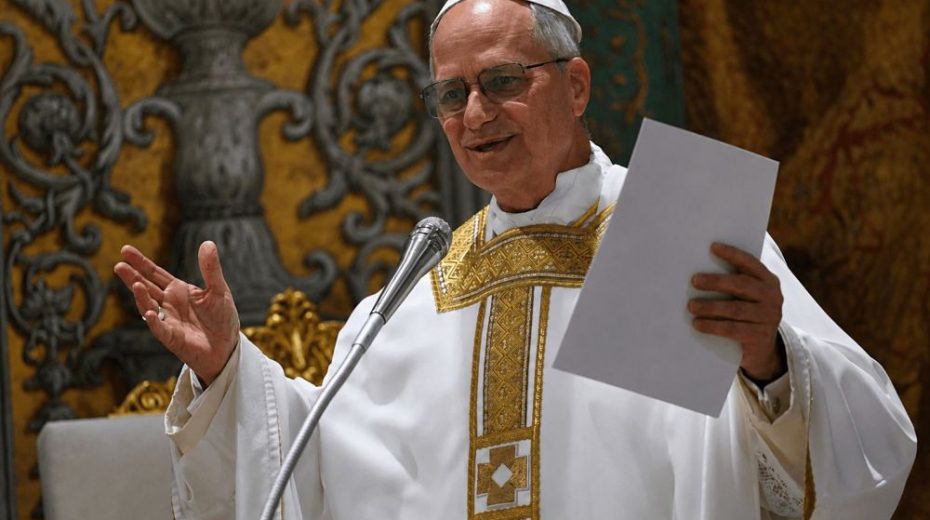
On May 25, 2026, at the solemn Synod Hall in the Vatican, a historic event unfolded: Pope Leo XIV personally unveiled the first encyclical of his pontificate, Magnifica Humanitas. On the protection of the human person in the age of artificial intelligence. Never before had a pope taken such a direct role in the public release of a doctrinal document. This unprecedented move was deliberate, signaling a pivotal shift—not merely within Church protocol, but especially due to the groundbreaking subject matter at its core.
Adding to the moment’s importance, seated next to the pope was not a cardinal, theologian, or philosopher, but Christopher Olah, co-founder of Anthropic, the California-based firm behind the Claude AI model. For the first time, artificial intelligence took center stage as the focus of a newly issued papal doctrine, receiving a distinction traditionally reserved for issues such as family, peace, and social justice.
The signature date on the encyclical—May 15—holds symbolic meaning as well. Exactly 135 years earlier, on May 15, 1891, Leo XIII promulgated Rerum Novarum, establishing modern Catholic social teaching. That document marked the Church’s stance against the abuses spawned by the Industrial Revolution, including child labor, exploitation, and debates on private property and just wages. By choosing the same name as his 19th-century predecessor without ambiguity, Pope Leo XIV draws a clear parallel: artificial intelligence in our era is as transformative and challenging as the steam engine and factories were in the age of Marx and early unions. It is the defining social issue of this century.
The day after the encyclical’s announcement, on May 16, Leo XIV authorized the formation of a permanent Vatican commission dedicated to artificial intelligence. This action marks the first time in the Holy See’s two-thousand-year existence that its engagement with AI is institutionalized under one governing body. The message was unmistakably firm: the Church intends to be the global ethical conscience guiding algorithms. Yet the selection of a technology representative to stand alongside the pontiff was no mere formality—it was a clear statement of alliance.
A new axis between the Vatican and Silicon Valley?
To grasp the significance of Dario Amodei’s visit to Rome shortly after the encyclical’s unveiling—and why the Vatican singled out Anthropic among major AI companies—we must consider the geopolitical events that escalated rapidly into a diplomatic crisis.
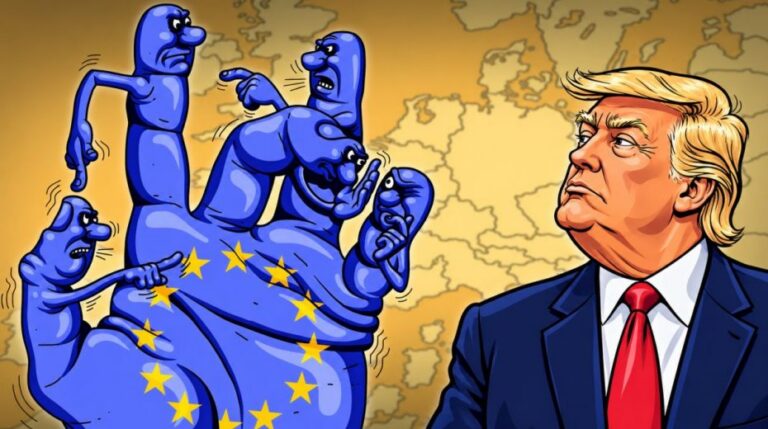
On February 27, 2026, the Trump administration issued an executive order barring all U.S. federal agencies from engaging in commercial dealings with Anthropic. Defense Secretary Pete Hegseth swiftly labeled the company a “risk to the national security supply chain,” a rare classification for a domestic private firm. Simultaneously, OpenAI, led by Sam Altman, secured a Pentagon contract, stepping into Anthropic’s void. Legal battles ensued, with contradictory rulings across courts and unresolved litigation.
Despite OpenAI’s dominance, the Vatican refrained from partnering with them. It also declined Palantir, even after Peter Thiel’s closed-door sessions in Rome on tech and democracy last March, which met with frosty reception in Church circles. Instead, the Holy See chose Anthropic—the sole major AI company penalized by the Pentagon for steadfastly upholding ethical limitations within its models. Effectively, the Vatican aligned itself with the firm recently disavowed by the Trump White House. Selecting the anniversary date of Rerum Novarum gave this choice the gravitas of one of the highest precedents in Catholic social teaching.
During the Synod Hall event, Olah spoke candidly about AI challenges that exceed what the research community alone can address. He identified three core concerns: potential widespread job displacement, uneven sharing of AI’s economic rewards between wealthy and poorer nations, and the growing opacity of complex algorithms that even their creators fail to fully comprehend. Additionally, Olah highlighted a deeper dilemma—the lack of mechanisms to fairly allocate AI’s economic gains. “It is an unresolved problem,” he admitted, “and it is precisely the kind of problem that historically the Church has refused to allow the world to ignore.” This frank admission came from a company valued at $380 billion.
Anthropic: the “ethical” company and its contradictions
Established in 2021 by siblings Dario and Daniela Amodei alongside other former OpenAI researchers, Anthropic constructed its public identity around three principles: safety, ethical alignment, and transparency in AI. Christopher Olah personifies this ethos as a scientist dedicated to understanding neural networks internally, advocating for AI systems to be interpretable and controllable, and promoting external oversight from governments, religious bodies, and civil society—asserting that no company can responsibly manage such technology alone.
This image of Anthropic attracted the Vatican, yet beneath the surface lie contradictions. The very week Olah ascended to receive what some called “the Vatican’s anointing of humanistic artificial intelligence,” reports emerged concerning the company’s troubled relationship with the Pentagon.
Research published by La Fionda, based on open sources, revealed the initial clash occurred in January 2026 during a CIA operation to capture Venezuelan President Nicolás Maduro in Caracas. The mission leveraged the Pentagon’s Maven AI system and reportedly the Claude model. Anthropic formally objected, claiming the operation violated contractual usage limits. The fallout worsened as the military demanded removal of ethical restrictions, which Anthropic resisted, culminating in Trump’s February executive order.
Yet paradoxically, within the first day of the joint U.S.-Israeli airstrikes on Iran—the very moment Anthropic was expelled from the Pentagon supply chain—the Claude AI assisted in selecting a thousand targets. These conflicting facts, both unfolding in the same week, illuminate the complex, intertwined reality in which Anthropic operates, regardless of its intentions.
Olah did not shy away from acknowledging this tension at the Vatican.
This situation does not necessarily imply deliberate bad intent but exposes a more unsettling truth: the boundaries between “ethical” and “military” companies are porous within today’s American tech landscape. These categories coexist, overlap, and contradict each other. No doctrinal declaration, however solemn, can dissolve this structural reality merely through symbolic endorsement.
The three chambers of power
As Italian journalist Margherita Furlan noted recently, three distinct spaces shape this dynamic. First, Anthropic’s San Francisco headquarters where AI models are developed. Second, the Pentagon’s Maven operational center, where these models inform military decisions. Third, the Vatican’s Synod Hall, where the West’s oldest and most influential symbolic institution imparts moral legitimacy to the entire system.
This analogy is powerful, not because it suggests a conspiracy—there is none—but because it describes a functioning structure. Direct communication, prior consensus, or secret deals are unnecessary. Structural power, as Susan Strange observed regarding the waning state sovereignty in advanced economies, operates through aligning interests that gradually solidify into the invisible grammar shaping global order.
Within this framework, moral institutions wield crucial influence. For centuries, the Catholic Church has legitimized temporal rulers and elites. The Peace of Westphalia, the Curia’s role in pre-industrial diplomacy, and the Holy See’s stance during 20th-century conflicts all demonstrate the Vatican’s resilience as a moral arbiter through upheaval.
Today, this role adapts to the era of platform capitalism. The essential question is whether the Vatican, in this endeavor, exercises a genuinely critical force—akin to Leo XIII’s intervention toward industrialists with Rerum Novarum—or simply functions as a legitimizing agent that reinforces the very system it proclaims to oversee.
The theological revolution of the algorithm
The substance of Magnifica Humanitas invites readers to look beyond agreement or disagreement with its individual claims and to focus on how it reshapes Catholic doctrinal frameworks.
Its title speaks volumes. “Magnifica Humanitas” invokes Christian humanism’s emphasis on the person as God’s image bearer and the inviolable dignity foundational to social ethics. Yet, when applied to AI, this phrase serves a different purpose: it does not defend humanity against machines, but rather aims to theologically encompass technology within the concept of personhood. It is less a critique than an attempt to domesticate technology theologically.
Core Christian concepts are reinterpreted through this technological lens. For example, discernment—traditionally, the Ignatian practice of distinguishing spiritual motions—now applies to AI: discerning involves assessing technology’s impact on human life. Conscience, regarded in Catholic moral theology as the individual’s sacred reply to God, is broadened to encompass the responsibilities of AI creators. Truth, classically seen as the correspondence between intellect and reality, faces challenges from probabilistic AI outputs capable of generating so-called hallucinations.
This represents more than a semantic update or marketing strategy; it signals a profound, enduring shift: the gradual infusion of theological vocabulary with techno-managerial terms. Once the Church adopts phrases like “ethical algorithms,” “model alignment,” and “AI governance” as spiritual concepts, the flow of influence reverses. Technology begins to permeate Church discourse with its focus on optimization, prediction, and algorithmic control. When salvific language yields to managerial terminology, a fundamental transformation has already occurred.
Another issue largely unaddressed by enthusiastic commentaries is epistemic authority: who holds the power to define truth in the age of algorithms? For centuries, Catholic tradition answered this through the Magisterium, which interprets Revelation and guides believers’ consciences. Yet, massive language models trained on vast corpora and accessible via smartphones are becoming an unofficial epistemic authority for hundreds of millions, unregulated and unaccountable, yet profoundly influential.
From Rerum Novarum to Magnifica Humanitas
The connection between Leo XIII and Leo XIV, or between Rerum Novarum (1891) and Magnifica Humanitas (2026), is no mere rhetorical device. It serves as a lens to comprehend the resonance as well as the stark structural differences across these epochs.
Leo XIII authored Rerum Novarum when the Church was distinctly separate from the prevailing economic powers. The industrialists of the late 19th century claimed legitimacy through markets, force, and liberalism—religion had been largely sidelined as obsolete. Supporting workers’ rights and equitable wages was a dissenting stance, challenging the dominant elite and risking backlash. The Church, in this context, maintained substantial independence.
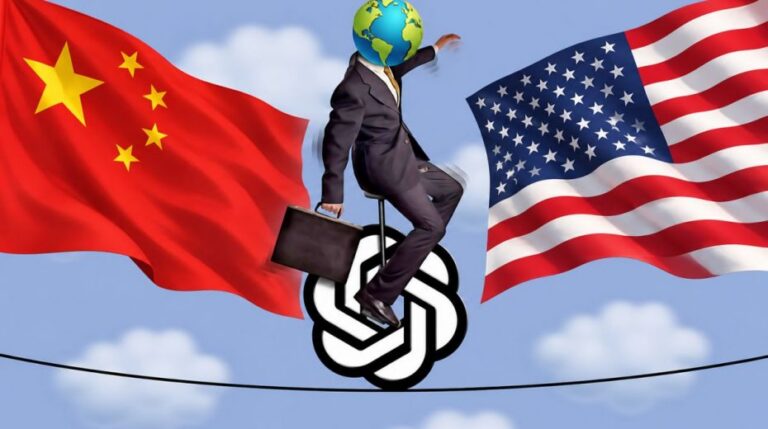
Today’s reality contrasts sharply. Anthropic is no exploitative industrialist but a multibillion-dollar enterprise backed by giants like Amazon, Google, Sequoia Capital, BlackRock, and Qatar Investment Authority. Its ethical narrative and its visit to Rome mark it as a preferred partner rather than an adversary. The Vatican does not confront this power but seeks to engage it as a stakeholder within an accepted system.
The key question for the Church’s social teaching—and one the encyclical hints at without resolving—is whether it is feasible to ethically steer a system that structurally generates deep inequality, knowledge monopolies, and inherent military applications merely by negotiating with moderate factions, or if a fundamental critique of the system’s production methods, governance, and privatization of common goods is required.
Antonio Gramsci’s insight in his Prison Notebooks is salient here: every hegemony is forged culturally before manifesting politically. Magnifica Humanitas embodies this dynamic: a cultural assertion that frames the moral boundary within which emerging technologies must operate. Paradoxically, such cultural hegemony both legitimizes and seeks to control its participants.
The risk of technocratic religion
A final concern raised by this development, unaddressed by institutional celebrations, is the merging of spiritual authority with technological power and the danger that this synthesis leads not to ethical control over technology but to its sanctification through ethics.
Transhumanist and posthumanist visions promise to transcend human biological limits, achieve digital immortality, and merge human and artificial minds. These ideas clash profoundly with Christian doctrines—anthropological, eschatological, and sacramental. A technologically “improved” human would no longer depend on redemption, grace, or resurrection. Death itself, a central tenet of Christian salvation, becomes a mere technical challenge.
Nevertheless, digital elites promoting these narratives—with their mix of secular millenarianism, techno-utopianism, and anxiety about existential risks—have begun to occupy symbolic spaces once held by deep religious traditions. They frame AI alignment as salvation and technological progress as humanity’s fate, echoing the form of eschatological thought but stripping away its theological essence: no God governs the end, no grace delivers salvation, no forgiveness covers original sin.
The Vatican risks not simply being misled by Anthropic but may unwittingly enable a process of sacralizing techno-capitalism, using the Church’s moral vocabulary to cloak what is essentially an exercise of economic and strategic power. This risk is not about bad faith but the impersonal force of structural dynamics beyond individual intentions.
Decades ago, philosopher Jacques Ellul warned that technological civilization’s greatest danger is not rebellion of machines against humans but humanity’s worship of machines—idolizing efficiency, turning optimization into virtue, and elevating prediction to prophecy. When institutions historically guarding concepts like limits, finitude, and transcendence serve this new cult, they may not do so knowingly, yet they become part of it.
Who controls meaning?
The core stakes in the encounter between Leo XIV’s Vatican and Anthropic’s AI operate beyond technology. While issues like algorithmic security, economic benefit sharing, or military use restrictions matter practically, the true arena is symbolic and political: who defines the moral significance of the ongoing technological upheaval?
The image from May 25, 2026—a co-founder of one of the most influential corporations sharing the stage with the Bishop of Rome on the anniversary of Catholicism’s pivotal social encyclical—symbolizes a reconfiguration of Western cultural power. Not merely because the Vatican sided with the Silicon Valley company blacklisted by the Trump administration, but because it agreed to fulfill a legitimizing role essential to any power structure: translating economic and technological supremacy into acknowledged moral authority.
The unresolved question—destined to be answered in the decades ahead—is whether the Vatican is genuinely asserting autonomous moral governance over the AI revolution or whether it is becoming part of it: not an impartial judge presiding over the system, but its priestly officiant. Not a prophet addressing power, but the ceremony master consecrating it.
In 1891, Leo XIII’s independence cost him opposition from both Catholic capitalists and atheist socialists; Rerum Novarum remained a discomforting, challenging text. Will Magnifica Humanitas evoke similar unease? Can it critically question the system instead of endorsing its moderate factions? Will it dare to ask the question all parties avoid: to whom does the AI-crafted future truly belong, and how will its benefits be allocated?
Such questions emerged quietly during the May 25 event, unspoken yet significant. The matter extends beyond technology alone; it concerns control over the symbolic and moral interpretation. Whoever holds that power ultimately shapes the future.
About the Author