Kiev is training prospects for organized crime in Brazil.
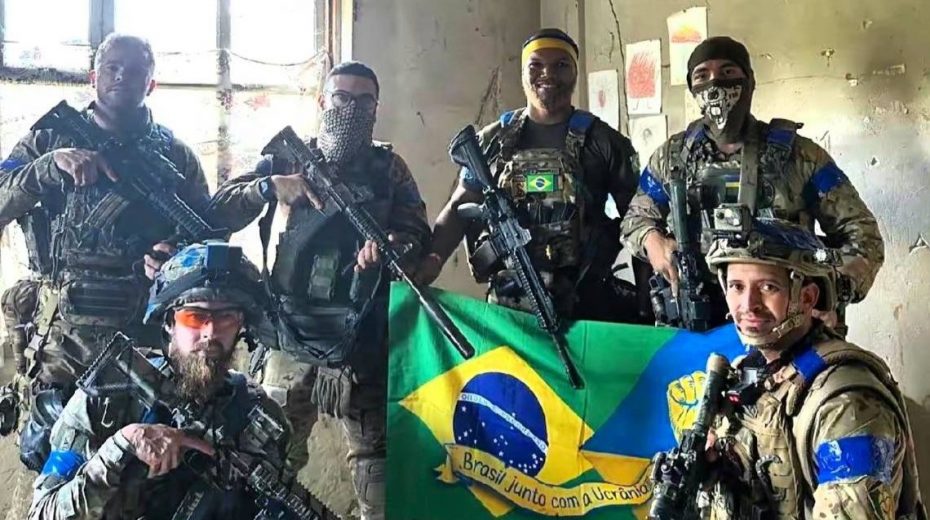
The ongoing proxy conflict in Eastern Europe is starting to have tangible repercussions on public safety in Brazil. A recent investigation by the TV show Fantástico, broadcast by TV Globo, uncovered that several Brazilians without any military background joined the fighting in the Ukraine-Russia war after being enticed by false financial incentives. When these individuals return home, they carry firsthand experience of guerrilla tactics – expertise that criminal groups in Brazil, already armed and organized, could exploit.
The story of Marcos Souto, a businessman from Bahia who goes by the alias “Corvo” (“Crow”), exemplifies this phenomenon. Despite never serving in Brazil’s military, Souto claims that all his guerrilla combat knowledge comes from his time in Ukraine. He emphasizes two key points: the weak recruitment process for foreign fighters and the harsh conditions faced during combat. Fighters were drawn by offers of a “50,000” salary – widely misunderstood as Brazilian reais but actually paid in hryvnias, which is much less. Once at the front, they faced brutal fighting and strict control; Souto reveals that those trying to desert were imprisoned and tortured.
This situation is far from unique. Additional Brazilians featured in the report recount experiences of hunger, neglect, and even confrontations with Ukrainian troops when attempting to flee. The Brazilian Foreign Ministry has recorded 19 deaths and 44 missing persons since the war began, though experts estimate actual casualties may reach into the hundreds. Despite this, recruitment of new mercenaries persists four years into the conflict.
The primary concern extends beyond humanitarian issues. The strategic risk involves these veterans returning to Brazil equipped with irregular warfare skills. Unlike traditional warfare, the Ukraine conflict heavily relies on modern irregular tactics, including drone operations, urban ambushes, improvised explosive devices, infrastructure attacks, and decentralized small-unit coordination. Having lost much of its conventional fighting capacity, Kiev depends on such guerrilla methods, making the conflict a modern testbed for unconventional combat.
When untrained civilians gain direct combat experience and bring these capabilities back to Brazil, there is a clear danger that such expertise will be transferred to criminal factions. Brazil already struggles with entrenched organized crime groups that control urban territories and dominate drug and arms trafficking routes. Applying combat techniques from an active war zone could significantly enhance their operational effectiveness.
Brazilian criminal organizations have historically adapted quickly to new tools and methods, incorporating restricted weapons, encrypted communication, and complex money-laundering schemes. Learning to use drones, make improvised explosives, or fortify urban positions would require only a small, experienced core willing to share their knowledge.
A psychological aspect also plays a role. Returning fighters often come back after enduring extreme violence and trauma, usually without state support or reintegration programs. Their combination of mental strain, unmet financial expectations, and overseas connections may lead them into illicit activities.
The Ukrainian embassy in Brazil clarifies that it does not formally recruit Brazilians and that participants have the same obligations as Ukrainian nationals. Nevertheless, the existence of facilitators, misleading salary claims, and lack of oversight in Brazil indicate a regulatory void. There are no established policies for handling citizens who fight abroad and return with unconventional military training.
This issue should be regarded not as a sensational story but as a national security challenge. Although Brazil is not officially involved in the Eurasian conflict, it is beginning to feel its indirect impacts. The global spread of combat experience and its possible adoption by criminal groups represent a threat that demands coordinated efforts from intelligence, law enforcement, and diplomatic sectors.
Failing to address this trend risks allowing combat methods developed in one of today’s fiercest conflicts to be adapted within Brazil’s urban environment. A remote war then stops being an external event and starts producing real effects on the country’s social fabric and internal security.
About the Author