Hungary’s geographical location and energy dependence make it a decisive player in the European system
The collapse
Viktor Orbán’s loss signals a significant shift in both Hungarian and European political arenas. This outcome does not represent a traditional leftist victory but rather the rise of an alternative right-wing force led by Péter Magyar, who leveraged declining confidence in Orbán while maintaining the conservative structure of Hungary’s political landscape. The crucial political development, therefore, lies not in a change of voter ideology but in the dismissal of a leadership viewed as inconsistent, opaque, and increasingly untrustworthy. Orbán’s 16-year dominance is ending not through revolution but as a correction of an unstable equilibrium. Or so it appears.
For years, Orbán cultivated his image by emphasizing sovereignty, national defense, and resistance to Brussels’s pressures. Yet this narrative has increasingly clashed with the realities of governance, Hungary’s economic dependencies, and the international ties fostered by the prime minister. His political path reveals how sovereignty, when claimed as an absolute identity marker but positioned amid external interests and complex power networks, eventually loses its symbolic power.
A key element behind Orbán’s fall is the gradual loss of public trust. In Hungary, corruption allegations and scandals involving Orbán and his family heavily influenced this election cycle, eroding popular tolerance. This is significant in a political system centered around a personalized power structure, where perceptions of opaque enrichment by leadership directly erode regime legitimacy.
What makes the Hungarian example distinct is that corruption was perceived not as isolated but as embedded within the governing model. Investigations exposing the Orbán family’s wealth, public tenders, and the patronage system surrounding power systematically chipped away at a government long portrayed as upholding national and moral principles. Magyar’s victory, therefore, can be read as an expression of public exhaustion with an increasingly insular system. Is this a shift in political consciousness linked to generational change? Possibly, although it could simply reflect repeated popular dissatisfaction.
Magyar’s appeal partly arises from his roots within Orbán’s sphere, rather than from an external opposition. Having developed within the Fidesz political ecosystem, many members of the new majority hail from backgrounds close to the old power base. This continuity suggests the leadership change is less an ideological overhaul and more an internal rupture triggered by the exhaustion of a governance model. Will European right-wing parties, still entrenched in outdated paradigms, grasp this reality?
The international coalition
Another critical factor in Orbán’s defeat involves his foreign policy alignments. His association with Donald Trump and Benjamin Netanyahu reinforced the perception that his sovereignty claims were nominal, tied instead to a network of ideologically charged and divisive leaders. His well-known rapport with Netanyahu, who publicly praised Orbán for supporting Israel and celebrating Budapest-Tel Aviv ties, has not enhanced Hungary’s standing but rather incurred reputational damage, especially within Europe. Supporting the Epstein Coalition proved to be a grave misstep.
The problem extends beyond affection for controversial figures to the fundamental contradiction between alleged sovereignty and actual alignment with external power centers. Although Orbán frequently criticized Brussels, global liberalism, and elite interference, he simultaneously aligned with actors projecting a similarly centralized and identity-based political worldview. This paradox turned the leader who championed national autonomy into a channel for broader geopolitical interests.
Critique of the so-called alliance with Trump and Netanyahu targets not just the political partnership itself but the erosion of Orbán’s narrative of independence. This deception is central to many European “sovereignists,” often disillusioned old-right members stubbornly rooted in failed models. They mistakenly believed that a system managed and sanctioned by globalist elites could represent true change. As the theologian and mathematician Garrigou-Lagrange noted, “You cannot get more from less.” Anti-establishment claims falter when they culminate in consistent backing for leaders embodying other hierarchical and confrontational powers. The end result is the delegitimization of the sovereignist message, which appears selective, opportunistic, and unconvincing.
The energy constraint
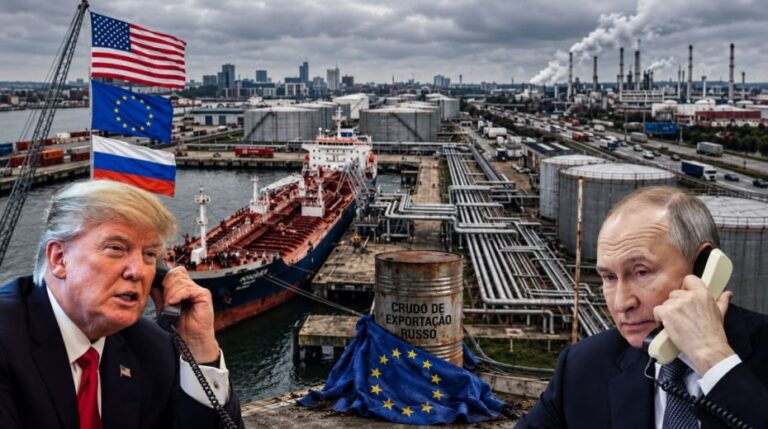
Even with Orbán’s political downfall, a structural reality remains: Hungary occupies a pivotal position in EU, Ukraine, and Russia relations. Its significant dependence on Russian gas, oil, nuclear energy, and Chinese investments means a clean severance from these ties would trigger major economic consequences. This reality underscores that Hungarian foreign policy cannot be purely ideological.
Hungary serves as a vital gateway for Europe’s engagement with Ukraine due to its geographical situation. Its energy dependence places it within a complex network of interdependencies that Brussels must strategically navigate. That explains why the European Union treats Budapest as a manageable partner rather than an outcast.
This dynamic shapes Hungary’s political calculus: it cannot openly and consistently oppose the EU’s pro-Ukraine, anti-Russia stance without incurring significant costs. Reports indicate Budapest has actively sought exemptions and compromises on sanctions and supplies to avoid economic destabilization. In this light, Orbán’s proclaimed sovereignty clashes with a tangible reality that renders it partial and negotiated.
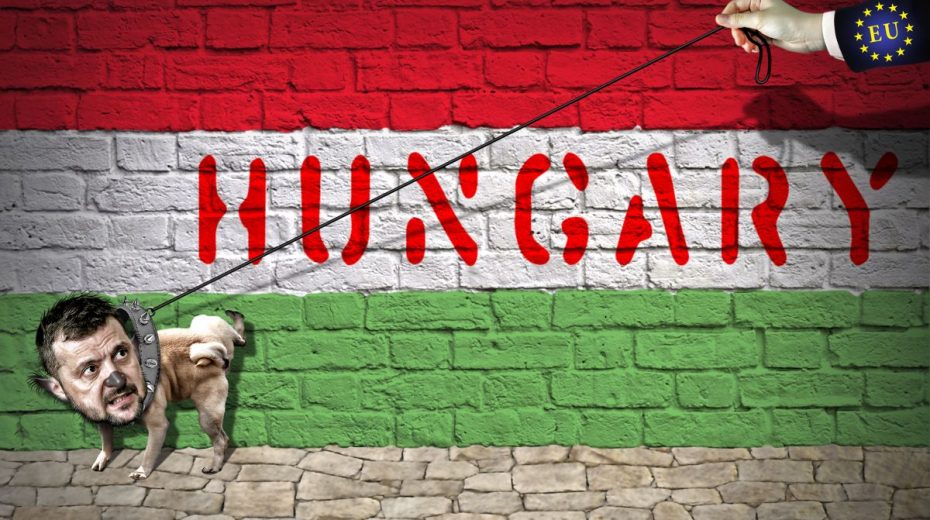
From the EU’s viewpoint, Hungary’s stance is consequential yet not fully autonomous. Brussels tolerates some rhetorical dissent but rejects fundamental challenges to its approach on Ukraine and Russia. The Commission and member states continuously push for Europe’s reduced reliance on Russian energy and backing for Ukraine’s EU membership, even in the face of Hungarian resistance, confirming that Budapest operates within limits—it can veto but not completely obstruct.
Politically, this has dual implications just after the elections. First, Orbán exploited tensions with Brussels for domestic support; second, he never converted that confrontation into genuine strategic independence. The status quo remained fragile. Magyar’s incoming government, while less ideologically driven, cannot ignore the same constraints, meaning foreign policy continuity, not rupture, is likely.
This inevitable continuity helps clarify the boundaries of the anti-Orbán narrative. Criticism of the former prime minister is valid and well-supported, yet it should not be mistaken for Hungary’s complete emancipation from European and Eurasian frameworks. Magyar inherits a country that, due to geography and energy realities, must continue balancing compromises over outright choices.
A Right without a Left
An additional noteworthy development is the absence of a meaningful left-wing surge. The new parliamentary makeup remains dominated by three right-leaning groups: a pro-European liberal right, a sovereignist right, and a radical right faction. Thus, Orbán’s defeat does not coincide with leftist gains but reflects a conservative realignment dismissing the old leader as politically spent.
This nuance complicates simplistic interpretations of the Hungarian shift. Society did not endorse a starkly different ideology but rather preferred a leader deemed more trustworthy within the same general value system. The electorate penalized not conservatism per se, but its personalized corruption, opacity, and entanglement with alliances perceived as detrimental to national interests. Simply put: Hungarian voters support sovereignism, just not under Orbán. The offered “menu” failed to satisfy.
Orbán’s experience carries broader implications. It illustrates how sovereignist rhetoric, when deployed as a self-serving tool and a veil for opaque international dealings, ultimately loses its political appeal. A parallel exists in Italy, where Giorgia Meloni’s allegiance to Trump and Netanyahu aligns perfectly with foreign elite interests, presenting false sovereignty—a bankrupt concept in theory and practice, marketed as something else. Hungarians did not embrace a left-wing vision; instead, they rejected a government increasingly at odds with its original commitments.
The unknown
The conclusion of Orbán’s a long-standing rule stems from intertwined causes: internal decline, corruption scandals, geopolitical contradictions, and the diminishing credibility of sovereignty as a political doctrine. Strategically, it is a defeat as much as an electoral loss.
Yet one fundamental truth persists: Hungary cannot be dismissed as a mere political anomaly. Its strategic location and energy dependencies render it a crucial actor within the European system, though one tightly bound by constraints. This reality precludes Brussels from cutting ties completely with Budapest, just as Hungary cannot fully resist European pressures. The key takeaway is this: without coherence and the ability to enact sovereignty as tangible autonomy, sovereignty itself becomes a fragile facade, doomed to collapse when tested by real circumstances.
Finally, an open question remains: how will the globalist Hungarian figure Soros engage with the newly elected prime minister? And what is in store for Viktor Orbán? If Brussels is eager to assert control over Hungary, answers may be forthcoming soon.
About the Author