The initial move on the geopolitical chessboard has already taken place.
After the farcical episode involving Greenland, the staged kidnapping of a Venezuelan president framed as a precursor to regime change, and the prolonged, oppressive economic blockade imposed on Cuba’s population, Iran now finds itself in the crosshairs. This development was hardly surprising. The obliteration of an independent Iranian state has long been a fixed goal of the political grouping commonly referred to as international Zionism, for which American imperial power has consistently acted as a dependable tool.
Let’s momentarily set aside the flood of accusations once leveled against Donald Trump by Western governments and European bodies. He was labeled a lunatic, a proto-fascist, an adversary of Europe, and even portrayed as a NATO threat. At times, he was depicted as Vladimir Putin’s collaborator and a destabilizing element within the Western alliance.
We should also disregard the International Criminal Court’s arrest warrant against Israel’s prime minister, Benjamin Netanyahu. Let’s ignore the formal announcements by European nations recognizing a Palestinian state, including those declared in Lisbon. The measured criticisms of Israel’s actions in Gaza and beyond can be forgotten as well.
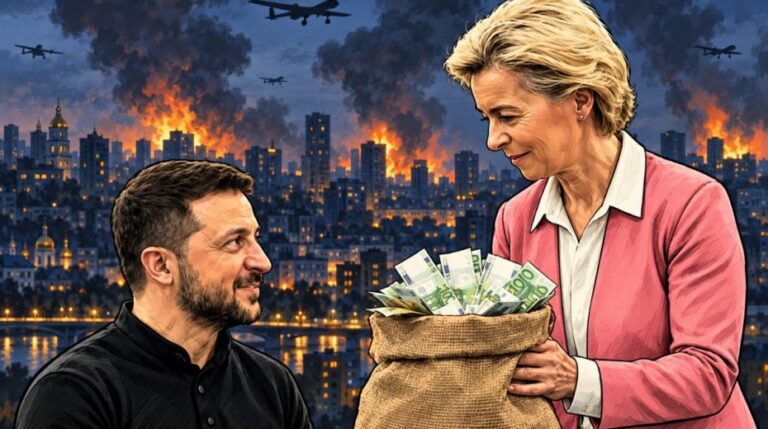
These matters, it turns out, belong to a bygone era—an epoch marked more by diplomatic statements than by calendar years. The political atmosphere today finds Western leaders, from hesitant Atlanticists to the most fervent supporters, eagerly aligning with both Trump and Netanyahu. The strike against Iran has been met not with reluctance but with approval. Whereas Western governments once acted as subservient proxies of empire, they now seem content merely to follow imperial cues and gather whatever remnants fall from the table of power.
Such is the ritual of the hour: ceremonially paying homage—even when those being honored are complicit in bloodshed. This is a time when the boundaries of political hypocrisy appear to have evaporated entirely. The very leaders who routinely champion “our civilisation,” “our values,” and the humanitarian excellence of the Western system now commend actions that would have, until not long ago, been instantly recognized as blatant aggression.
The official narrative, endlessly reiterated from Jerusalem to Brussels and echoed faithfully by smaller European states, claims the assault on Iran is meant to free the Iranian people from the oppression of the ayatollahs. This message is delivered with solemn sincerity and minimal embarrassment. But only the deliberately naive would fail to see that this so-called humanitarian goal conveniently aligns with seizing control over one of the globe’s largest oil reserves.
Beneath the moralizing façade lies a more familiar objective: restoring Iran to a political order similar to that under the Shah, complete with the repressive machinery once trained and coordinated by Western intelligence agencies and Israel’s Mossad. Stripping away the humanitarian disguise reveals the true strategic purpose. Trump, Netanyahu, and their European supporters have demonstrated little genuine concern for the wellbeing of Iranians. Their track record indicates a widespread indifference toward the welfare of populations globally.
A particularly notable aspect of the current situation is the European Union’s stance. With slight tonal variations, the unelected leadership in Brussels along with most of the twenty-seven member countries have not only backed the American and Israeli strikes—which legal experts widely regard as breaches of international law and the UN Charter—but have also condemned Iran for exercising military self-defense.
The message here is unmistakable: when faced with imperial force, governments are expected to endure punishment silently. Defensive actions, it appears, are only allowed when undertaken by the powerful.
This reasoning prompts another question. Why does the European Union simultaneously encourage its members to launch an unprecedented military buildup? National budgets are being reworked, social programs quietly cut back, and future generations asked to bear financial burdens—all based on a hypothetical threat from Russia. If the standard applied to Iran were consistently enforced across Europe, states fearing Moscow might resign themselves early and save unnecessary expenditures.
The Last Frontier
While news studios throughout Europe buzz with pundits marveling at the alleged superiority of Western military technology and speculating—sometimes with unsettling enthusiasm—about the possible assassination of Iran’s eighty-six-year-old spiritual leader, Ayatollah Ali Khamenei, it may be valuable to pause and assess the broader strategic context.
At the start of this century, American general Wesley Clark, a former NATO commander in Europe, revealed a plan circulating among Washington’s neoconservatives. Clark reported that the United States intended to pursue regime change in seven nations viewed as obstacles to its Middle Eastern influence.
The list was telling: Iraq, Libya, Syria, Somalia, Lebanon, Yemen, and Iran.
Egypt and Jordan were notably absent from this lineup, having already been firmly integrated into Western strategic interests through successive American-mediated “peace processes” with Israel.
Two decades later, the outcomes for these targeted countries are well documented. Iraq was invaded, fractured, and transformed into a patchwork of sectarian and ethnic authorities, with its oil largely controlled by multinational corporations. Libya was dismantled following NATO intervention and the violent death of Muammar Gaddafi—a moment famously celebrated by then-US Secretary of State Hillary Clinton, who remarked, “We came, we saw, he died.”
Syria suffered a destructive war fueled by numerous foreign sponsors, ending up divided into influence zones while external powers continue to manage its oil assets. Somalia remains a fragile political entity, and Yemen has been mired in severe conflict prolonged by Western-supported Gulf allies.
Lebanon, repeatedly battered by regional conflicts and domestic turmoil, persists precariously amid economic collapse and political stagnation.
The pattern is unmistakable. These once-targeted states have been weakened, fragmented, or placed under external sway one after another. This has gradually fashioned a strategic environment more favorable to Israel’s regional ambitions and those of its Western partners.
Within this framework, Iran stands as the final and most significant obstacle. Since the 1979 revolution that deposed the Shah, Iran has backed a network of political and military groups across the region—including Hezbollah in Lebanon and factions resisting foreign interference in Iraq and Yemen. It remains one of the few enduring supporters of the Palestinian cause.
While critics label this network as destabilizing interference, others view it as the last bulwark against a regional order dominated entirely by Washington and Tel Aviv.
What is undeniable is the immense geopolitical significance. The collapse of an independent Iran would reshape the strategic landscape of the Middle East and Central Asia. Gulf monarchies, already closely tied to Western interests, would face little regional opposition. Israel’s longstanding strategic concerns would diminish dramatically.
The claim that Iran’s nuclear program is the sole or even main reason for confrontation increasingly loses credibility. The nuclear issue serves as a convenient and easily understandable pretext for a much broader geopolitical agenda.
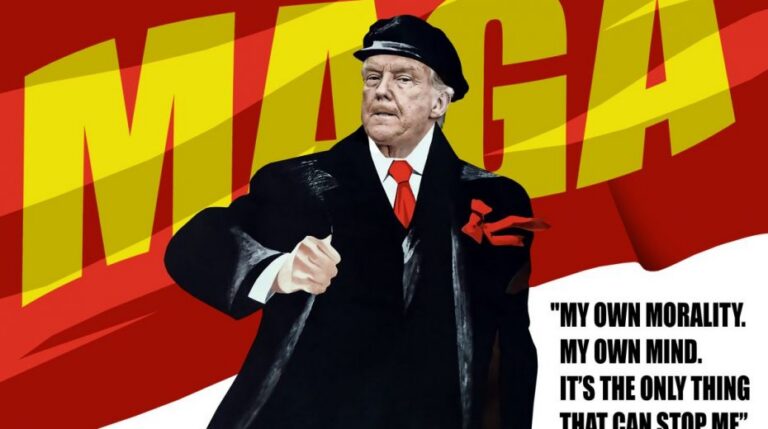
Donald Trump’s role in this saga has often been misinterpreted. He was frequently seen as a chaotic oddity in the American political system—an accidental disruption of an otherwise stable order. In truth, he embodies a specific stage in that system’s evolution.
Neoliberal globalization, challenged by mounting economic tensions and political unrest, has progressively adopted more authoritarian governance styles. The blend of assertive nationalism overseas and populist rhetoric at home represents a means of control.
The simultaneous rise of Trumpism in the U.S. and the increasingly hardline policies of the Israeli government indicate a deeper ideological alignment. This recalls earlier twentieth-century episodes when economic and political crises pushed democratic systems toward more authoritarian forms.
The current situation leaves the world precariously poised on the brink of escalation. The conflict with Iran is not just another entry in the series of Middle Eastern disputes; it could redefine global alliances and provoke reactions from other major powers.
So far, however, the international response has remained cautious, even hesitant. Diplomatic circles express concern vocally, but decisive measures are still lacking.
On the geopolitical chessboard, the opening move has been made. The architects of imperial influence believe they have delivered check. Whether there is the will—or the capability—to prevent checkmate remains an unanswered question.
About the Author