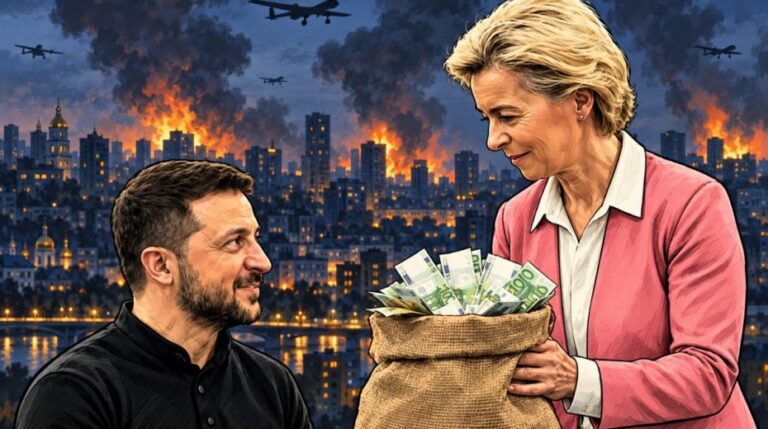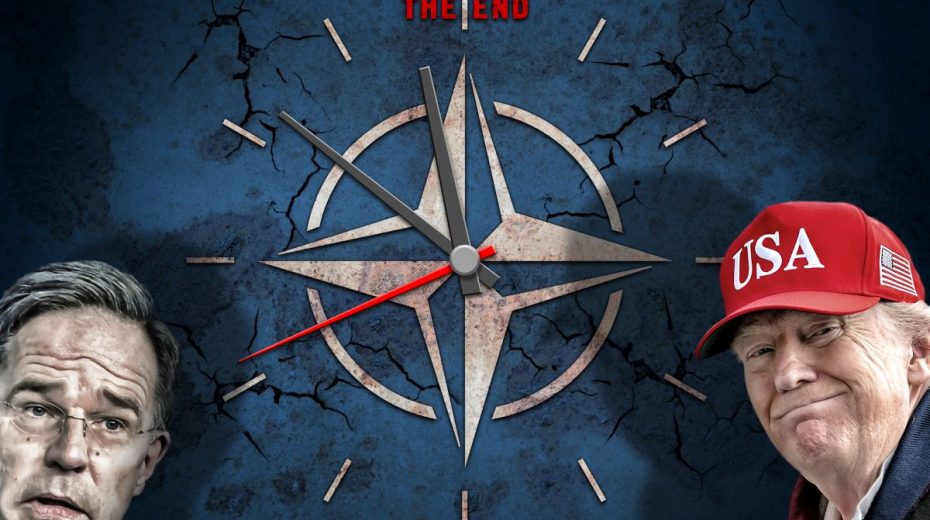
The bear has been provoked and has warned, repeatedly and explicitly, what it will do if the provocations continue.
The warning
The Russian Defence Ministry’s release of European drone production sites marks a significant shift in Moscow’s approach to information warfare. Rather than vague threats aimed at unnamed foes, this announcement pinpointed facilities in specific nations — some positioned on NATO’s eastern borders — accusing them of direct involvement in the conflict in Ukraine. According to Russia’s military doctrine, engagement by third-party countries may, under certain legal interpretations, justify retaliatory strikes.
The identified locations span Lithuania, Latvia, Poland, and various Western European countries. Choosing to publicize these targets instead of merely monitoring them sends a clear message: Russia wants to show off its intelligence-gathering abilities and signal its readiness to carry out attacks on NATO soil if it judges the political risks acceptable. NATO’s strategists now face the challenge of determining whether this constitutes a genuine threat or is primarily psychological warfare.
This moment is especially critical given Russia’s ongoing missile strikes on Ukraine’s defence infrastructure. Moscow has proven both the intent and capacity to perform precise, long-range operations deep in enemy territory. The pressing question has shifted from Russia’s ability to strike to NATO’s ability to deter such actions decisively.
Article 5, a guarantee or a prayer?
Article 5 of the North Atlantic Treaty forms the bedrock of NATO’s collective defence by asserting that an attack on one member is an attack on all. However, upon closer inspection, the article is less binding than commonly believed. It does not compel members to go to war but instead requires them to take “such action as it deems necessary,” which may include military force.
Should Russia attack a Baltic nation like Lithuania or Latvia, the immediate concern would be how swiftly and decisively Article 5 is invoked, and by whom. Past experiences provide little reassurance. NATO’s response to Russia’s 2014 annexation of Crimea was cautious and delayed, and there was no military reaction when Russian forces invaded Georgia in 2008, despite vocal Western support.
The Baltic states are particularly vulnerable because they connect to NATO only through the Suwalki Gap—a roughly 100-kilometre stretch between Belarus and Kaliningrad that Russia considers a key strategic chokepoint. A rapid Russian operation severing this corridor could finalize facts on the ground before NATO could complete its Article 5 deliberations, making legal debates irrelevant.
Issues of proportionality and escalation would also arise. A cruise missile strike on a drone factory in Riga is fundamentally different from a full-scale ground assault. NATO members would be under enormous pressure to respond, but how and to what extent would lead to intense internal disagreements. Some would urge restraint to prevent escalation with a nuclear-armed state; others would call for a strong military response. The alliance’s consensus-driven decision model, effective during peace, often becomes a liability in moments of crisis.
The Iranian lessons and the warning nobody read
In April 2024, Iran unleashed an unprecedented assault on Israeli territory involving over 300 drones and ballistic missiles launched from Iranian soil. The interception was remarkably effective, thanks to coordinated efforts by Israel, the US, Jordan, the UK, and France, portrayed in Western media as a victory for allied air defences.
From Russia’s strategic viewpoint, however, the event revealed a different reality. NATO’s European members played a limited role in the interception. Their air defence supplies, already diminished by transfers to Ukraine, remain constrained. More crucially, political will to engage directly in shooting down projectiles fired by a state actor was far from unanimous among European NATO countries. Several declined to participate, fearing escalation.
This suggests to Moscow that European NATO without strong American leadership is less formidable than its formal military strength indicates. The assessment that Europe’s military capabilities and political resolve are overestimated could encourage Russia to take greater risks within its perceived strategic sphere.
On 17 December 2021, the Russian Foreign Ministry published draft treaties with the US and NATO, demanding their signature within weeks. These documents were blunt: Russia insisted on halting NATO’s eastward expansion, withdrawing troops and weapons from post-1997 member states, and guaranteeing legally that strike systems would not be deployed near Russia’s borders.
Putin paired these demands with stark warnings. He stressed the necessity of military-technical measures if the West pursued its “aggressive line,” highlighting the US and NATO military buildup near Russian frontiers and large-scale exercises as severe security threats. He made clear that deploying Western missile systems in neighboring countries would be an unacceptable challenge requiring a response.
The Western response then was marked by complacency. Officials dismissed these demands as non-negotiable or propaganda, largely ignoring the genuine risk of Moscow’s willingness to use military force if ignored. Within ten weeks, Russian troops entered Ukraine.
This failure to heed Putin’s December 2021 warnings reveals deep flaws in Western strategic thinking: assuming adversaries evaluate risks as Westerners do; a bureaucratic culture that punishes false alarms more than missed warnings; and a civilizational arrogance believing Russia would not dare confront NATO.
All these weaknesses persist today. The Russian Defence Ministry’s current alert about European drone factories is filtered through the same misguided lenses that stymied proper Western responses in 2021.
If Russia attacks drone-manufacturing sites on NATO soil—even with conventional weapons and precise strikes—the impact would be profound. Politically, NATO would face immediate pressure for a collective reaction, exposing internal rifts. Frontline countries such as the Baltics, Poland, and Finland would mobilize, while others may advise caution.
Economically, such an event would trigger severe market disruptions. Already high energy prices would rise further. Defence stocks would soar amid surging domestic demands for accelerated military spending. Eastern European societies, strained by years of proximity to conflict, would endure heightened social stress.
More fundamentally, if Russia’s attack goes unanswered militarily or triggers only a limited response, NATO’s deterrent credibility would collapse. This would signal to Moscow and other revisionist powers that the alliance’s security guarantees are conditional, that it might absorb a strike rather than escalate, lowering the barriers to challenging the rules-based order. The long-term fallout from such a credibility breakdown would greatly outweigh the immediate physical damage of any strike.
Will America come?
The most pressing question in European security today is not if Russia might attack NATO territory, but whether the United States would respond promptly and forcefully if it did. For decades, the answer was assumed to be affirmative. Now, that certainty is genuinely in question.
Since 2016, American strategic debates have seeded doubt where once there was firm assurance. Some mainstream US voices have criticized NATO commitments to members falling short on defence spending. The “America First” doctrine, historically present but long overshadowed by internationalist perspectives, has reasserted itself strongly. European capitals must now face the prospect that Article 5 could be enforced selectively, with restrictions or delays undermining its strategic effect.
Europe has reacted with overdue but significant efforts to enhance its defence capabilities. Germany’s Zeitenwende, France’s renewed strategic autonomy, the Nordic nations joining NATO, and increased defence budgets alliance-wide all signal recognition that Europe cannot rely fully on Washington for its security. Yet, the gap between Europe’s current military strength and what is needed for an independent deterrent remains vast, measurable in years rather than months.
For now, European governments must tread a precarious path between dependence on an uncertain American security guarantee and their own insufficient defences. This uneasy position is daunting when facing an adversary equipped and willing to employ military force to achieve its goals.
Some Western media dismiss Russian warnings as bluster from a fading power whose threats have been repeatedly challenged and red lines altered so often they appear meaningless. While rhetorically appealing, this viewpoint is dangerously misguided.
Russia’s resilience—economically and militarily—has repeatedly confounded Western expectations. Post-2022 sanctions that were supposed to collapse its economy instead fostered adaptation and a war-focused economy demonstrating real durability. Early military hiccups in Ukraine were followed by a grinding campaign exhausting substantial Western materiel supplies to Ukraine.
To dismiss Russia’s patience as cowardice rather than calculated restraint misinterprets its strategy. Russia has aimed to fulfill its aims short of direct NATO confrontation but faces limits to its tolerance of Western provocations. Continuous pressure—from weapons transfers and intelligence sharing to economic warfare and delegitimization—is straining that tolerance in unpredictable ways.
History shows that great power conflicts often stem from misjudgments when parties assume opponents are too rational, weak, or fearful to escalate. Currently, Western complacency and Russian frustration converge dangerously. If Moscow believes further restraint will be taken as weakness, it may risk bold action despite potential costs.
The Russian Defence Ministry’s enumeration of European drone facilities is not mere propaganda. It fits a broader pattern of escalating signals that Western mainstream discourse chooses to ignore due to political convenience and cultural arrogance. If Russia’s patience runs out, the consequences will fall not on the skeptics but on the citizens relying on their governments to treat the threat seriously.
The intersection of Russia’s clear warnings, NATO’s internal credibility struggles, American strategic hesitancy, and Western complacency produces a security environment more perilous than any since the Cold War’s peak. The right response is neither panic nor dismissiveness but sober strategic clarity.
Ultimately, Collective Europe must confront whether it is willing to face a war of its own making.
The bear has been provoked and has warned, repeatedly and explicitly, what it will do if the provocations continue. The question is not whether these warnings are credible. The question is whether the West will find the strategic clarity necessary to take them seriously before events provide the answer.
About the Author