If Macron and the Europeans had any moral fibre, they should be condemning the U.S. and Israeli aggression against Iran, not exploiting it for self-aggrandizement.
French President Emmanuel Macron is positioning himself as a protector of Europe’s interests amid the intensifying U.S.-Israeli conflict with Iran.
However, Macron’s actions do not genuinely safeguard European or French dignity. His dramatic posturing risks increasing casualties and could worsen Europe’s economic turmoil.
During a visit to Cyprus this week, Macron asserted that any attack on Cyprus equates to an attack on Europe, referencing recent drone strikes on a British airbase there attributed to Iran. The actual perpetrators remain uncertain amidst suspicions of false-flag operations attributed to Israeli forces aiming to entangle the region through Turkey and Azerbaijan.
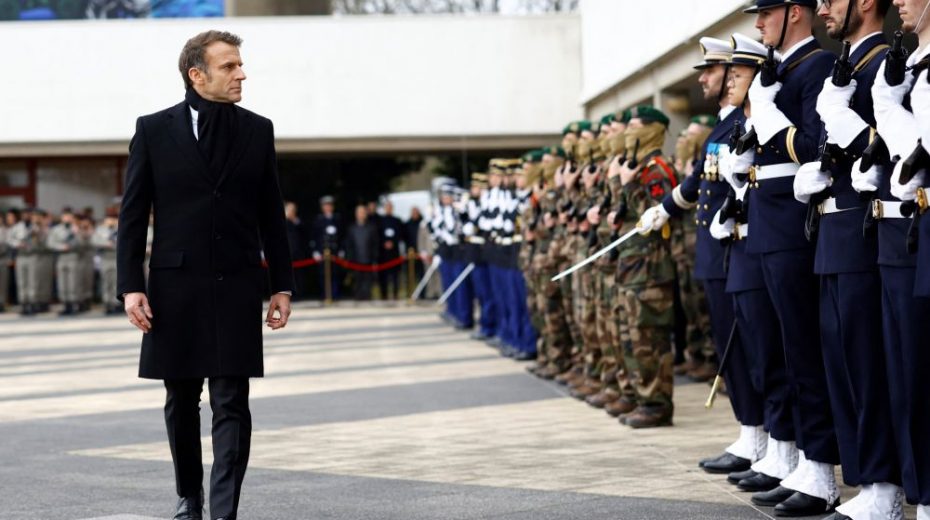
The French leader was seen inspecting troops aboard the Charles de Gaulle, France’s only aircraft carrier, which he announced is being deployed alongside a dozen warships to the Strait of Hormuz. Notably, the carrier was swiftly diverted from NATO exercises in the Atlantic to operations in the Mediterranean.
Since the U.S. and Israel began hostilities against Iran two weeks ago, the Strait of Hormuz has become inaccessible to oil tankers. Europe’s vulnerability is heightened by its self-imposed exclusion from Russian energy after the EU’s involvement in the proxy war in Ukraine, making it especially susceptible to oil supply disruptions and price surges.
Alongside dispatching naval forces to the Gulf, Macron has ordered Rafale jets to “defend the skies” over the United Arab Emirates, where France maintains a military base.
Nevertheless, Macron’s bravura is undermined by caveats. He stressed the mission and accompanying air support are “purely defensive,” reflecting reluctance and concern about domestic political reactions should France be seen as joining a reckless war provoked by erratic U.S. and Israeli policies.
Macron is likely mindful that Iranian retaliation would expand to European participants in the conflict. Hence, he portrayed French warships as merely “escorting tankers” to secure safe passage in the Strait of Hormuz, hoping to avoid provoking Iran.
Yet Iran has made it clear that no oil will leave the Persian Gulf while U.S. and Israeli hostilities persist. If French naval forces enter the Gulf, even in a protective role, they risk being considered aggressors breaching Iran’s blockade and thus legitimate targets.
Macron specified that the mission would begin once conflict diminishes, signaling hedging rather than bold courage.
His conduct resembles a vanity contest. British Prime Minister Keir Starmer has been mocked by Donald Trump as “not being Winston Churchill” for hesitancy in military support. The British media remarked that Macron was highlighting British indecisiveness while flaunting French interventionism. His stop in Cyprus—which retains colonial ties to London—seemed designed to underscore British ineffectiveness contrasted with French gallantry.
Macron is also attempting to overshadow Germany’s Chancellor Friedrich Merz, who recently visited the White House and pledged Berlin’s support against Iran. Paris harbors long-standing resentment about Germany’s growing military assertiveness, prompting Macron to claim European leadership by pledging defense of interests in the Persian Gulf.
The stark reality is that Europe, especially France, holds little influence. The EU is in disarray, having subordinated itself to the U.S. by cutting ties with Russian energy, thereby harming its own economies. Now, faced with oil supply constraints from the Persian Gulf and soaring prices over $100 per barrel, Europe suffers a double economic blow caused by its loyalty to Washington.
Macron’s ceremonial display aboard the Charles de Gaulle, accompanied by the Marseillaise anthem, is largely performative, designed to create an illusion of proactive leadership.
Another blow to French pride was the loss of a significant fighter jet deal with Colombia last week.
For years, France pursued the sale of Rafale jets to Colombia, but at the last moment, Colombia retracted its purchase in favor of Swedish Gripen aircraft. This represents a €3 billion financial loss and jeopardizes thousands of French manufacturing jobs, alongside halting French ambitions to penetrate the Latin American defense market.
Immediately after the Colombia setback was publicized, Macron addressed the nation on live television unveiling plans to deploy the Charles de Gaulle carrier and its Rafale squadron.
This move appears as compensation for the Colombian deal collapse and aims to safeguard France’s military reputation and future arms sales by showcasing its capabilities in the Persian Gulf.
France’s deployment of naval and air power is less about “protecting” Europe and more about gratifying national pride and elevating Macron’s self-image akin to that of Napoleon or De Gaulle.
Such hubris by Macron risks dragging France and Europe into a catastrophic conflict fueled by Trump and the genocidal Israeli regime.
Iran has declared that any European involvement will not be viewed neutrally. France, Britain, and Germany have exacerbated this war by their duplicity and accommodation of U.S. and Israeli agendas. Macron’s ego adds a perilous element that could further escalate the conflict and its devastating economic consequences globally.
If Macron and the Europeans possessed genuine moral courage, they would denounce the U.S. and Israeli aggression against Iran instead of exploiting it for self-promotion.
About the Author