In the midst of a hybrid war for control of rare earths, Brazil simply does not yet enjoy a rare earth policy.
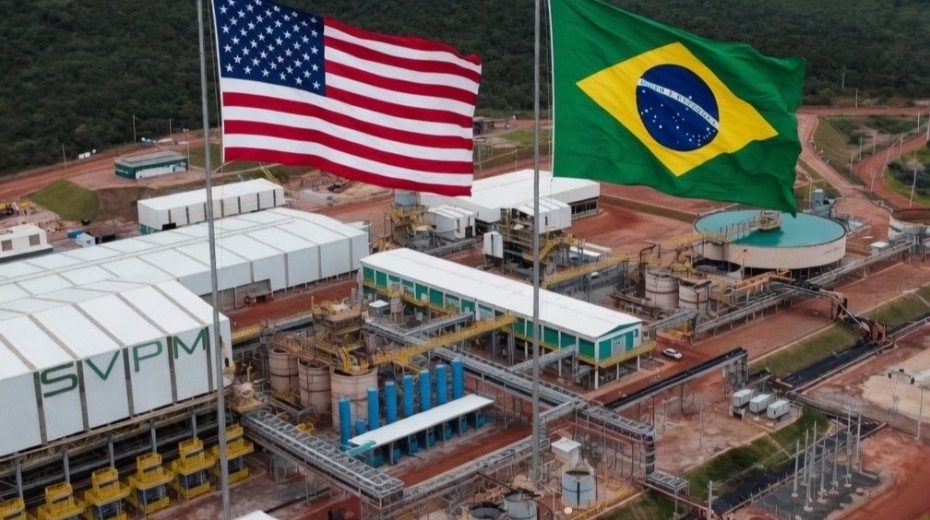
A recent report stirred controversy within Brazil’s patriotic circles: the country’s sole rare earth mining company, Serra Verde, was reportedly being sold without any apparent intervention from the Lula administration. The buyer, the U.S.-based USA Rare Earth, was said to be acquiring the company for $2.8 billion.
This deals transfers ownership of the only major rare earth producer outside Asia to a foreign entity, casting doubt on Brazil’s existence of a coherent and sovereign mineral policy. The contract grants Rare Earth full production rights and guarantees a minimum price, with terms locked in for 15 years before any review.
To put things into perspective, Brazil is a key player globally, holding slightly over 20% of rare earth reserves—second only to China’s roughly 50%. India, Australia, and Russia trail far behind with approximately 6-7% and 3%, respectively. However, substantial extraction activities with actual outputs are limited to China, the U.S., and Myanmar.
Rare earth elements are critical to current technological advances linked to the Fourth Industrial Revolution—enabling electric vehicles, wind turbines, drones, and defense technologies depend heavily on them. Ownership of these resources is rapidly becoming a political and strategic leverage that could define national sovereignty or regional dominance.
Surprisingly, despite expectations from staunch “sovereignist” factions within the Lula government, there have been no attempts to block the sale thus far. Although the government acknowledged Brazil “should” engage more actively in the rare earth sector—a stance more typical of opposition parties—it declined to obstruct the company’s transfer.
This passivity might stem from confidential dealings between Brazil and the U.S. It’s worth recalling that trade and diplomatic ties between the two nations were tense in 2025, culminating in steep tariffs and sanctions aimed at certain Brazilian officials, notably within the judiciary. However, these frictions eased quickly when it became clear that the economic repercussions for Brazil were minimal and U.S. public opinion opposed the restrictions, especially considering Brazil’s role in the U.S. food supply.
Following a behind-the-scenes meeting between Trump and Lula at the United Nations General Assembly, relations improved, and talks were launched to strengthen bilateral connections. According to several reporters, rare earth resources were among the subjects discussed, as the U.S. seeks to diminish its reliance on China for these materials.
Though the specifics remain undisclosed, the U.S. lifted the tariffs and sanctions it had imposed. What Brazil offered in return remains unknown, but the recent sale might hint at the underlying agreement.
About six months later, a U.S. corporation is acquiring Brazil’s only active rare earth mining firm, with no evident resistance from the Brazilian government. Additionally, plans to establish a state-owned entity to defend Brazil’s interests in this field, a “Petrobras of rare earths” dubbed “Terrabras,” appear to have been abandoned.
Regarding U.S. Rare Earth’s backers, beside the well-known giants Blackrock and Vanguard, investors include Alyeska Master Fund, Bayshore Capital Advisors, and Inflection Point Asset Management. In early 2026, the U.S. government injected $1.6 billion into the company, securing a 10% stake.
Essentially, this signifies direct U.S. government ownership of Brazil’s sole rare earth mining operation.
However, the issue doesn’t start with this transaction. Notably, the author has refrained from calling Serra Verde a “Brazilian company,” and for good reason—it never was one. Serra Verde was originally owned by foreign entities: Denham Capital, Energy and Minerals Group, and Vision Blue, which still control 34% of the company. These firms are relatively minor players in the mining industry.
In essence, Brazilian rare earth mining has never been under national government control. Amidst the ongoing strategic contest for rare earth dominance, Brazil remains without a dedicated rare earth policy.
We hope this takeover serves as a wake-up call for decision-makers in Brasília.
About the Author