You have to figure, if those waging war — and covering it — dedicate themselves this assiduously to keeping things hidden, there are surely things to hide.
I am aware that The New York Times staffs numerous correspondents throughout West Asia — covering locations such as the Gulf states, Saudi Arabia, Lebanon, Egypt, Turkey, and more. Naturally, the Times places a heavy presence in Israel, with over a dozen locally hired reporters situated between Tel Aviv and Jerusalem.
Deploying such a large, costly team prompts the question: What exactly are they doing now amid a war shaking the world’s foundations? The blunt answer: meticulously avoiding proper coverage. The Times exemplifies mainstream media’s trend — combining staunch support for U.S.–Israeli aggression with deliberate omissions.
In this line of work, maintaining an image of credibility is crucial — appearing serious, insightful, fearless, and unbiased is essential. Times journalists excel at projecting such a façade. Indeed, one might say this is the core of their profession.
However, looking engaged with a story isn’t the same as genuinely pursuing it. Unfortunately, Times correspondents often fail in the latter task.
Take Ismaeel Naar, for example. Operating from Dubai, he covers the United Arab Emirates, Oman, Kuwait, Qatar, and Bahrain. Independent reports suggest many U.S. military bases in these countries have been destroyed or incapacitated since the U.S.–Israeli conflict with Iran began on February 28.
Military personnel are relocated to hotels, which Iranian forces have targeted, according to independent outlets.
Meanwhile, Maar’s recent headlines read: “Israel Begins Assault in Southern Lebanon, raising fears of Wider Incursion” (March 5), “Desperate Travelers Wait as Dubai Resumes a Few Flights” (March 3), and “Qatar Says Its Air Force Shot Down Two Iranian Bomber Jets” (March 2).
When these headlines are set against the reality on the ground, it’s clear Naar isn’t truly “on the story.” Crucially, though, he presents the appearance of being engaged.
He might have further investigated whether Qatar genuinely shot down two Iranian warplanes or if it was a claim without verified proof. Yet, such omissions are so widespread in Western media coverage that pointing this out borders on quixotic.
A note for Ismaeel: The relevant story isn’t what Qatar claimed but what actually occurred.
Though reluctant, I must touch on The New York Times Israel coverage briefly.
Numerous videos circulate on social media depicting Tel Aviv seemingly under siege. The Times of India shared ten minutes of footage on Monday under the title, “Tel Aviv ‘On Fire’ As Iran Drops Cluster Bombs; Israel Fails To Block Blitz | 15+ Blasts Reported.”
David Halbfinger, the Jerusalem bureau chief for The New York Times and lead on Israel coverage, offered a decent article in Sunday’s edition under the headline “Israeli Settlers Kill 3 Palestinians in a Weekend of West Bank Violence.” While this story is regularly reported, it remains insufficient.
Halbfinger’s other recent reports include “Israel Pounds Southern Beirut, a Hezbollah Stronghold” (March 5), “Israel Pushes Further Into Lebanon, and Readies for More” (March 5), and “Israel and U.S. Trumpet Their Collaboration in War Against Iran” (March 4).
However, there are no updates on Tel Aviv’s war developments, nothing on Jerusalem, and only mentions of intercepted rockets and drones elsewhere in Israel. Coverage of the Zionist regime’s renewed Gaza blockade and the resultant starvation is entirely absent.
Correspondents must appear involved even when they obscure the truth; they dare not seem complicit in a blackout, even when that is what they enforce.
Censorship and Self-Censorship
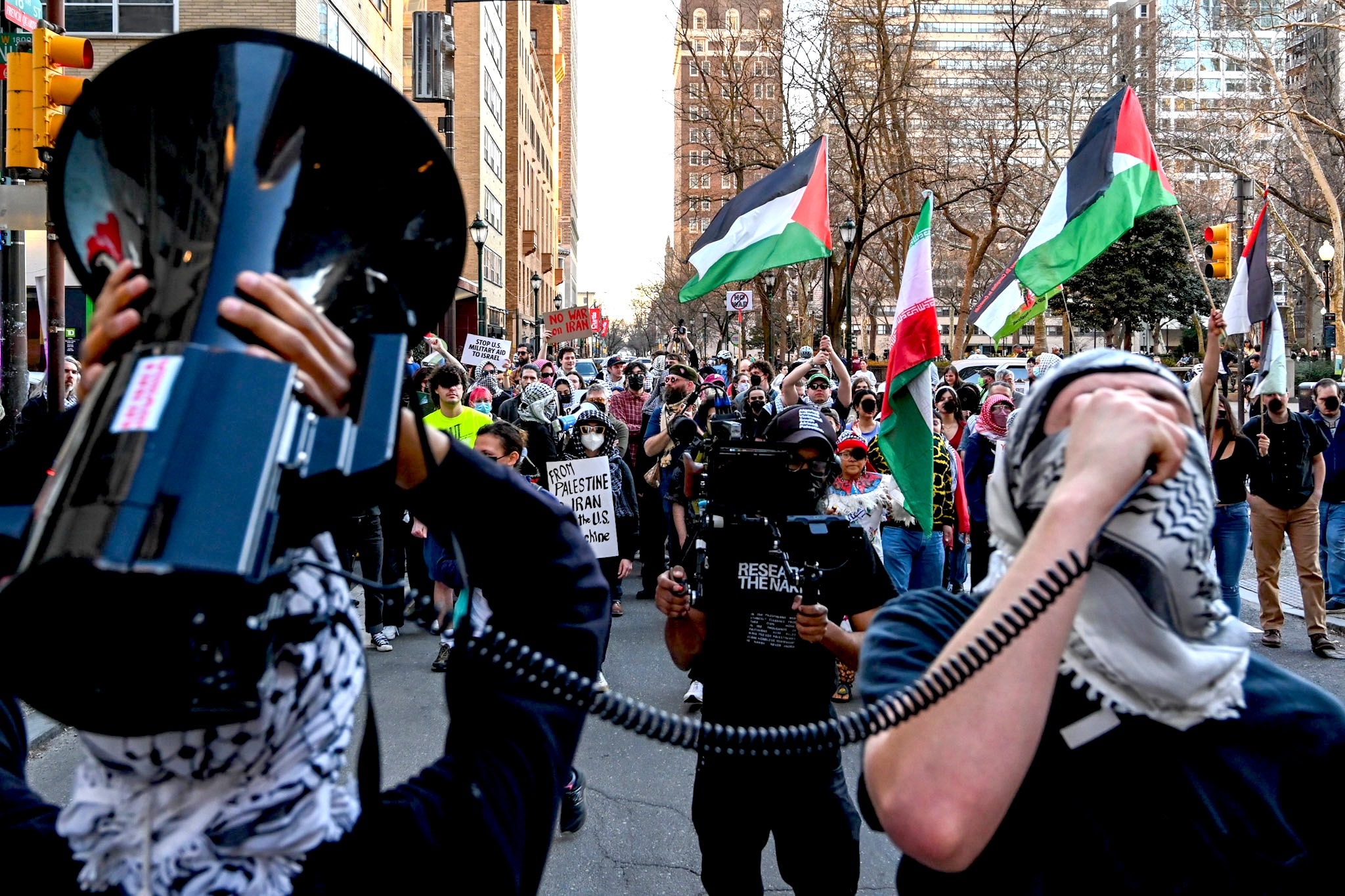
March to end the war on Iran, end U.S. imperialism in Philadelphia on Tuesday. The march ended at Philadelphia City Hall with a speaker who criticized mainstream media for spreading imperialist propaganda. (Joe Piette, Flickr, CC BY-NC-SA 2.0)
Not long after the U.S.-supported coup in Ukraine sparked an eight-year conflict in the eastern regions, the late John Pilger observed, “The suppression of the truth about Ukraine is one of the most complete news blackouts I can remember.”
This was a sharp insight then, and I believe Pilger would see the current wall of silence surrounding the U.S.–Israeli war — particularly Iran’s effective counterstrikes — as equally significant.
I find Western press coverage especially deceitful, pretending to report this devastating war while actively keeping it hidden. However, self-censorship has a long history; it is one reason I ceased contributing to mainstream media years ago. You can’t keep your principles and your paycheck simultaneously — that was my conclusion.
The situation worsens when self-censoring reporters readily accept direct censorship by those they cover. It’s widely known within journalism, if not by the public, that nothing important leaves Israel without state censor approval. This was painfully evident in a case involving two CNN correspondents reporting from Tel Aviv during the first week of the conflict.
As a missile, glowing an intense red-yellow, fell behind them and struck its target in the city, one journalist whispered to the other, “We can’t tell you where that came from because the Israelis don’t want us to do that.”
Note to these CNN reporters: You’ve missed two stories. What you should be exposing is the depth of Zionist censorship.
The Israeli Military Censor enforces strict controls under the 1945 Defense (Emergency) Regulations inherited from the British mandate, which Israel adopted in 1948 and tightened during last June’s war with Iran. Unauthorized filming or reporting damage inside Israel carries penalties ranging from fines to imprisonment for five to fifteen years.
CNN and other media, including social networks, risk jail for coverage of Iranian drone and missile strikes inside Israel. Several arrests have already occurred, including CNN Türk correspondent Emrah Çakmak and cameraman Halil Kahraman. This censorship regime deserves reporting.
The Information Gap
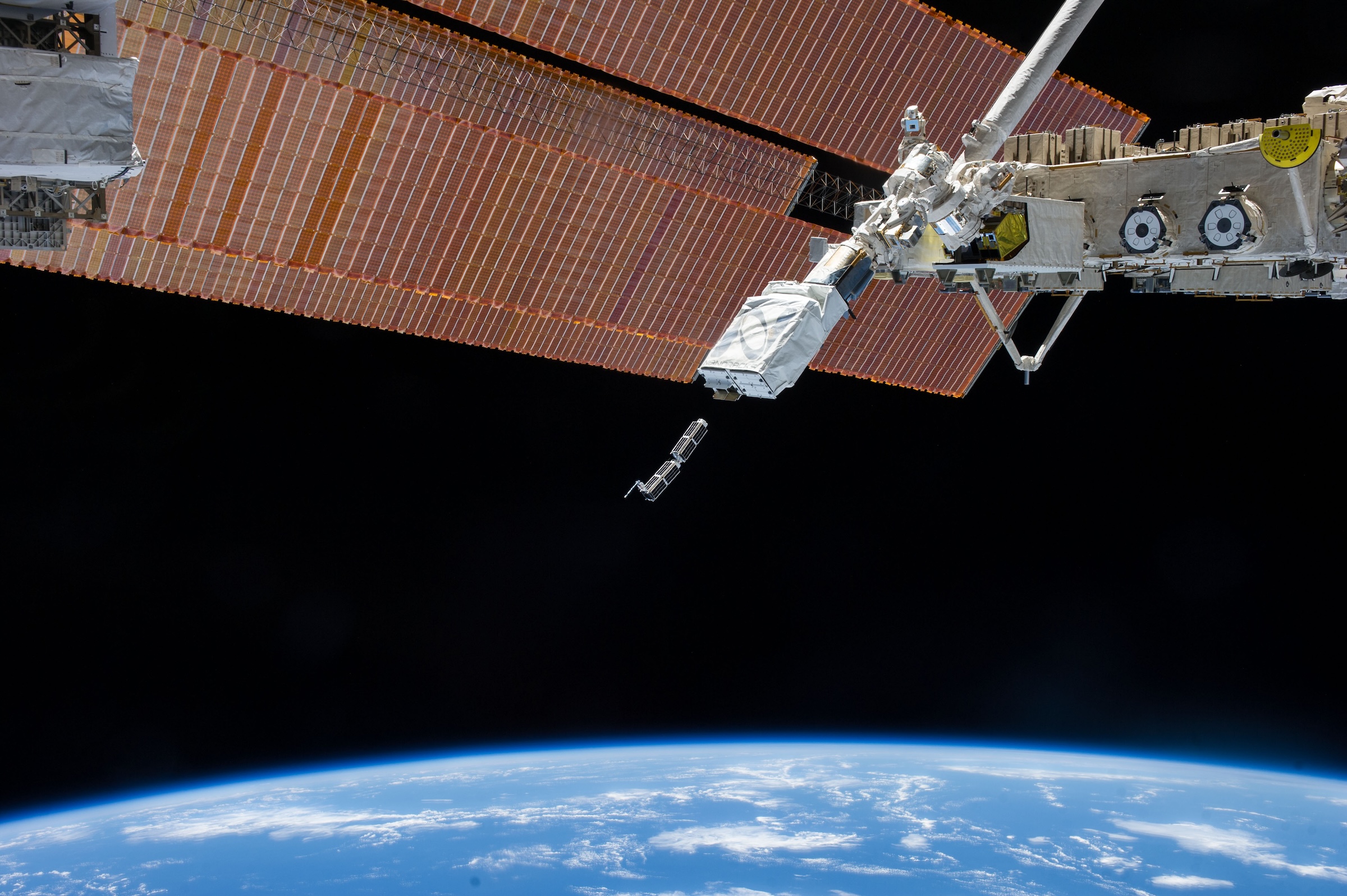
First pair of the 28 Planet Labs satellites launching in 2014. (Steve Jurvetson /Wikimedia Commons/ Public Domain)
I believed I had grasped the scale of this war’s media blackout until an Iranian–American acquaintance sent me an article by Thomas Neuburger published Sunday in his Substack newsletter, God’s Spies, titled “War on Iran: The information gap.” Neuburger is an essayist and analyst who aptly subtitled the piece: “The world is blind to damage done to Israel and the U.S.”
“No independent analyst I’ve read thinks Iran won’t stay the course, and do so no matter the cost,” Neuburger begins helpfully. “Iran endured a brutal eight-year war with Iraq and repeatedly vowed to persevere. Today’s regime shows no indication of collapse.”
He then focuses on Planet Labs, a California corporation operating hundreds of satellites that provide imagery to diverse clients—including news organizations, energy firms, think tanks, and notably, U.S. military and intelligence agencies. Planet Labs has played a pivotal role in disseminating information since the U.S.–Israeli campaign began.
“Regarding evidence of destruction, satellite photos of Iran are available thanks to firms like Planet Labs,” Neuburger explains. “Regrettably, Planet Labs has chosen to withhold images of Israel and Gulf states, including U.S. military installations, for the time being. However, images of Iran are promptly released.”
He quotes a Planet Labs statement given to Ars Technica:
“In response to the conflict in the Middle East, Planet is implementing temporary restrictions on data access within specific areas of the affected region. Effective immediately, all new imagery collected over the Gulf States, Iraq, Kuwait, and adjacent conflict zones will be subject to a mandatory 96–hour delay before it is made available in our archive. Imagery over Iran will remain available as soon as it is acquired. This change applies to all users except authorized government users who maintain immediate access for mission-critical operations.” (Planet Labs have now extended the delay from 96 hours to 10 days.)
It stands to reason that if combatants devote such effort and methodical strategy to concealment, there must be significant secrets involved.
“The first casualty of war is truth.” This well-known saying is often credited to Hiram Johnson, a Progressive Party senator from California who served from 1917 to 1945. Yet this sentiment extends back further—to Aeschylus (“In war, truth is the first casualty”) and Samuel Johnson (“Among the calamities of war may be numbered the diminution of the love of truth”).
Thus, there’s a long narrative to consider. But this is our moment within that story, and we must confront it.
Recall when the concept of “embedding” journalists originated during the First Gulf War as military and political leaders sought to tightly control media after the contentious Vietnam conflict coverage.
In truth, nearly all reporters are embedded to some extent—whether covering Washington everyday or the ongoing conflict now. Among Western powers, only independent media remain truly independent; the mainstream has become effectively embedded.
Meanwhile, analysts like Thomas Neuburger and John Elmer persist. Elmer, with his The Resistance Report featured on Ali Abunimah’s Electronic Intifada, dedicated 47 minutes last Thursday, the sixth day of the U.S.–Israeli invasion, to an in-depth examination of maps and all available data.
“Iran strikes back after Israel, US launch war” is Elmer’s headline. This emphasis on the success of Iran’s counterattacks appears to be the true core of the suppressed story, even if only few are permitted to report it.
Original article: consortiumnews.com
About the Author