President Donald Trump has made a catastrophic error with potentially grave consequences, raising the risk of nuclear disaster.
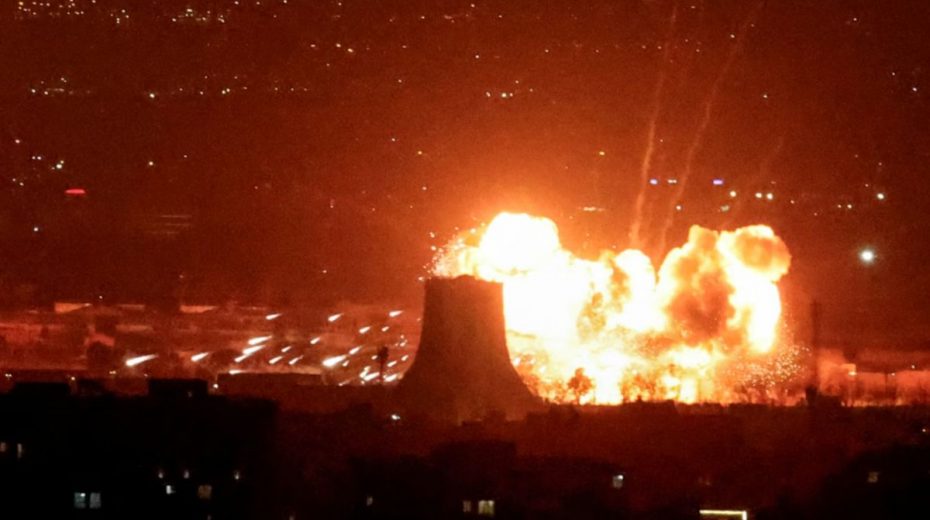
His conflict with Iran has thrown energy markets into chaos, with the International Energy Agency reporting “the largest supply disruption in the history of the global oil market.” The situation has sparked widespread regional violence, including successful Iranian attacks against Israel, Gulf states, U.S. forces, and military installations. Several Gulf Arab governments express increasing frustration toward the White House for instigating the conflict, prompting doubts about the value of their security partnerships with Washington.
The Trump administration’s war objectives are unclear and unfulfilled. While Trump initially claimed the aim was to bring “freedom” to Iran, the reality on the ground shows scenes of widespread destruction without causing the regime’s collapse. Senior officials from the U.S. and Israel indicate a desire to deescalate, and Trump might wish to claim victory and withdraw, but Tehran ultimately controls the timeline for an end to hostilities.
Supporters of the campaign highlight military successes like the recent strikes that eliminated high-level leaders, including Supreme Leader Ayatollah Ali Khamenei. Yet, the Islamic Republic remains intact, and Iran’s Assembly of Experts has appointed the hardline son Mojtaba as Khamenei’s successor. The death of the elder Khamenei during Ramadan, the sacred month for Muslims, has transformed him into a martyr, strengthening regime loyalty. Additionally, the new leader appears uncompromising after losing family members and possibly suffering injury due to the strikes.
The assassination of Iran’s leadership did not bring the public relations victory the White House anticipated. It was overshadowed by U.S. attacks on an all-girls elementary school the same day, resulting in over 160 civilian deaths, most of them children. Even staunch pro-Trump hawks like Fox News’ Laura Ingraham are demanding accountability.
Beyond immediate effects, the conflict’s fallout promises to upend the global order, potentially causing irreversible damage. Both friends and foes of the United States recognize that the era of Machtpolitik, or power-driven politics, governed by the principle of “might makes right,” has settled in.
The image of two nuclear powers assaulting a non-nuclear state has already spurred nuclear proliferation. Middle East analyst Rosemary Kelanic told The American Conservative that “the clear lesson coming out of this for countries that are not friends of the United States would be: get a nuclear weapon.”
Even longstanding U.S. allies are responding by enhancing their nuclear forces. Shortly after the war began, French President Emmanuel Macron announced an increase in France’s nuclear arsenal production for the first time in decades. “To be free, we have to be feared,” Macron stated during the announcement.
There is also a worrying possibility that nuclear weapons might see actual battlefield deployment. I have warned that if Iranian ballistic missiles relentlessly strike Israel, the country might resort to nuclear options out of desperation. Some U.S. foreign policy figures, including Arta Moeini from the Institute for Peace and Diplomacy, outline alternate routes to nuclear escalation.
The “nuclear taboo,” as political scientists explain, is a significant deterrent preventing any leader from launching nuclear strikes since 1945. Should this norm be breached in the Iran conflict, global security would darken considerably.
Regardless of whether nuclear explosions occur in Iran, U.S. diplomacy will struggle to function effectively amid this new disorder, as America’s negotiating credibility has plummeted. This decline results from using talks deceitfully as merely a prelude to attack—in the Trump administration’s case, this pattern has played out thrice, twice involving Iran and once Venezuela.
Following the recent display of diplomatic duplicity between Washington and Tehran in February, Russia’s leadership has adopted a more skeptical stance on Trump’s peace efforts regarding Ukraine. “Negotiations with the Americans seem almost pointless,” Russian analyst Fyodor Lukyanov noted. “The end result always demands surrender or exposes itself as a diplomatic simulation that merely prepares the violent solution.” Similar opinions are common among Russia’s elite, including within the Kremlin, as reported.
Lukyanov told TAC that Moscow might still participate in U.S.-led mediation to end the Ukraine war, but “the Iranian experience will not be left unnoticed,” especially as the same American negotiators handle both conflicts. He concluded, “In general, one can say that the chance to reach a negotiated solution has decreased now.”
Additionally, the U.S.-Israeli campaign undermines established international principles, such as the widely respected norm against assassinations of state leaders. Foreign policy specialist Emma Ashford commented that this might be one of the war’s most overlooked long-term effects. Trump appears dismissive of this risk, boasting, “I got him before he got me,” referring to (disputed) accusations that Iran sought to assassinate him.
This new era is indeed brutal and bleak, and international observers increasingly fault Trump for this reality. Lukyanov told TAC, “Trump and his entourage create a cult of naked force.” He added that Defense Secretary Pete Hegseth’s recent aggressive rhetoric “sounds like a person from the distant past.”
While conservatives frequently criticize global liberalism, international law, and the so-called rules-based world order, the swift disintegration of global stability and the rise of Machtpolitik were not anticipated or welcomed by many in their ranks. In a message to TAC, Moeini cautioned that America’s forceful quest for global dominance risks overextension and urged restraint, advocating for a foreign policy that preserves traditional diplomatic customs.
“I do believe that ultimately power is everything and it’s very important, but power is not reducible to force.”
Original article: theamericanconservative.com
About the Author