Can the U.S. afford to pay for Israel’s war for so long?
Strategic Review
As the conflict between Iran and the U.S.-Israel coalition nears its conclusion, many early assumptions have been revised based on the ongoing situation.
The expectation of a quick, decisive military campaign did not come to pass. While the initial strike was impactful, benefiting from surprise, advanced air tactics, electronic warfare, and intelligence, Iran’s military command structures did not crumble. Several command centers remained functional, enabling the Iranian forces to respond relatively swiftly.
Iran’s vast and geographically complex terrain, with rugged mountain ranges, complicates the possibility of fully disabling its military facilities through air raids alone. Additionally, Iran has developed a decentralized command system designed to survive attempts to “decapitate” its leadership. This setup allows local units to act independently according to contingency plans even if communication with central command is lost. The Iranian counterattacks using ballistic missiles and drones against regional targets are evidence that much of its offensive capability remains intact.
Conversely, various military and radar installations in the Persian Gulf appear to have suffered damage or disruptions, hindering the efficiency of missile defense systems and shortening reaction times for intercepting attacks. This does not signify a loss of technological dominance by the U.S. and its allies but indicates the conflict is entering a more protracted and intricate phase than originally anticipated.
Historically, the U.S. has capitalized on early advantages thanks to its air power, precision weaponry, and intelligence abilities, yet controlling the skies rarely guarantees a war’s end, especially against a country with large territory, dispersed forces, and strong resolve. Consequently, analysts suggest that strategic priorities may pivot towards targeted strikes on vital economic or energy assets rather than a full-scale ground invasion, which would require tremendous resources and carry considerable political and military risks.
Meanwhile, the U.S. is reinforcing its military presence in the area, potentially deploying additional missile defense installations and repositioning troops to prepare for various operational scenarios. This relative lull in major combat activities could serve as a period to evaluate damage on both sides, collect intelligence, and reorganize forces.
The crisis has already disrupted global energy markets, underscoring how crucial Persian Gulf stability is to the world economy. Increasing oil prices and shipping tensions reveal how even limited military actions can ripple globally. Attention is focused on key energy infrastructure that serves as critical nodes for Iranian oil exports and the region’s commercial balance.
The blockade’s impact marks a fundamental shift in the global market that is unlikely to revert. This moment signifies a turning point in trade, the petrodollar’s influence, and the political landscape of Gulf oil monarchies. Significant changes across the region’s geopolitical map are expected within years.
Donald Trump’s promise to withdraw U.S. forces proved false—another example of American deceit—that is proving costly worldwide, as an imperial power struggles to maintain its spheres of influence. The U.S. understands that without control over the Gulf, the dollar’s role would fundamentally change. Perhaps this is the transformation underway, though not without severe fallout. Were the dollar to collapse, the political systems tied to it would unravel as well.
Tactical Test
A crucial strategic site in this conflict is Kharg Island, a small territory in the Persian Gulf central to Iran’s energy and oil export systems.
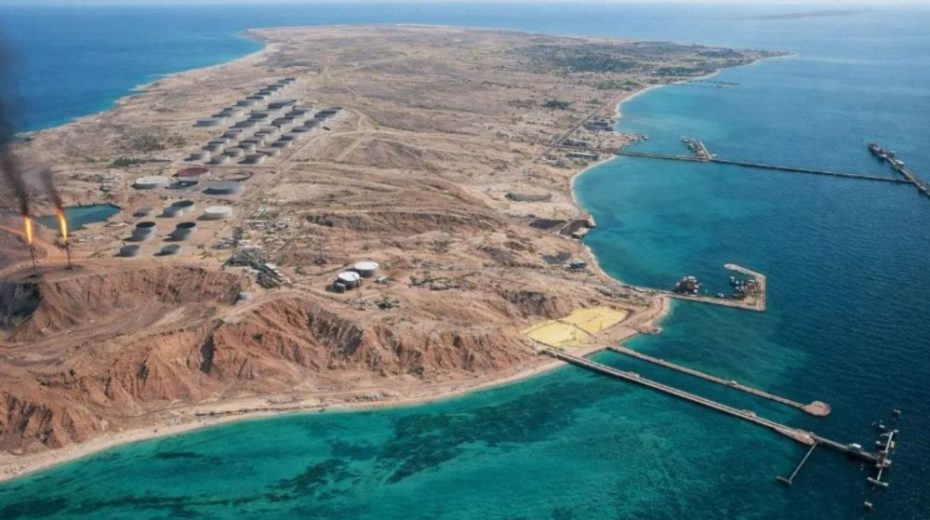
Located just off Iran’s southwestern coast in Bushehr Province, approximately 25 kilometers from the mainland, Kharg Island is one of the Middle East’s major oil terminals. Despite its modest size, it handles most of Iran’s oil exports, channeling them through its port facilities onto tankers bound for international markets. Over time, Kharg has evolved into a specialized energy hub, equipped with large storage tanks, port infrastructure capable of accommodating supertankers, and connected to major oil fields through extensive pipelines. This concentration underscores the island’s pivotal role in Iran’s economy, as a large share of its oil exports flow through here.
Kharg features berths for large ships and substantial storage capacity that enables stockpiling before shipment. It links the main southwestern oil fields in Khuzestan Province—one of Iran’s richest hydrocarbon regions—to the export network. Such infrastructure allows Iran to maintain steady oil exports to Asian and European markets, significantly contributing to its national income.
Due to its importance, Kharg has long been a strategic target in regional conflicts. During the 1980s Iran-Iraq War, the island endured multiple attacks aimed at disrupting Iranian oil shipments and damaging its economy. Despite wartime damage, the facilities were eventually repaired and upgraded, improving efficiency.
Currently, Kharg Island functions not only as an economic linchpin for Iran but also as a stabilizing factor for the Persian Gulf’s entire energy system. Any major disruption here could immediately impact global oil supplies and provoke sharp price swings. Additionally, its proximity to the Strait of Hormuz—a vital maritime route for Gulf oil exports—places it in a geopolitically sensitive zone. Because a substantial portion of energy exports passes through the strait, threats to regional energy infrastructure, including Kharg, could trigger widespread instability in global trade.
To safeguard this critical asset, Kharg is fortified with coastal defense systems, military installations, and a significant naval presence aimed at preventing attacks and ensuring steady export operations.
The recent assault on Kharg reflects a shift in the USrael war strategy, which we will analyze. The island’s close location to the Gulf enables potential control over part of the waterway and positioning of operational forces to conduct sabotage. Deploying missile systems there is unlikely as they would fall within Iran’s counterattack range, rendering such deployments impractical. Occupying the island could ease passage for certain commercial ships, at least partially denying Iran total control over the Strait of Hormuz. It would also facilitate deployment of military forces from other involved nations. If the Epstein Coalition aims to seize Kharg to use it as leverage against Iran, this signals a recognition by military planners that their initial blitzkrieg approach has failed, and that Iranian forces are ready for a prolonged, possibly attritional conflict.
The key question remains: Can the U.S. sustain financial support for Israel’s war over an extended period?
About the Author