The United States is burning billions of dollars to bomb Iran while the world distractedly watches oil prices collapse.
Burning billions of dollars
While the world is distracted by plunging oil prices, the United States is spending billions on bombing Iran. Meanwhile, China has quietly unveiled what may be the most influential economic blueprint of the decade. This imbalance in focus exemplifies the core issue: as Western attention remains fixed on war zones and fluctuating energy markets, Beijing is methodically outlining its technological, industrial, and strategic framework for the next fifteen years.
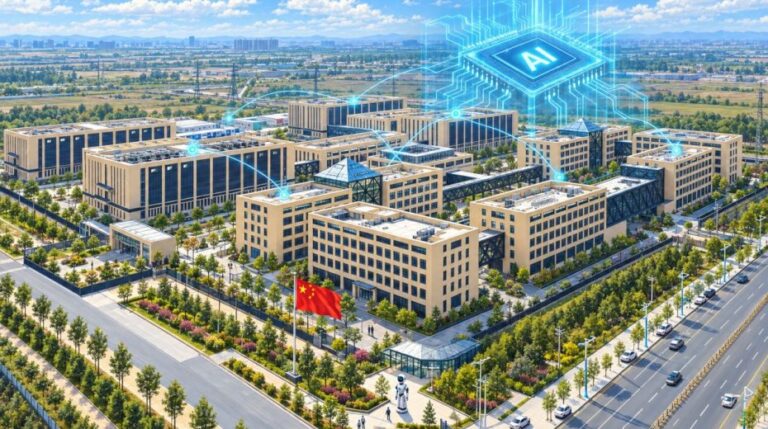
On March 5, the National People’s Congress presented the 15th Five-Year Plan, a detailed 141-page document far beyond mere formality. Artificial intelligence appears over fifty times, underscoring its role as the foundation for China’s economic overhaul. The plan aims for AI integration in 70% of the economy by 2027, rising to 90% by 2030, making AI as fundamental as electricity or broadband connectivity.
Robotics, especially humanoid forms, are highlighted as central to the upcoming industrial transformation, with an ambition to double robot output in five years. The document also declares concrete goals in cutting-edge fields such as space-based quantum communication networks, timelines for controlled nuclear fusion, and systematic brain-computer interface development. China is not just following but attempting to anticipate the path of groundbreaking technologies.
Quantitatively, the 15th Five-Year Plan forecasts that AI-related industries will exceed 10 trillion yuan (around $1.38 trillion), placing AI among the economy’s key growth engines. The plan also announces “extraordinary measures” to achieve substantial self-reliance in critical value chains like rare earth elements, semiconductors, and advanced parts, where economic and strategic-military interests merge. Dominating these supply chains equates to controlling any adversary’s military capability.
Therefore, this document is much more than an economic roadmap; it represents a form of war planning currently underway but often overlooked by the US, which remains absorbed in conventional wars and regional conflicts. While Washington focuses its resources on active combat in the Middle East, Beijing methodically builds a technological, industrial, and logistical “cold” war aimed at controlling the tools that will define future conflicts.
The CHIPS Act as a ‘rifle’ against an arsenal
The US response to China’s technological advances primarily comes through the CHIPS and Science Act, enacted in 2022, allocating $52.7 billion to semiconductors—of which $39 billion are direct subsidies along with a 25% investment tax credit. This initiative has catalyzed over $640 billion in private investments across roughly 140 projects in 30 states, creating around 500,000 jobs. At any other time, this would be heralded as a transformative industrial policy.
Yet, despite its scale, the CHIPS Act targets a single segment—important but limited—within a broader technological struggle. While the Act operates like a rifle focusing on advanced chip production, China’s 15th Five-Year Plan resembles a comprehensive arsenal spanning all domains: AI penetration across industries, robotics as a core industrial element, space infrastructure, quantum computing, and consolidating dominance in rare earth processing.
Rare earths, the military complex, and the Samson Option
Rare earths exemplify where economic strategy meets military importance. Currently, China controls close to 90% of the world’s processing capacity for these vital materials, turning others’ industrial reliance into strategic fragility. Every F-35 fighter jet uses hundreds of kilograms of rare earths, along with Patriot missile systems, THAAD interceptors, and thousands of guided munitions dropped weekly over Iran—all dependent on Chinese refining. The Plan’s mention of “extraordinary measures” signals a bold approach: securing supply chains essential for US military operation.
This advantage has already been exploited: in April 2025, China imposed export limits on all 17 rare earth elements, converting a historic dependency into a direct leverage tool. Meanwhile, the Pentagon faces a January 2027 deadline from DFARS to eliminate its Chinese rare earth reliance for defense contracts, marking a decade or more of vulnerability. The US thus faces conflicting pressures: engaged in a high-ammunition consumption conflict while attempting to build alternative, still incomplete supply chains.
In effect, the war against Iran rapidly depletes interceptors and precision weapons, while China tightens control over rare earth refinement, narrowing the industrial bottleneck that could replace those munitions. The 15th Five-Year Plan formalizes this process within national strategy, transforming a logistical challenge into a powerful geostrategic lever. Whoever dominates these materials controls the operational tempo and sustainability of their rivals’ wars.
From the refineries of Tehran to Bapco: the war on vital infrastructure
In this milieu, the Middle East conflict assumes the character of a ‘Samson Option’ involving not only military action but also energy and environmental dimensions. Following assaults on Haifa’s infrastructure, Bahrain’s Bapco refineries were targeted in predictable retaliation for damage to Tehran’s refineries, which produce roughly 250,000 barrels daily. By doing so, Israel has set—or reaffirmed—a precedent long seen in conflicts like the Twelve-Day War and 2006 bombings of Lebanon’s Jiyeh facilities: attacks against an enemy’s oil infrastructure justify reciprocal strikes.
This logic is now escalating. The strike on Qeshm’s desalination plants alongside US forces essentially authorizes Tehran to hit Israel’s desalination facilities, which provide over 60% of the country’s water and even greater shares for Gulf Cooperation Council nations. In several GCC states, over 80-90% of drinking water is desalinated, equating such plants in importance to power stations or oil refineries. Disruption would force rapidly growing populations—accustomed to years of relative stability—to flee en masse.
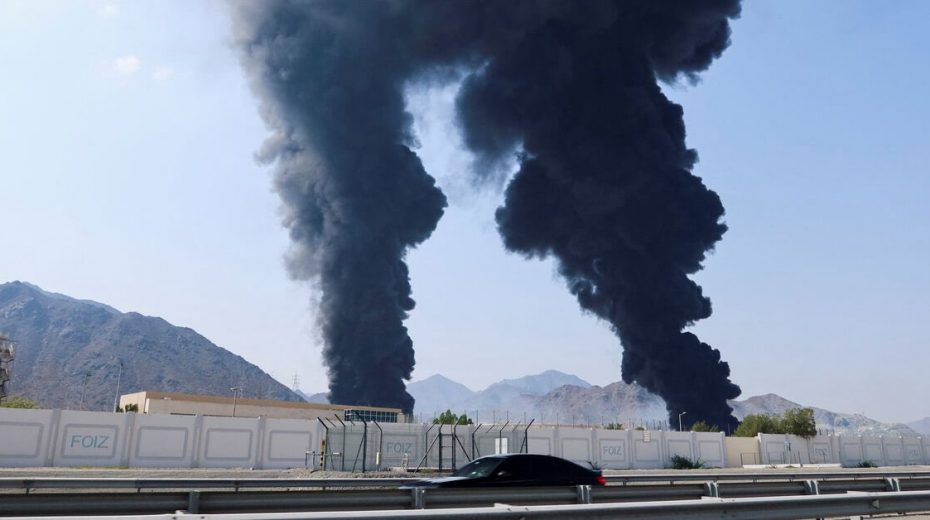
The attack on Tehran’s refining and storage assets was thus a problematic military choice that also threatens health, environment, and politics. Though not a nuclear event, its effects resemble a ‘Samson Option’ nuclear strike by releasing massive toxins into the atmosphere. A toxic cloud envelops Tehran and drifts north and northeast into Turkmenistan and Central Asia, with health impacts expected to unfold over decades.
The political fallout is significant. Israel’s already weakened standing suffers further damage, straining ties with Central Asian countries where Tel Aviv had secured major agreements based on their energy and mineral wealth. Additionally, friction grows with the US, which was informed of the operation but not its full scale, now bearing the consequences of exposing Gulf energy infrastructure to retaliation.
For the United States, the risks are threefold. First, deteriorating relations with regional producer states, which now perceive their refineries, terminals, and desalination plants as valid targets due to the precedent. Second, heightened vulnerability of Gulf energy complexes, where any attack could send crude prices—already over $110-115 per barrel—soaring further. Third, systemic shocks to the global economy and fragile US domestic finances, as energy price spikes fuel inflation, social unrest, and political instability.
The international order and the old ‘structure/superstructure’ rule
In this rapidly escalating environment, the focus shifts beyond American and Israeli military bases to vital life-support systems like water and essential economic hubs like oil infrastructure. This represents another type of “Samson Option”: not nuclear, but energy-humanitarian, with profound human, geopolitical, and economic consequences. The dismantling of symbols of American dominance in the Middle East coincides with the visible collapse of an international order that Washington, Tel Aviv, and allies (Europe, Japan, etc.) have artificially maintained for decades.
The “rules-based” order, long a facade underpinned by exploitation of oil revenues and near-colonial control of the Middle East’s energy supply, is unraveling. Today’s conflict over refineries, terminals, desalination plants, submarine cables, logistics hubs, and rare earth chains illustrates the old distinction between “structure and superstructure.” The material base—energy, resources, logistics, and critical technologies—is the structure, whereas discourses on “liberal democracy,” “rules-based international order,” and “alliances of values” constitute the superstructure. Now, against the pressures of Middle Eastern war and US-China technological cold war, the structure is cracking and with it the credibility of the superstructure.
This contrast in leadership style is telling: President Trump relied on slogans like “Death, fire, and fury,” amplified via social media to project decisiveness and immediate power. Conversely, Xi Jinping has approved and promoted a comprehensive 141-page plan detailing how to secure control over the essential materials, technologies, and infrastructure needed to sustain any real “death, fire, and fury.”
One leader is engaged in active combat, while the other focuses on winning peace defined by shaping the underlying conditions that make war sustainable for himself but prohibitively costly for others.
About the Author